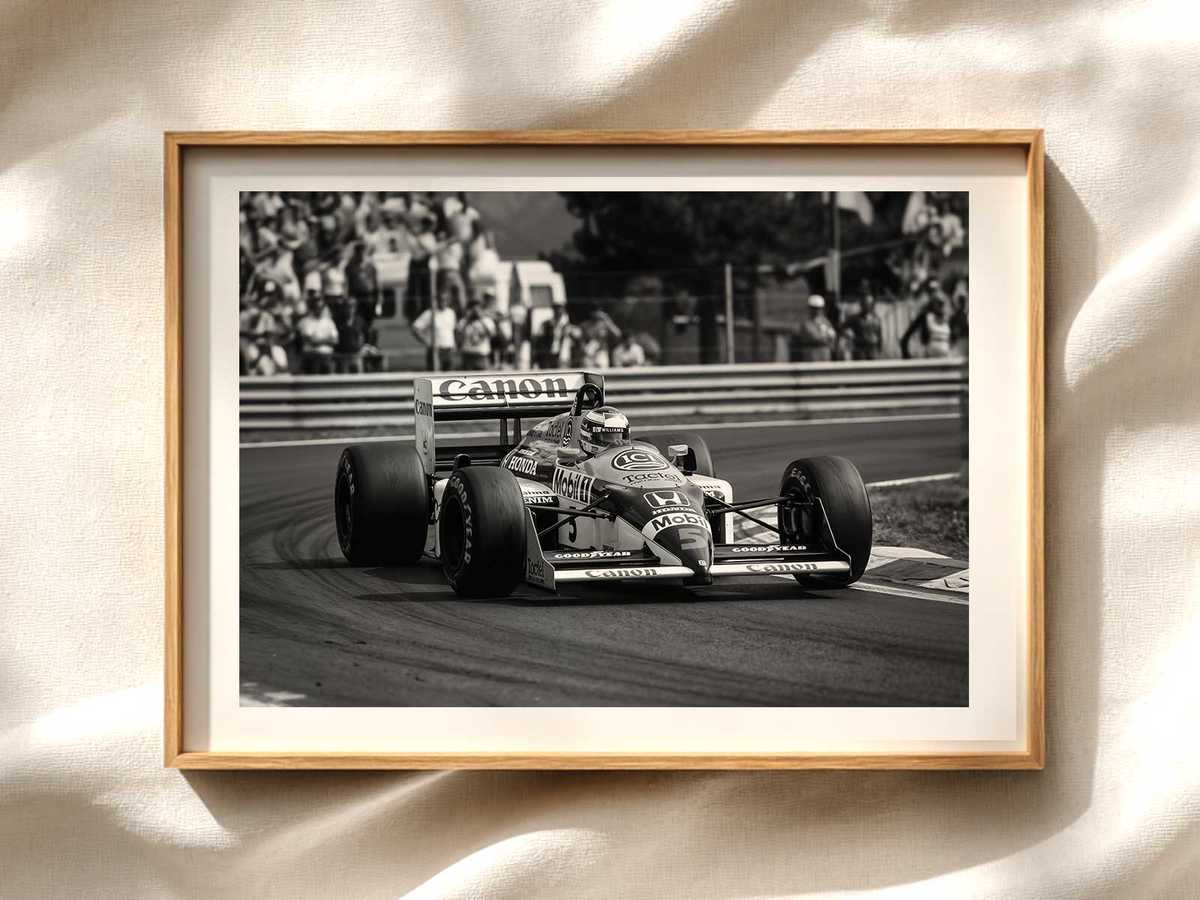
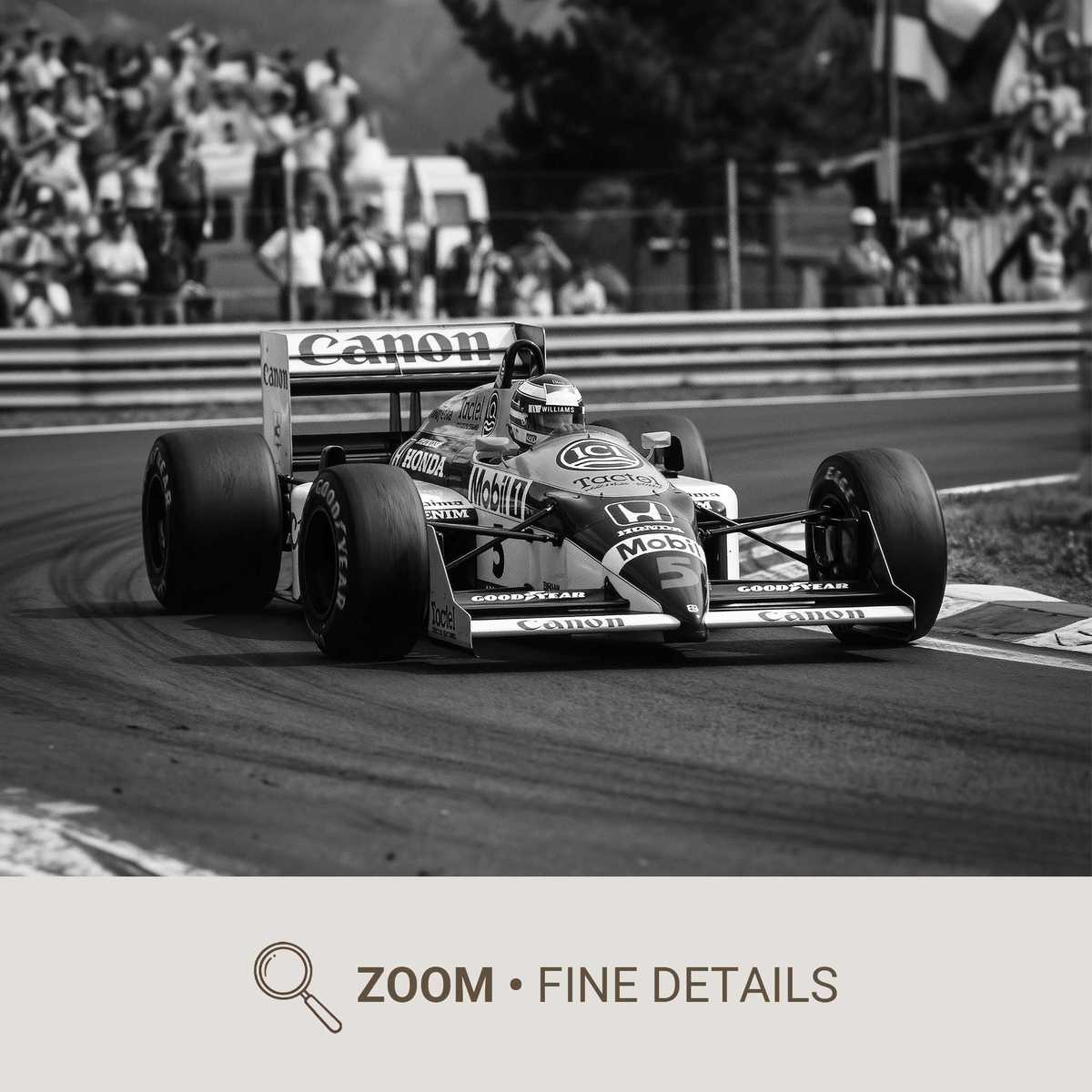
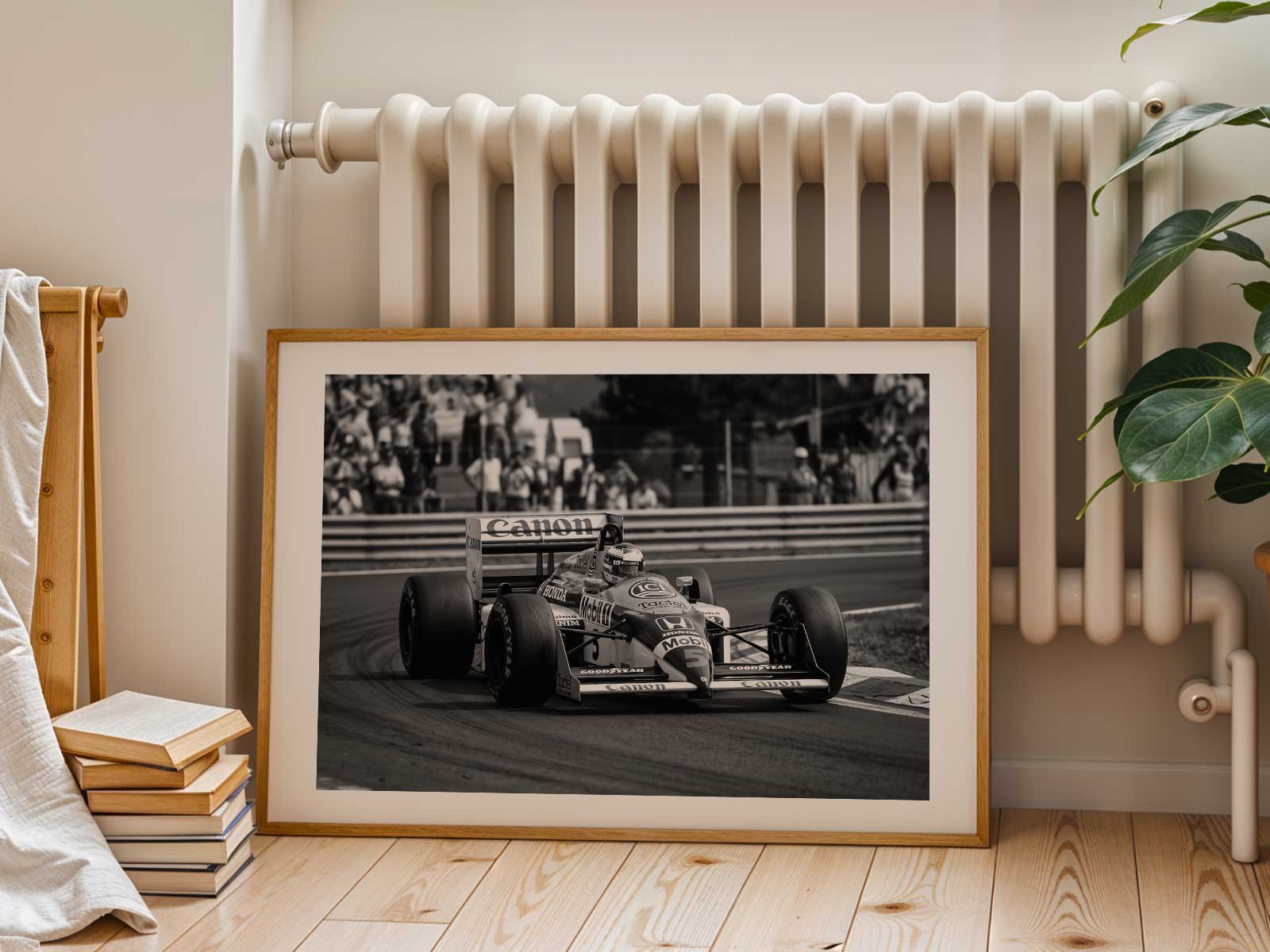
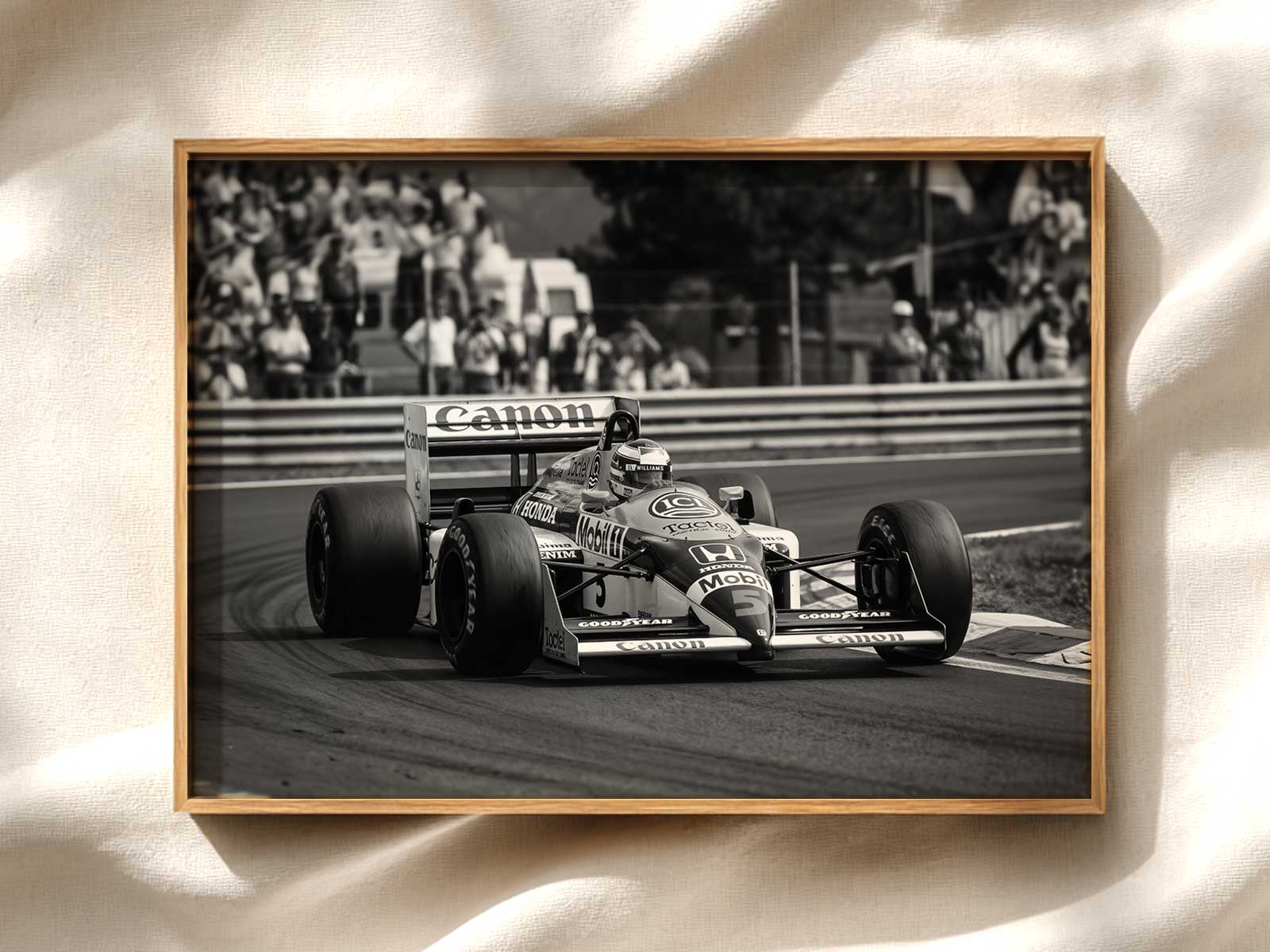
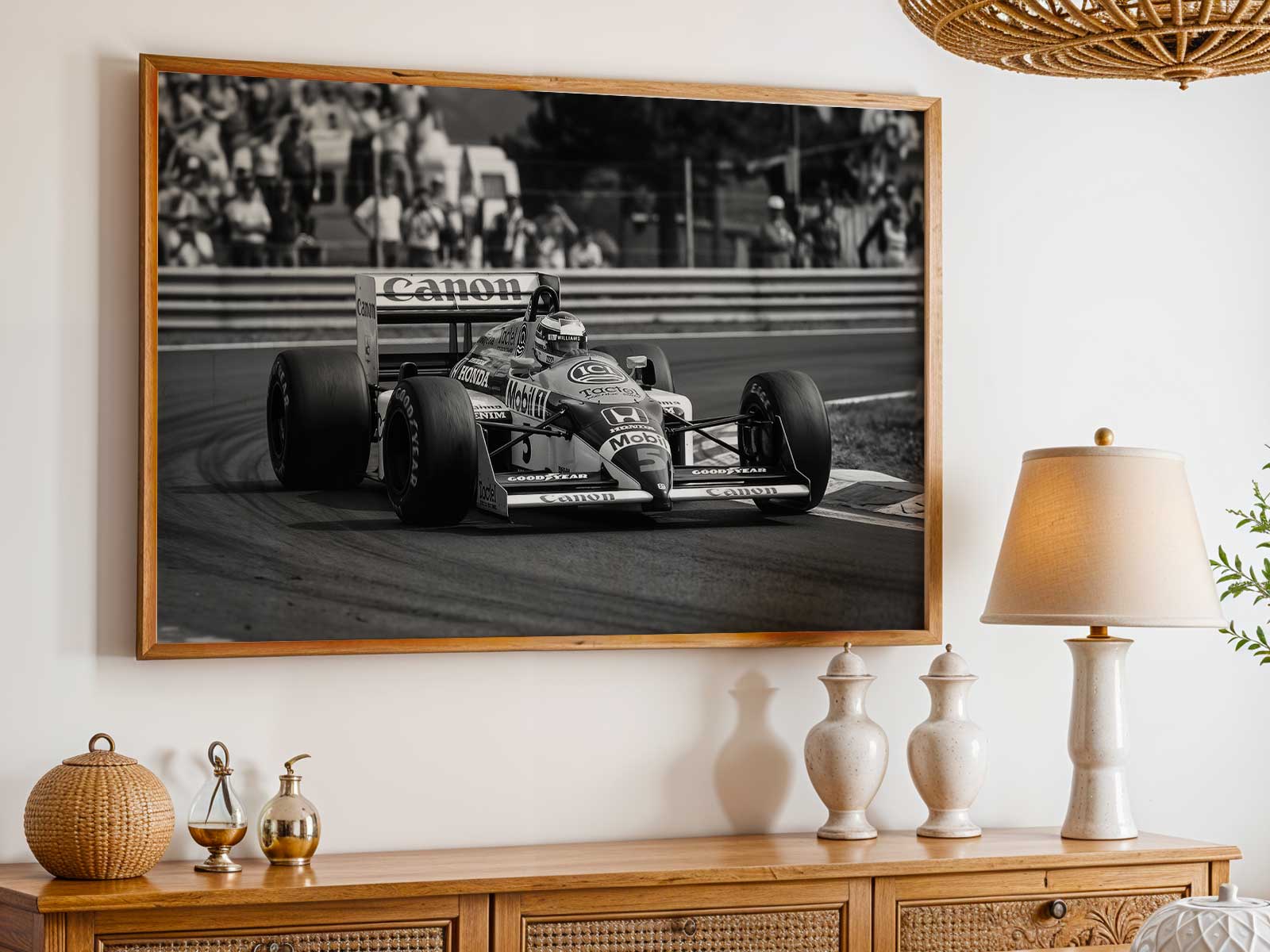
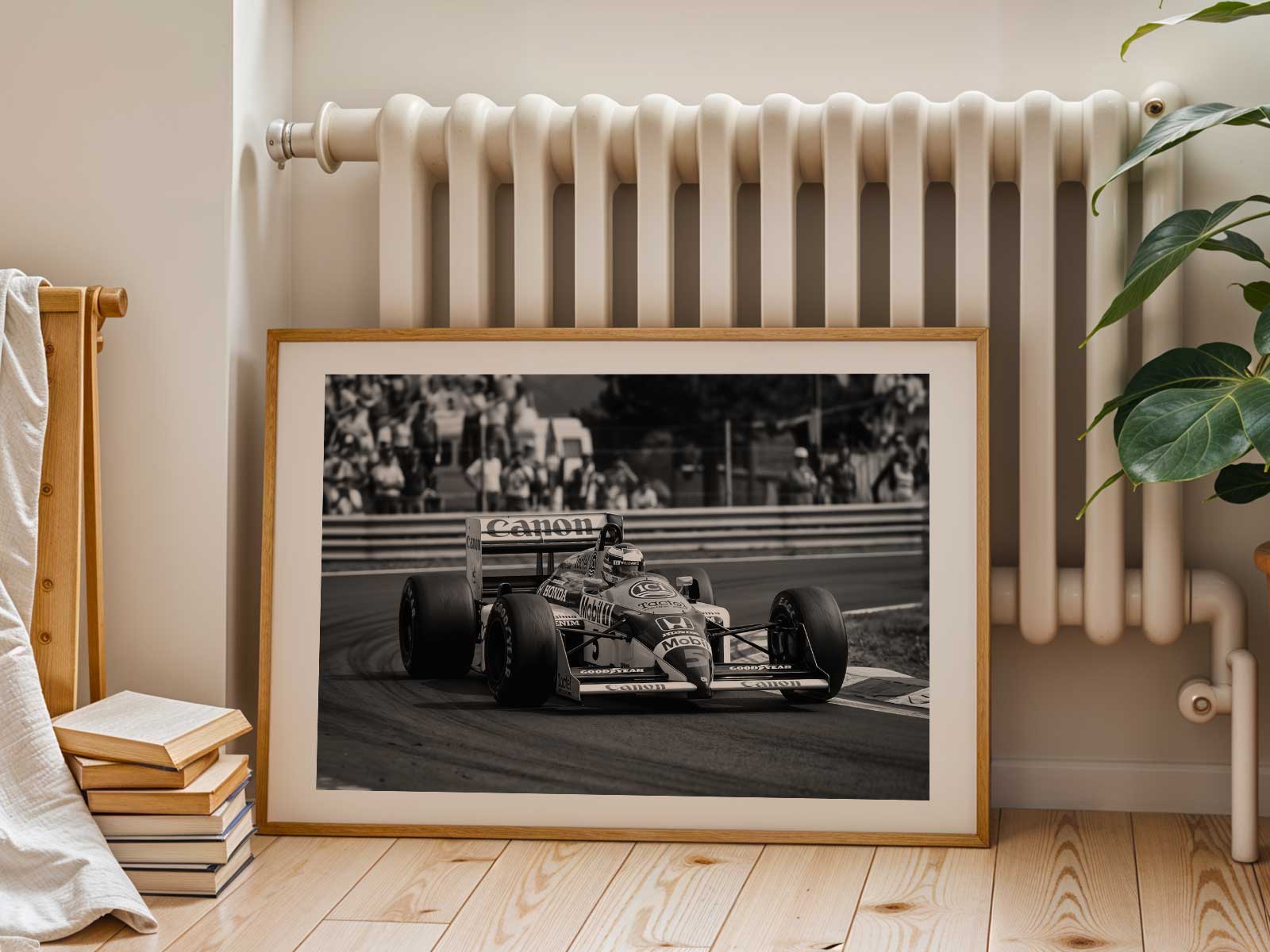
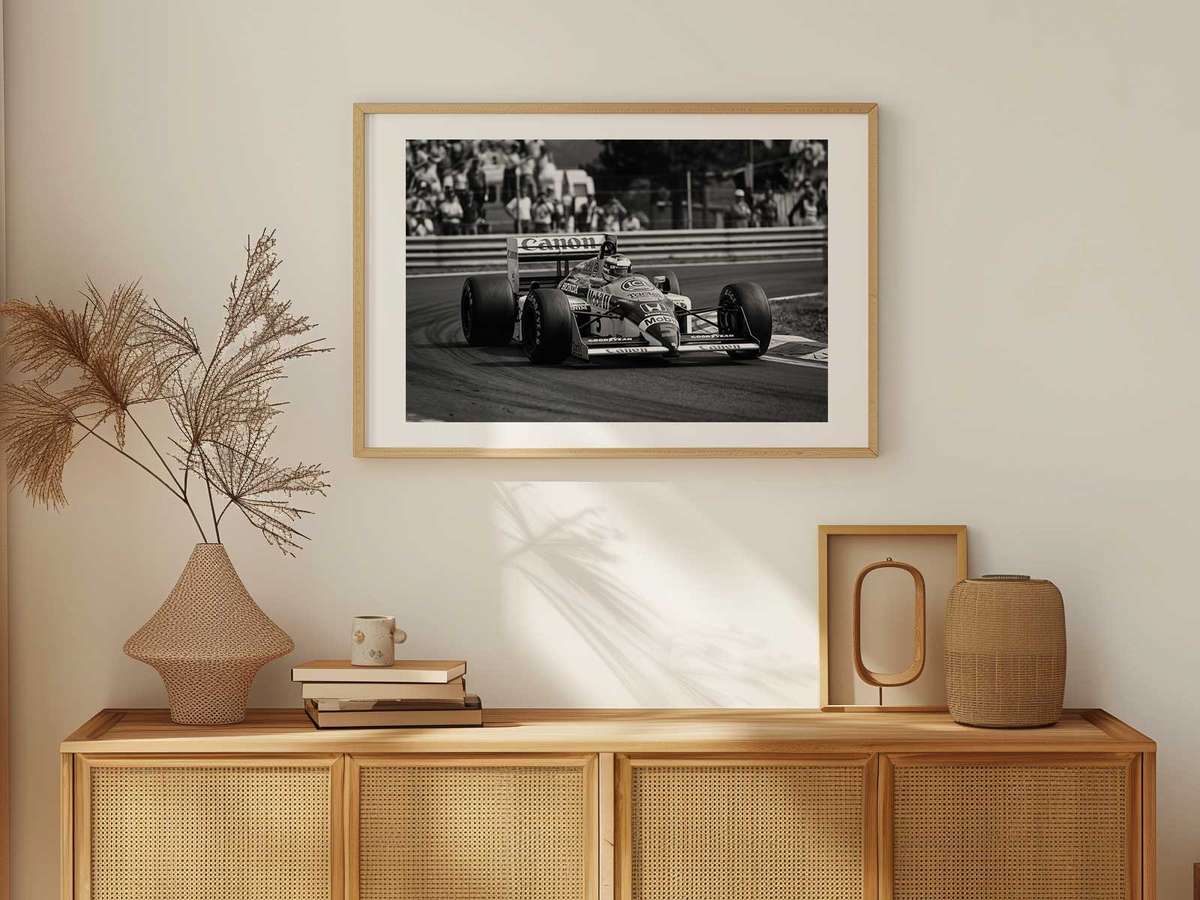
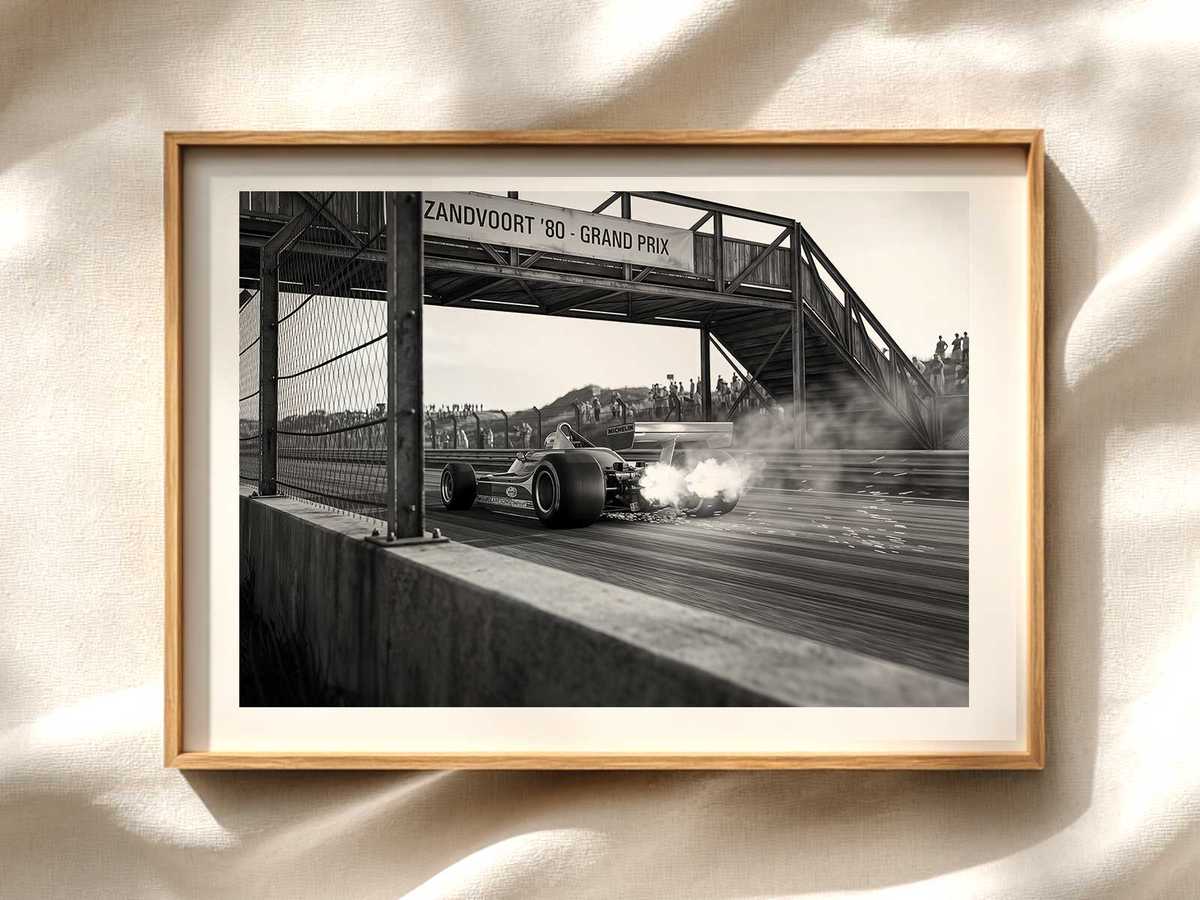
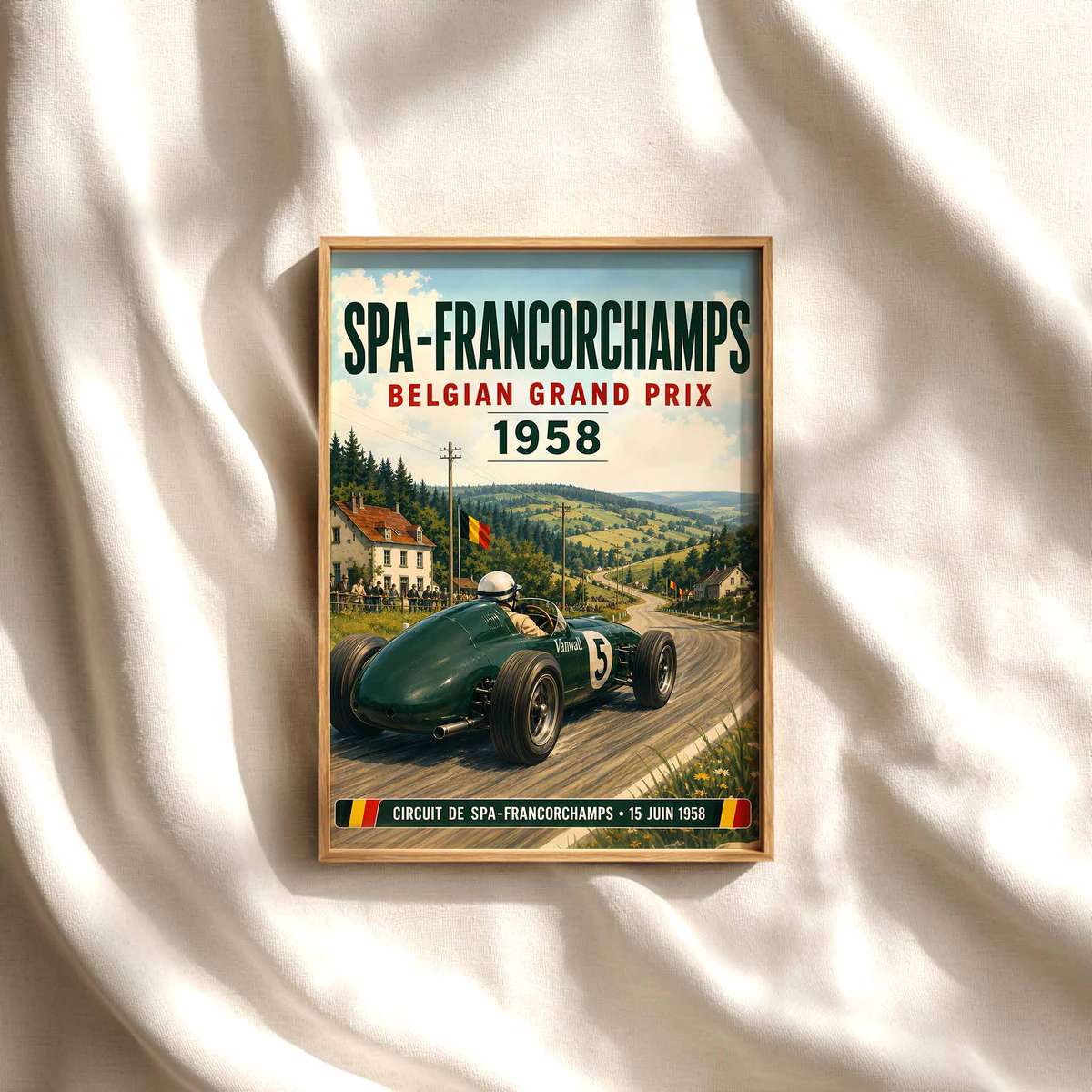
The Williams FW11 occupies a special place in Formula 1 history: a technological and visual landmark of the early 1980s. When that car is reinterpreted as a vintage F1 poster, its image acquires a second life. This article examines how a retro aesthetic—grain, color fade, period typography and composition—does more than decorate the FW11: it amplifies its visual memory, reveals layers of historical patina, and shapes its value as an object of heritage. Below we unpack design choices and the cultural reasons why a 1980s-inspired treatment makes the FW11 feel at once immediate and timeless.
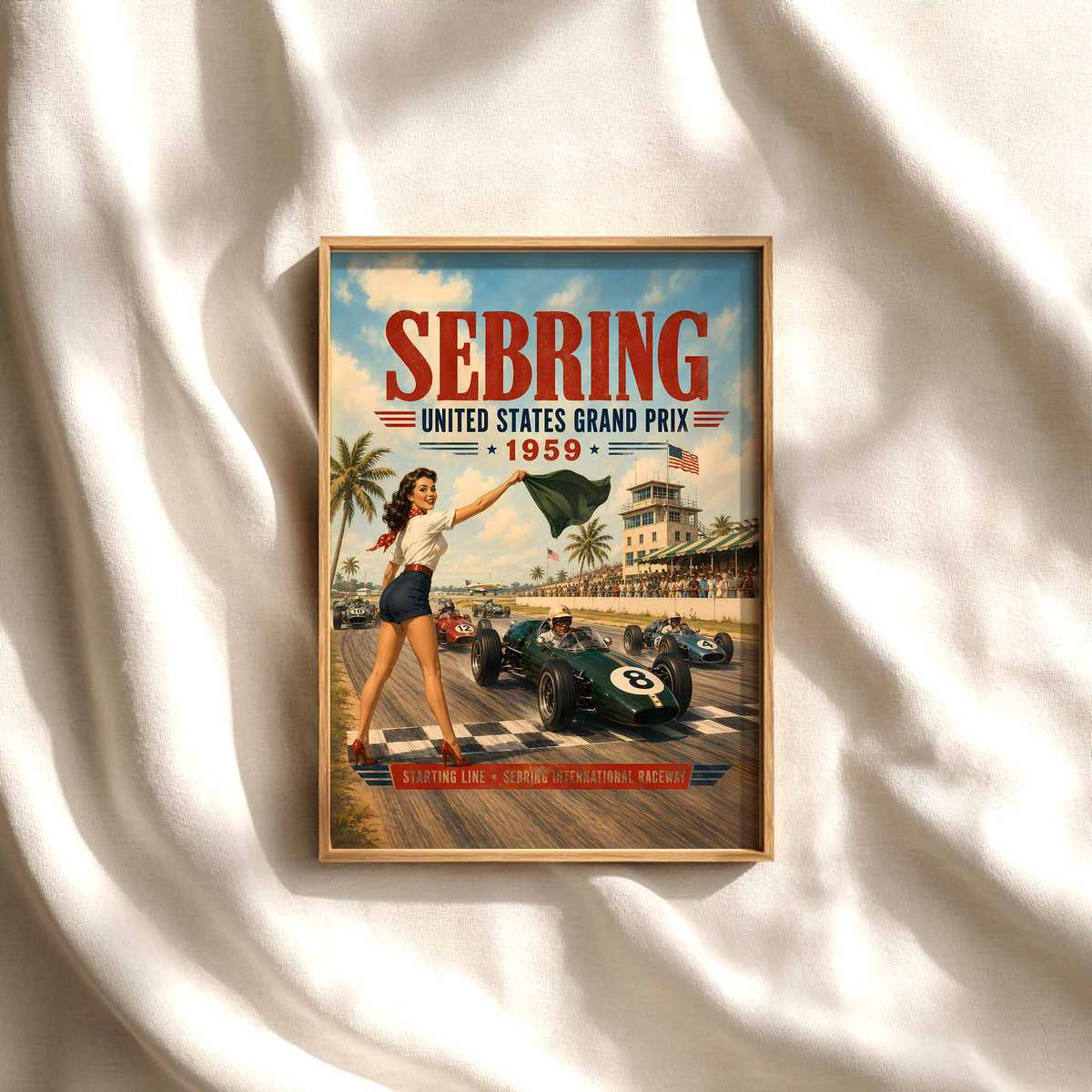
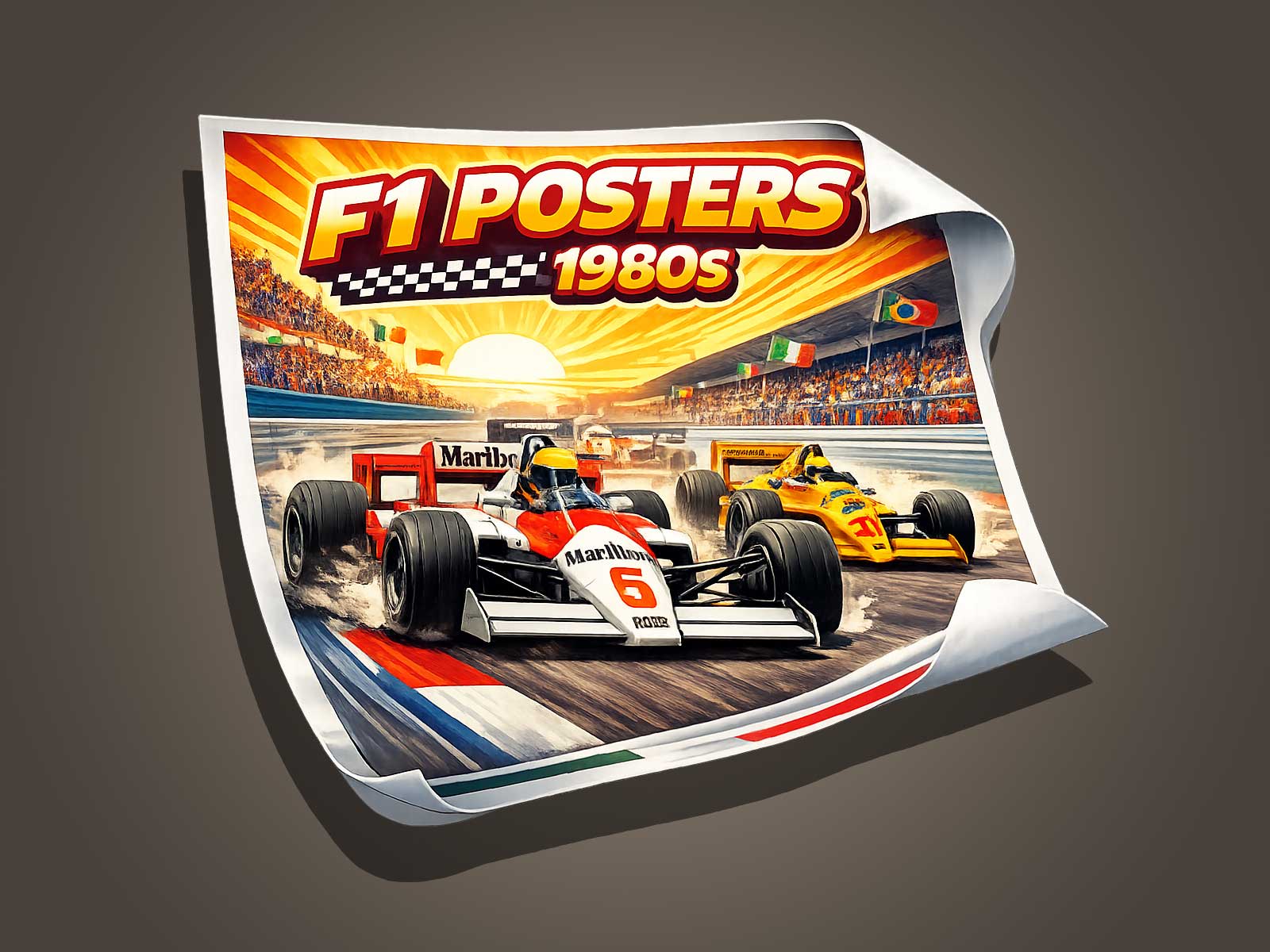
The FW11 was both a racecar and a cultural artifact of its era: sponsorship liveries, carbon-fiber beginnings, and the geometric shapes of 1980s graphic design. A vintage poster treatment leans into these cues rather than obscuring them. By reducing modern crispness—adding film grain, slight desaturation, and period-accurate typefaces—the poster reinforces the FW11’s original context, helping viewers read the image not just as a car but as a historical moment. That context triggers recognition and nostalgia for enthusiasts who remember the era and invites younger audiences to perceive the car as a recovered relic.
Visual memory: how aesthetic cues reconnect viewers to the past
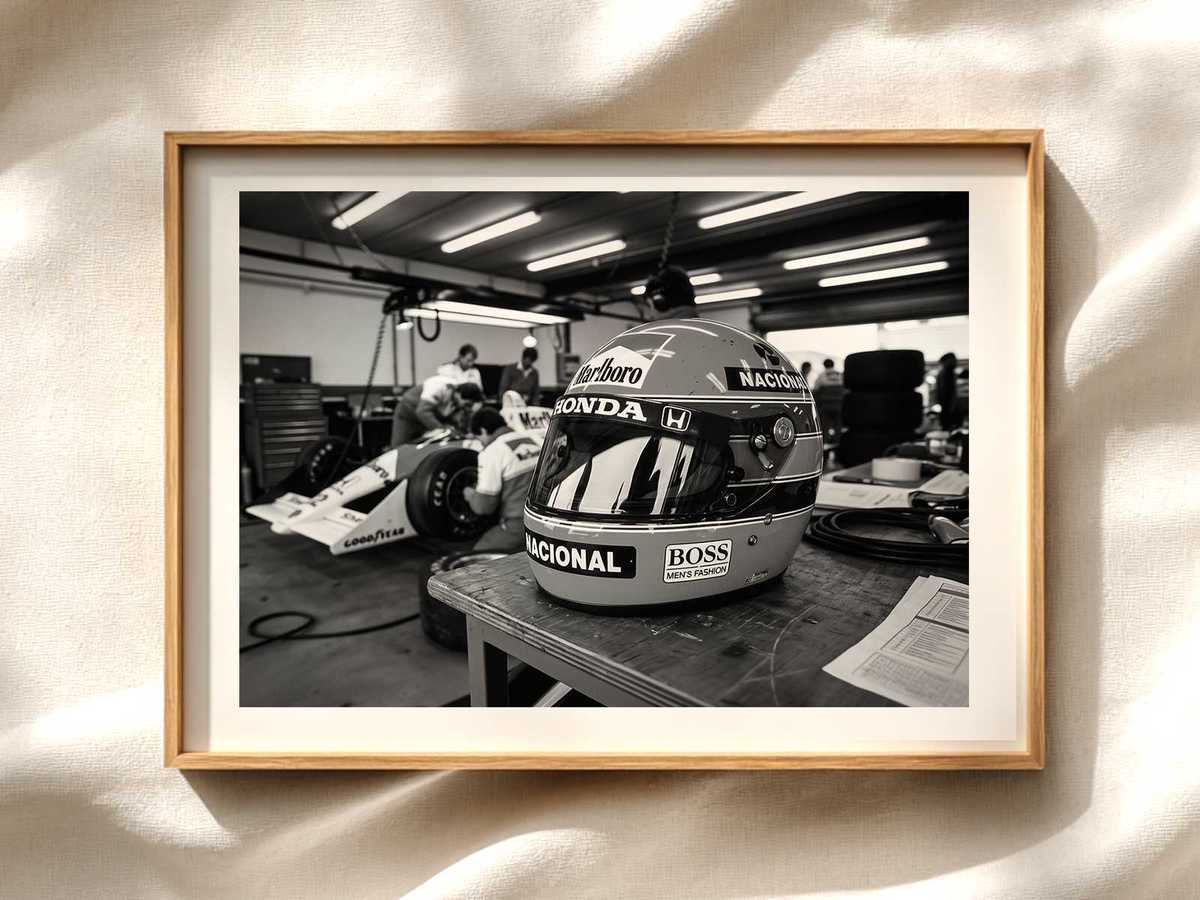
Visual memory depends on cues: color palettes, texture, and typography anchor recollection. A 1980s-inspired poster for the FW11 uses warm film tones, halation around highlights, and analog grain to mimic the photographs and print materials of the period. These cues operate like mnemonic triggers—viewers don’t need an explicit date to feel the 1980s; the aesthetic does that for them. For fans of Formula 1 champions and motorsport history, such triggers make the FW11’s story more immediate and emotionally resonant.
Patina as narrative: why wear matters
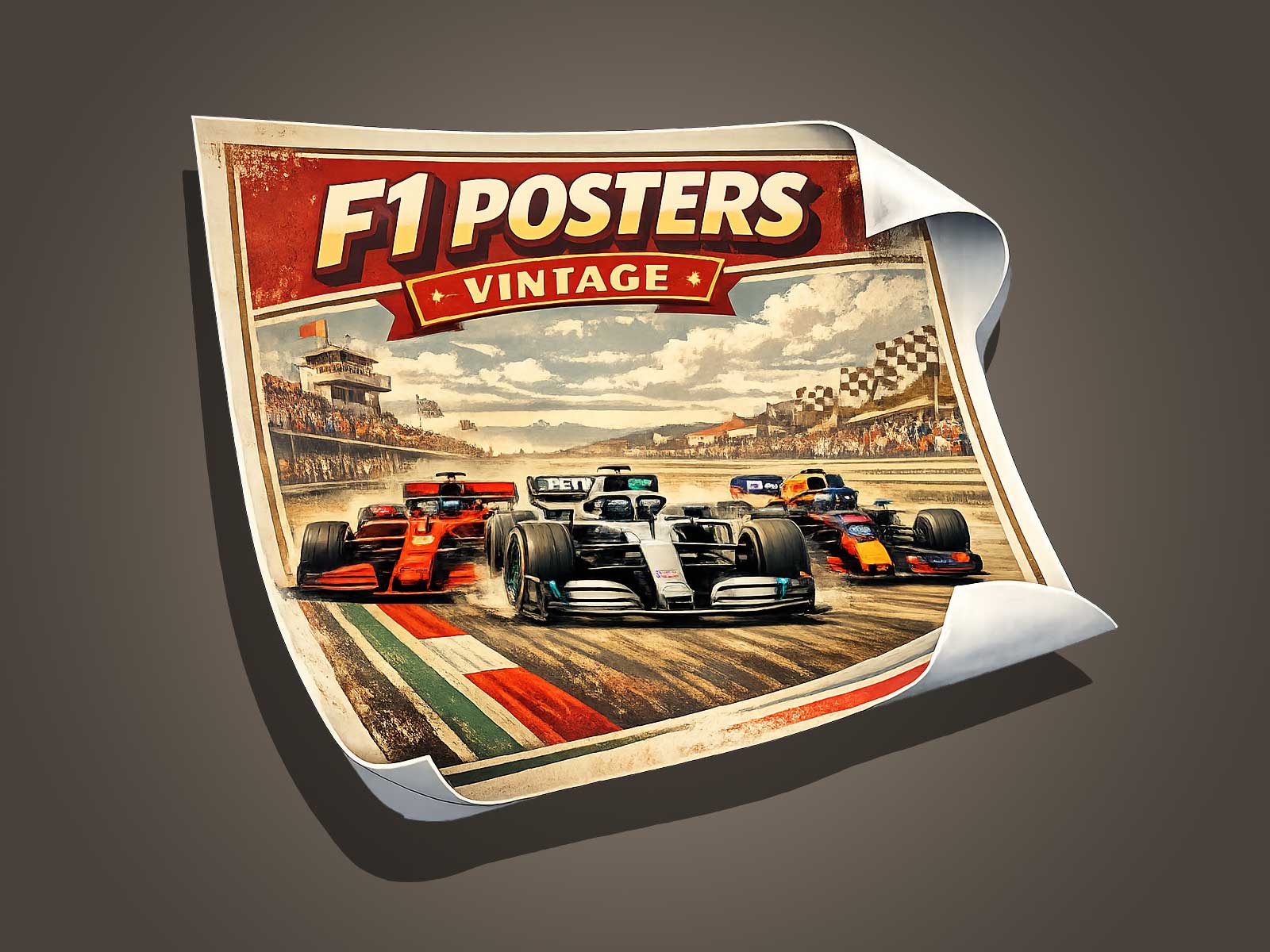
Patina—subtle signs of age—transforms an image from a pristine reproduction into an artifact that suggests a life lived. In poster design, controlled patina can include edge fading, paper texture overlays, and micro-scratches that evoke decades of handling. For the FW11, these treatments imply a narrative: this car has been seen on circuits, in magazines, and in the hands of fans. That implied history increases the perceived authenticity of the image and deepens its emotional weight as an object connected to the lineage of Formula 1 champions.
Heritage value: collectible appeal and cultural significance
When a poster emphasizes age and provenance, it directly affects how collectors appraise it. A vintage-style FW11 poster signals heritage—an artifact representing a championship era, technological milestones, and iconic drivers. This helps the piece function both as wall art and as a collectible. The aesthetic choices—limited palettes, numbered editions, or period-accurate typography—can be deliberately used to enhance scarcity and desirability without fabricating history.
Design elements that work best for 1980s-inspired FW11 posters
- Color grading: muted primaries with warm highlights to emulate film stock.
- Texture: subtle paper grain and edge wear to suggest age without obscuring detail.
- Typography: sans-serifs or condensed display types common in 1980s motorsport posters.
- Composition: use of negative space and geometric framing that mirror period advertising.
- Limited palette prints: using two- or three-color screen-print techniques for authenticity.
Balancing accuracy and artistry
Successful heritage posters respect historical details—livery colors, sponsor logos, wheel and wing shapes—while applying artistic filters that evoke rather than falsify the past. The goal is to amplify the FW11’s identity, not rewrite it. Designers should avoid over-cleaning or heavy-handed distressing that would obscure key features that enthusiasts use to verify authenticity.
Practical tips for collectors and designers
Collectors: seek posters that clearly state print technique, edition size, and whether any distressed effects are intentional. Authenticity notes or provenance descriptions add confidence.
Designers: reference period source material—race programs, magazine covers, and broadcast stills—to ensure that typographic and color choices are historically informed. Use texture sparingly to maintain legibility and iconic detail.
Conclusion: a poster as preserved memory
Recasting the Williams FW11 through a 1980s vintage F1 aesthetic does more than create a pretty image. It constructs a preserved memory—an aestheticized artifact that communicates lineage, evokes nostalgia, and increases heritage value. For fans of Formula 1 champions and motorsport history, such posters serve as both decorative statements and material connections to a pivotal era in racing.
Explore period-inspired FW11 posters and more Formula 1 champions artwork at our curated listings, including designs that echo the textures and tones discussed here: https://www.etsy.com/listing/4439067670/formula-1-poster-f1-gifts-formula-one