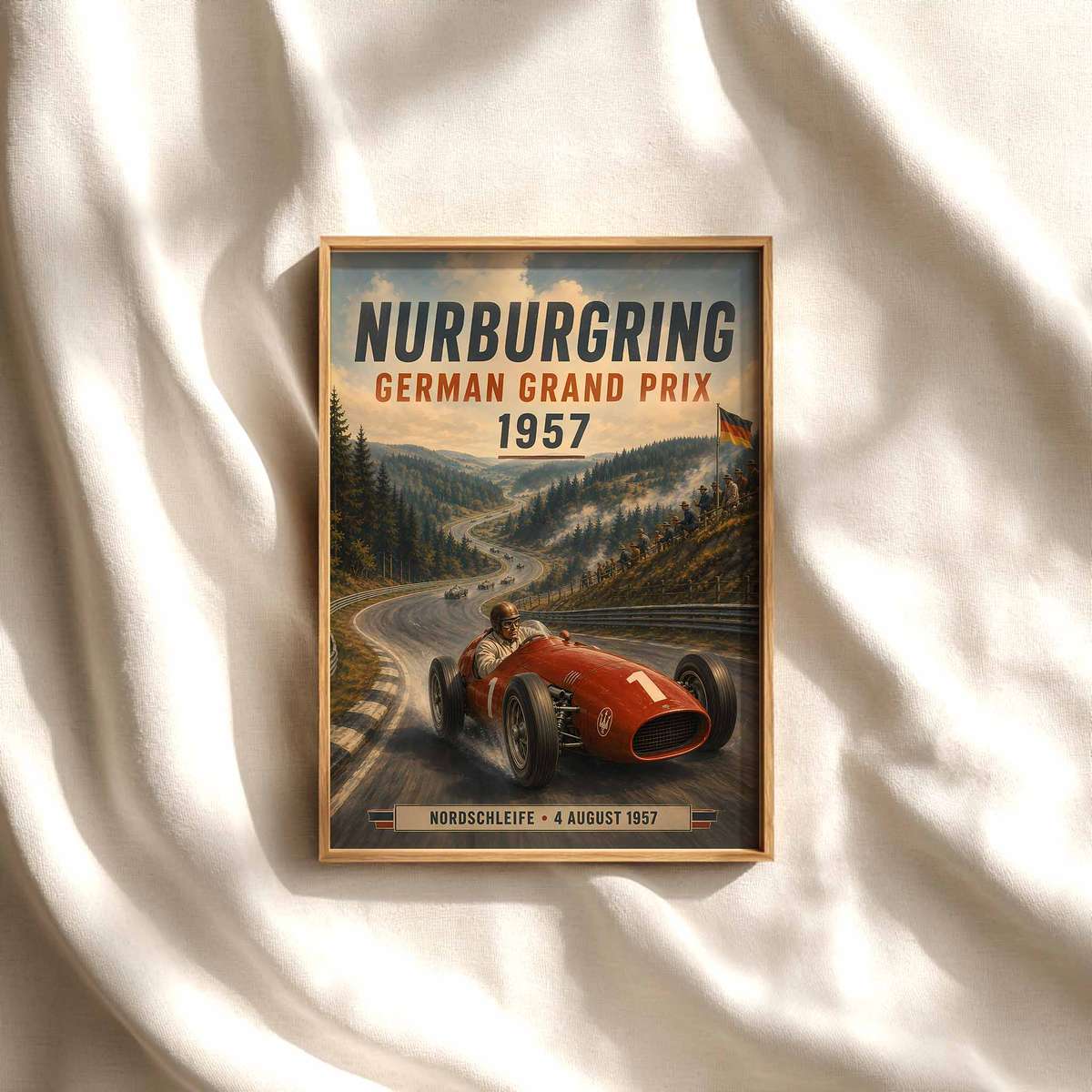
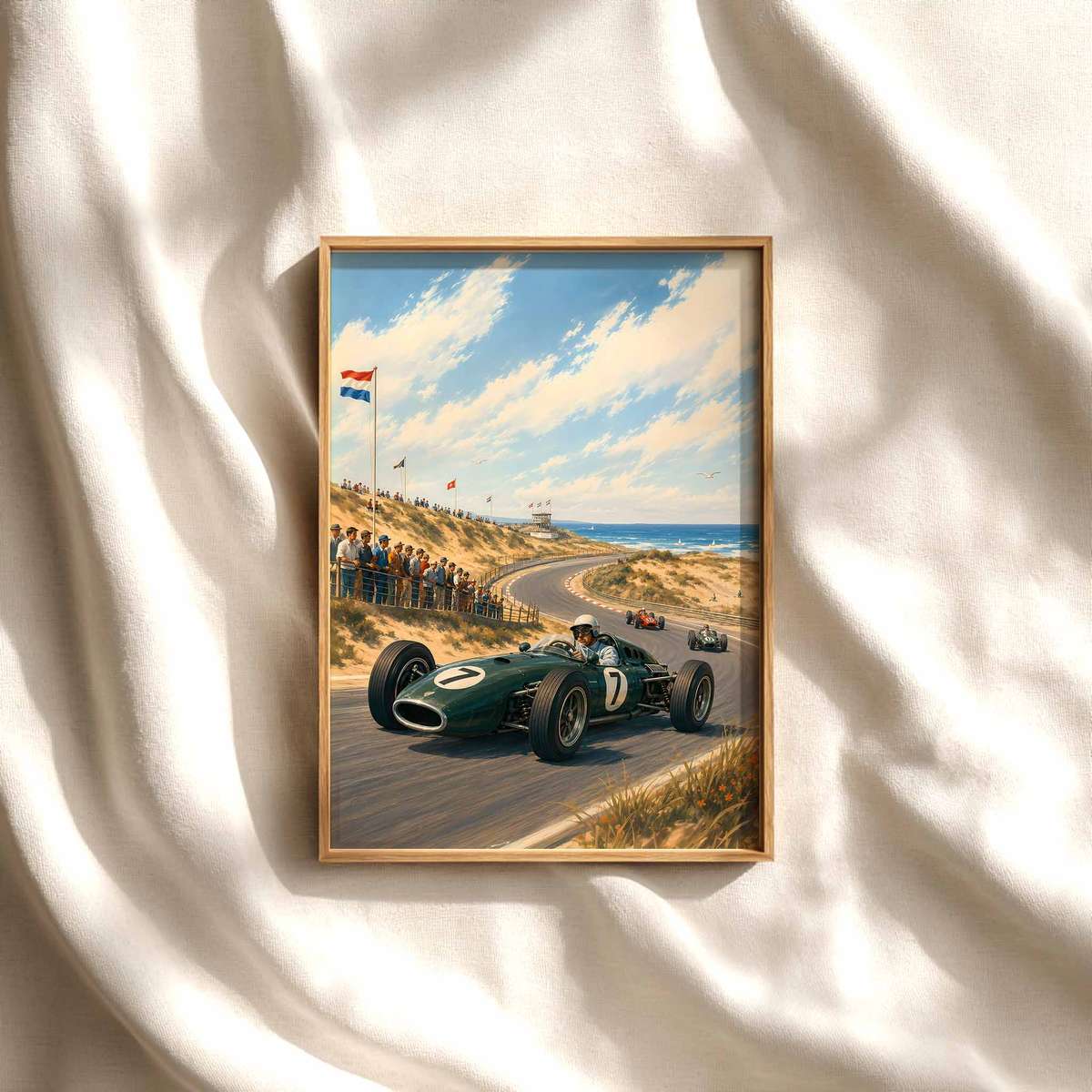
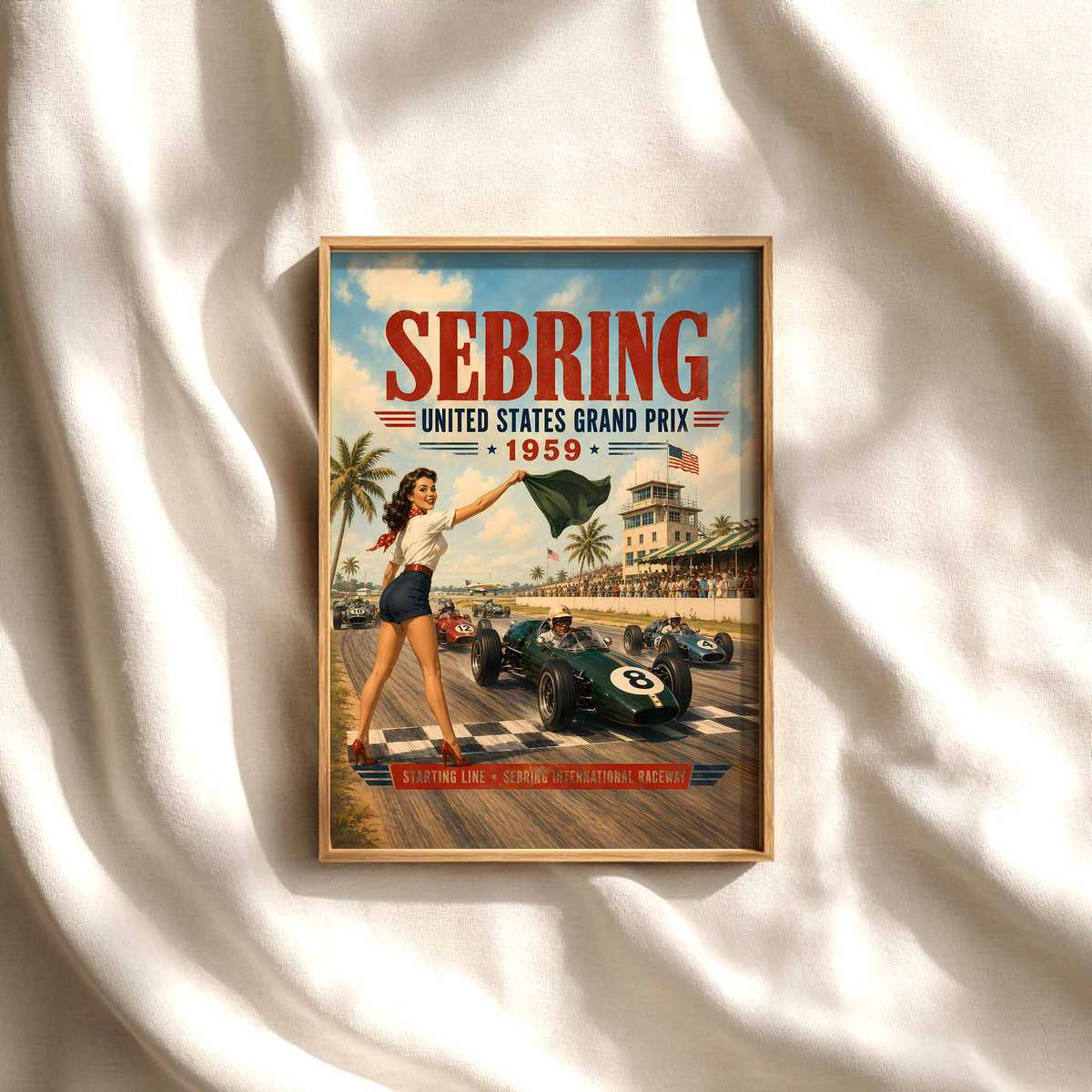
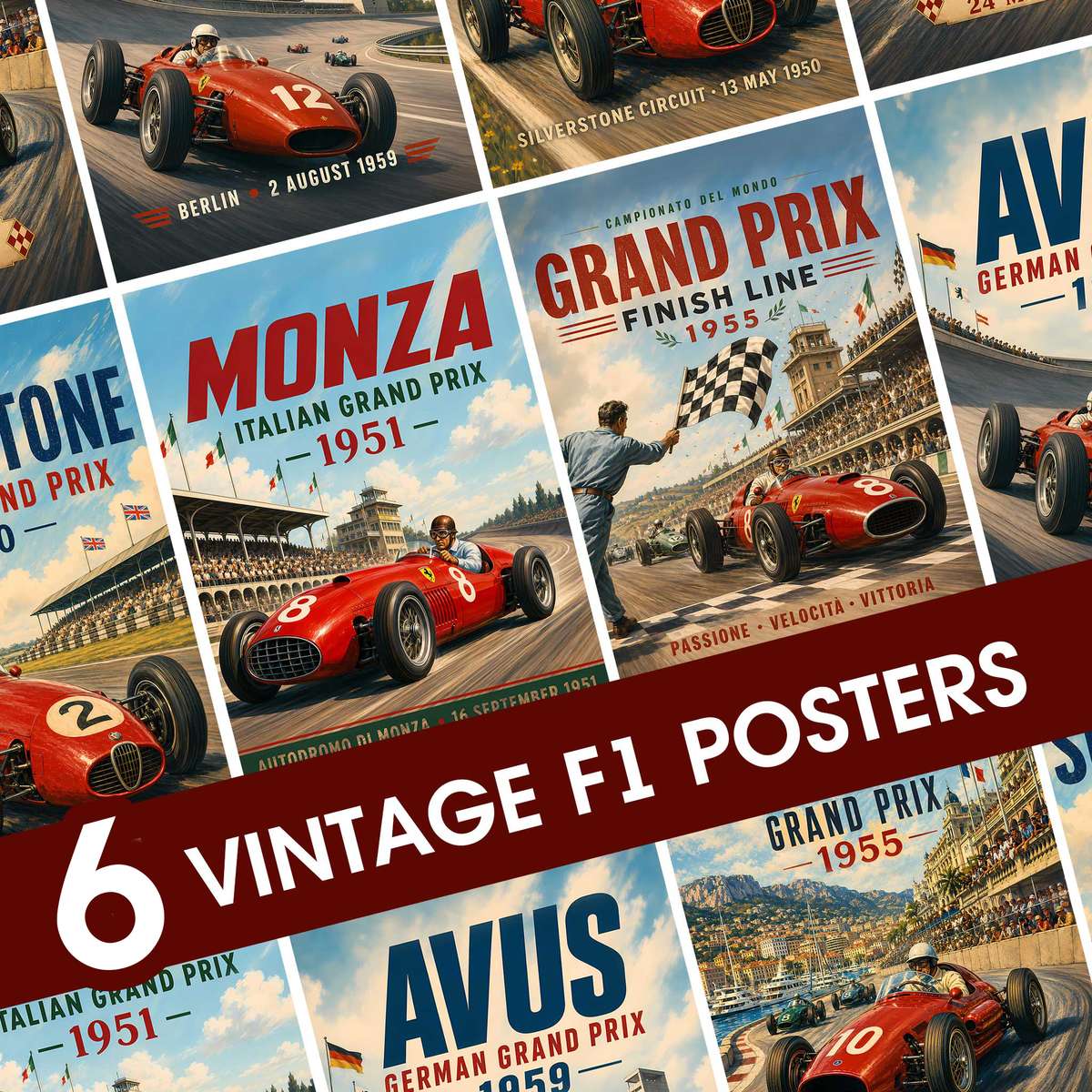
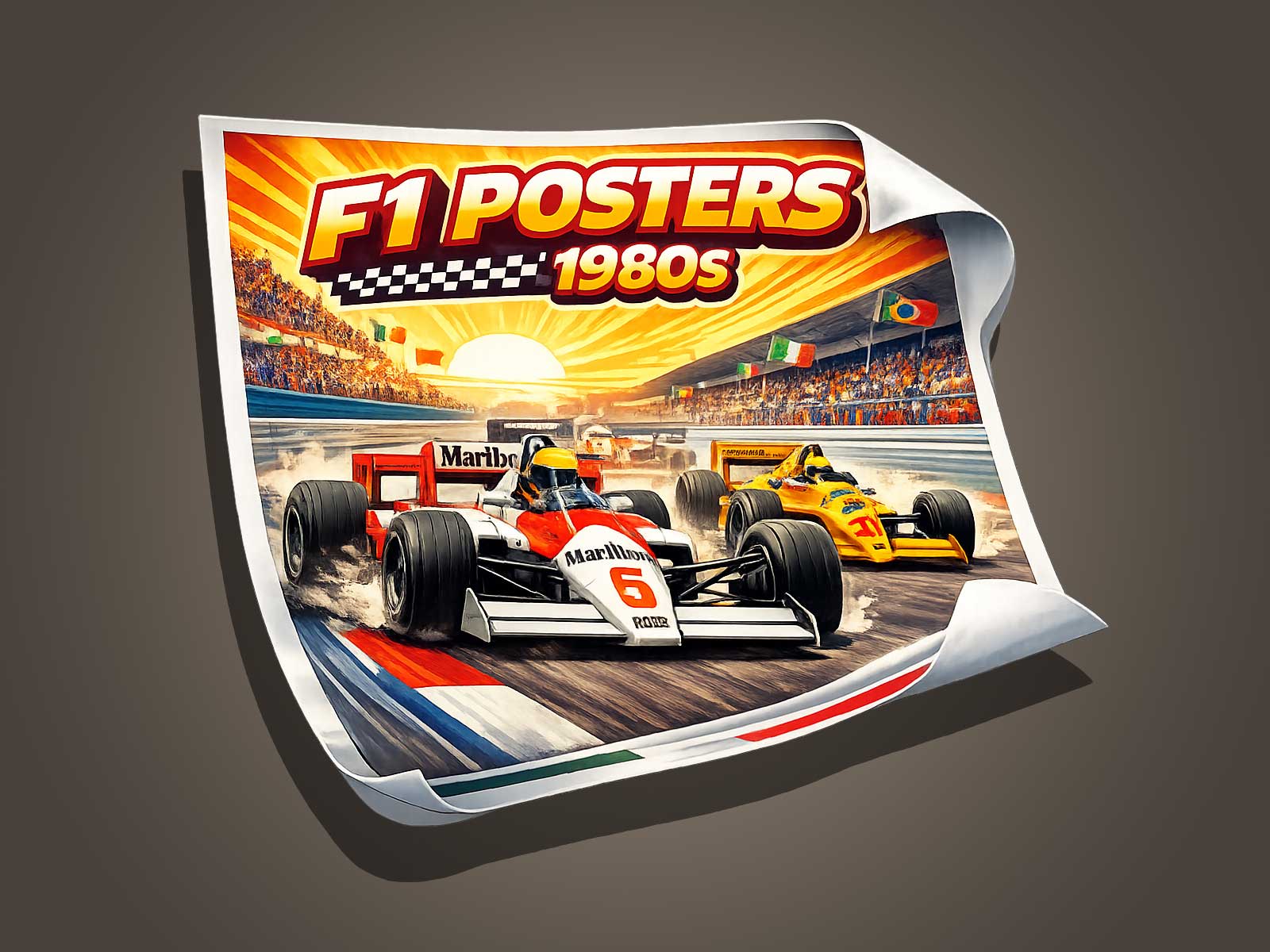
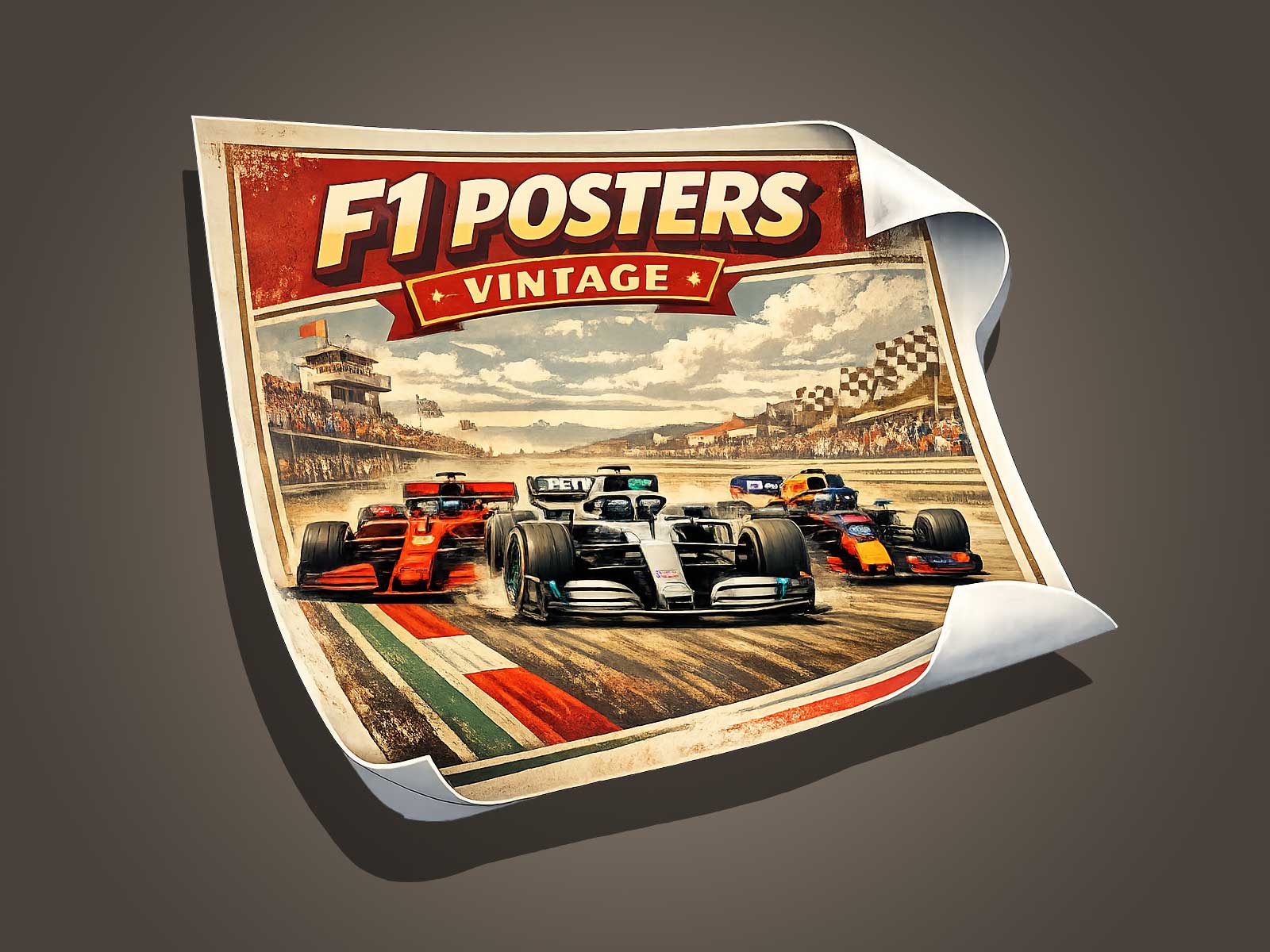
Formula 1 grand prix posters viewed through an 1980s vintage lens do more than decorate a wall: they activate visual memory, reveal the patina of motorsport history, and transform a race image into a cultural artifact. This article examines why a poster that channels 1980s F1 aesthetics—bold graphics, film grain, and period typography—gains a particular depth and heritage value for collectors, fans, and design historians.
Visual Memory: How the 1980s Look Reawakens Grand Prix Moments
Visual memory is central to how we experience motorsport imagery. The 1980s introduced a distinctive visual language in Formula 1—analogue photography, saturated color palettes from slide film, and strong graphic motifs on team liveries. When contemporary posters adopt these cues, they don’t just imitate a style: they trigger recognition of specific eras, drivers, and circuits. That recognition is especially powerful for fans who lived through those seasons, and it also offers a convincing retro context for younger enthusiasts discovering F1’s past.
Patina and Authenticity: Design Techniques That Suggest Age
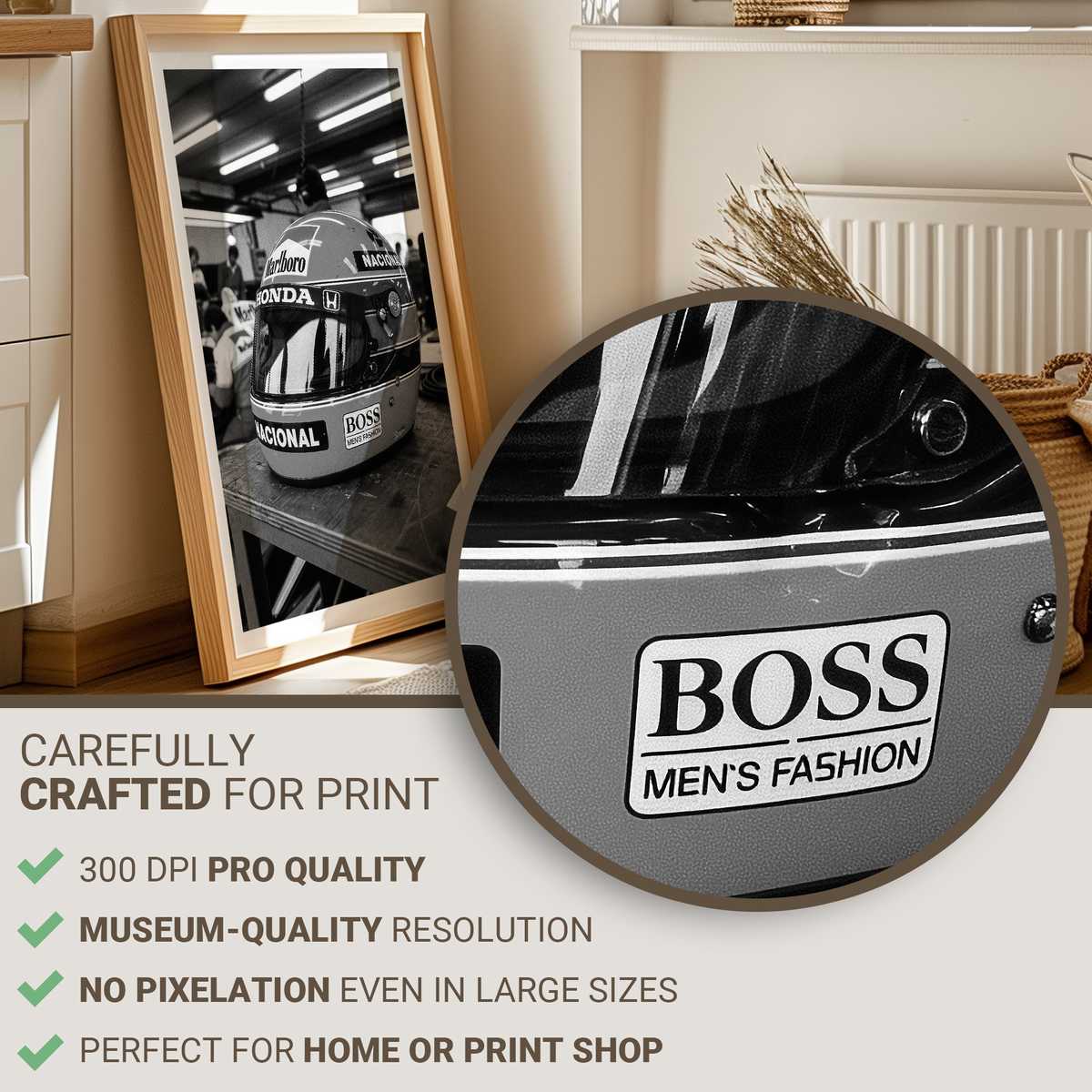
Patina in poster design—subtle fading, simulated film grain, textured paper effects, and slightly imperfect printing—creates the impression of an object that has endured. These treatments do more than add aesthetic charm; they make the poster feel like an authentic relic. A well-crafted 1980s-inspired F1 poster will balance deliberate wear with high-quality reproduction, so the image reads as both historically resonant and suitable for contemporary display.
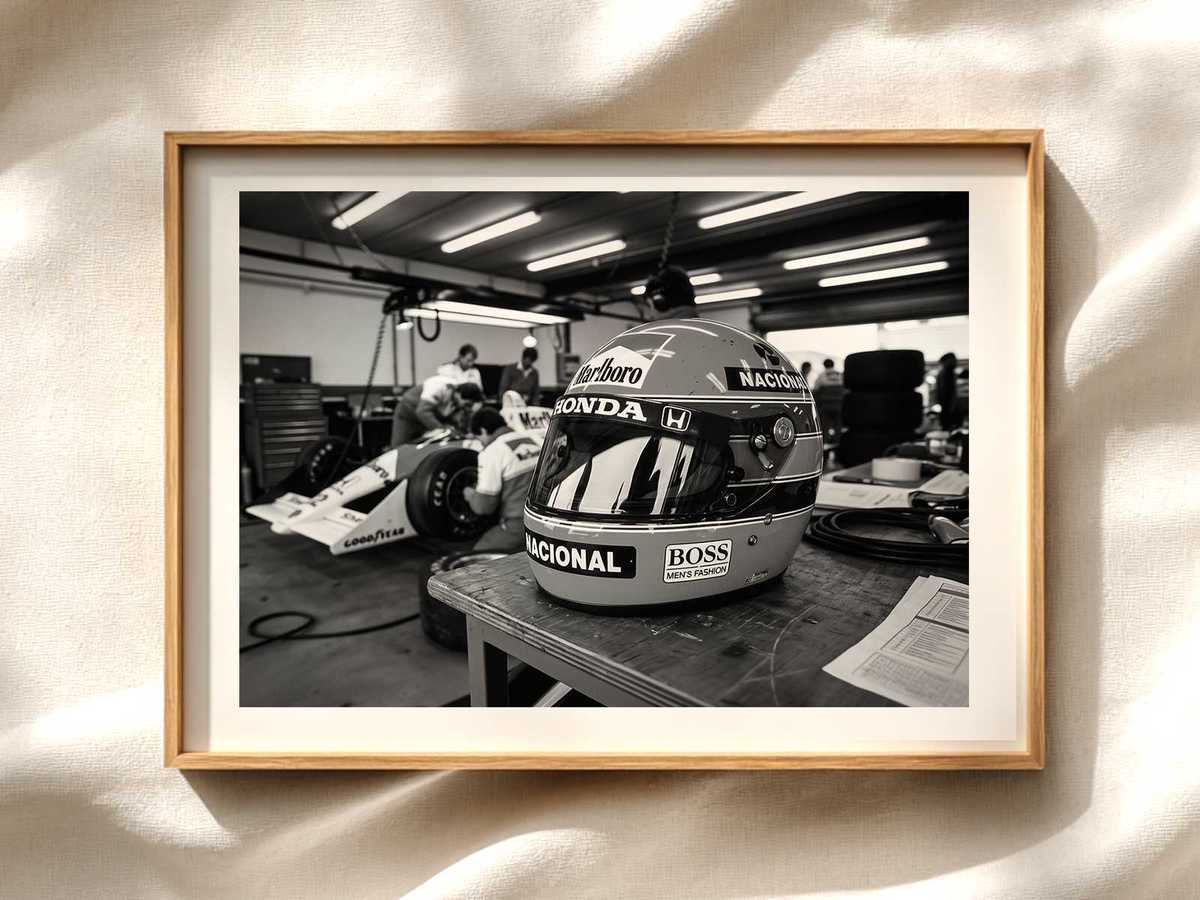
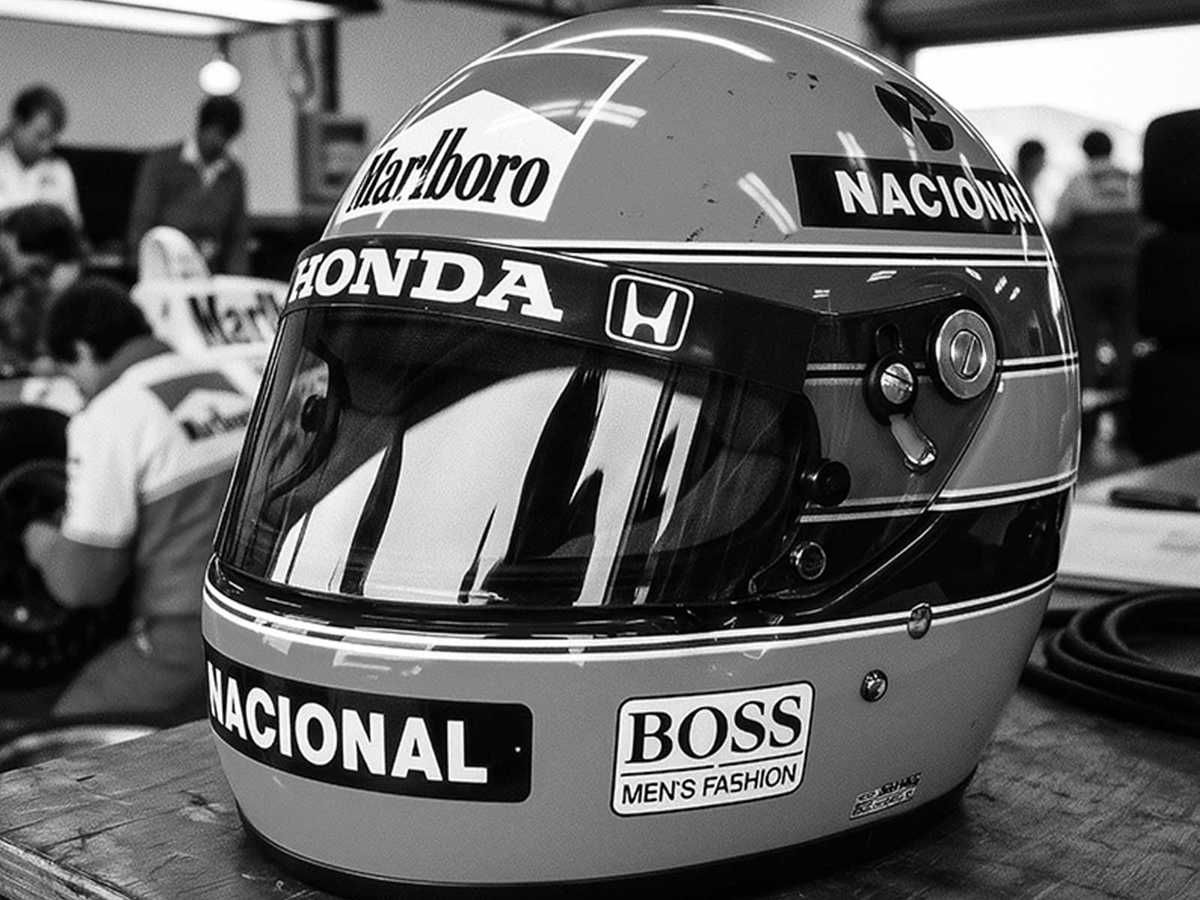
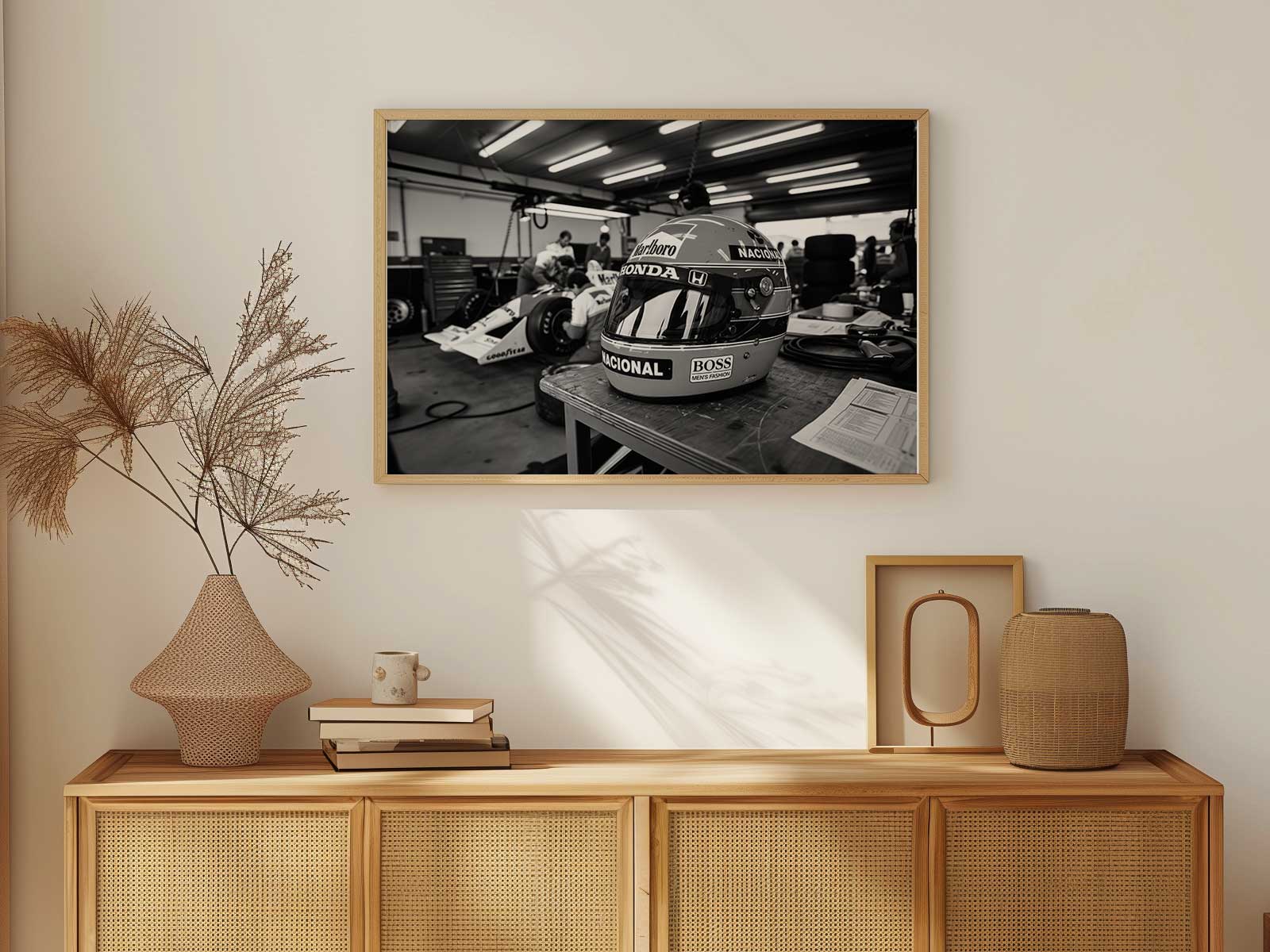
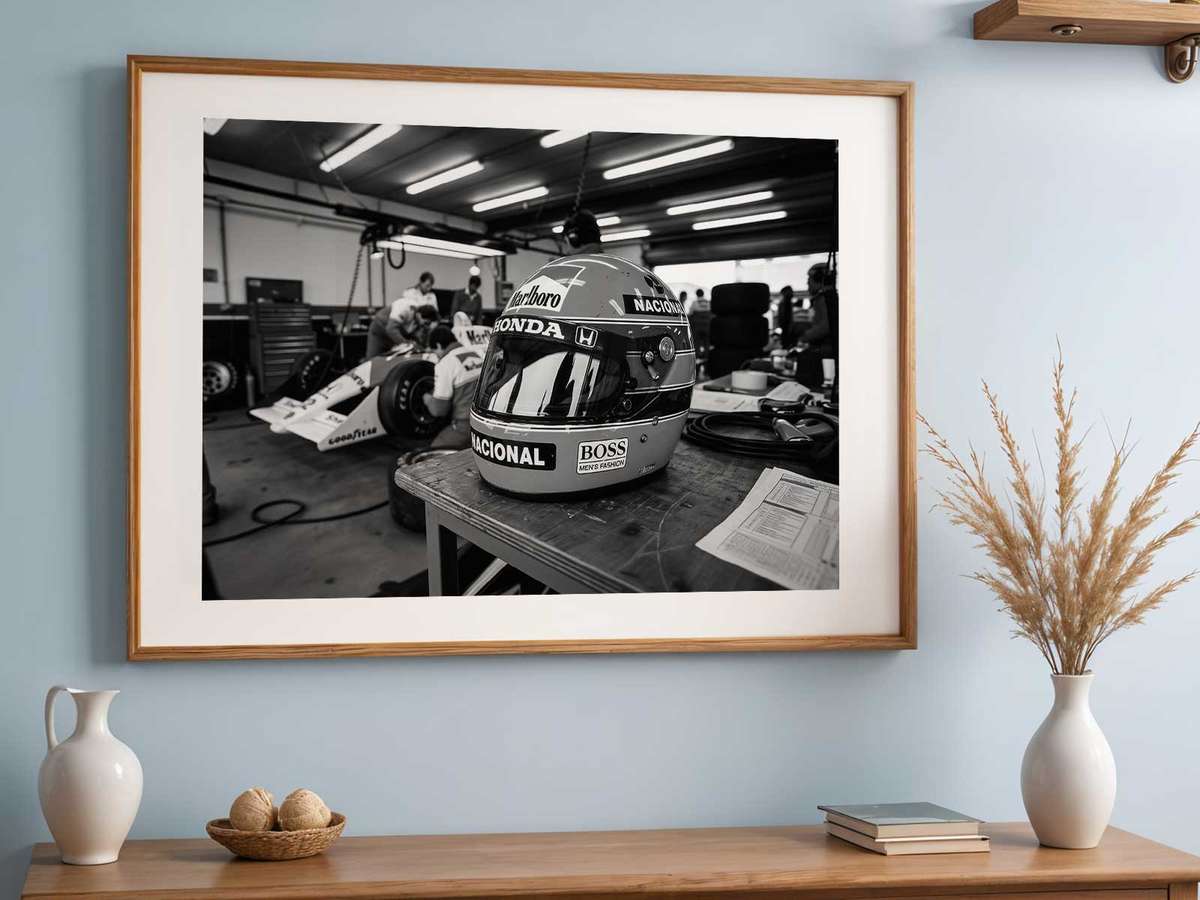
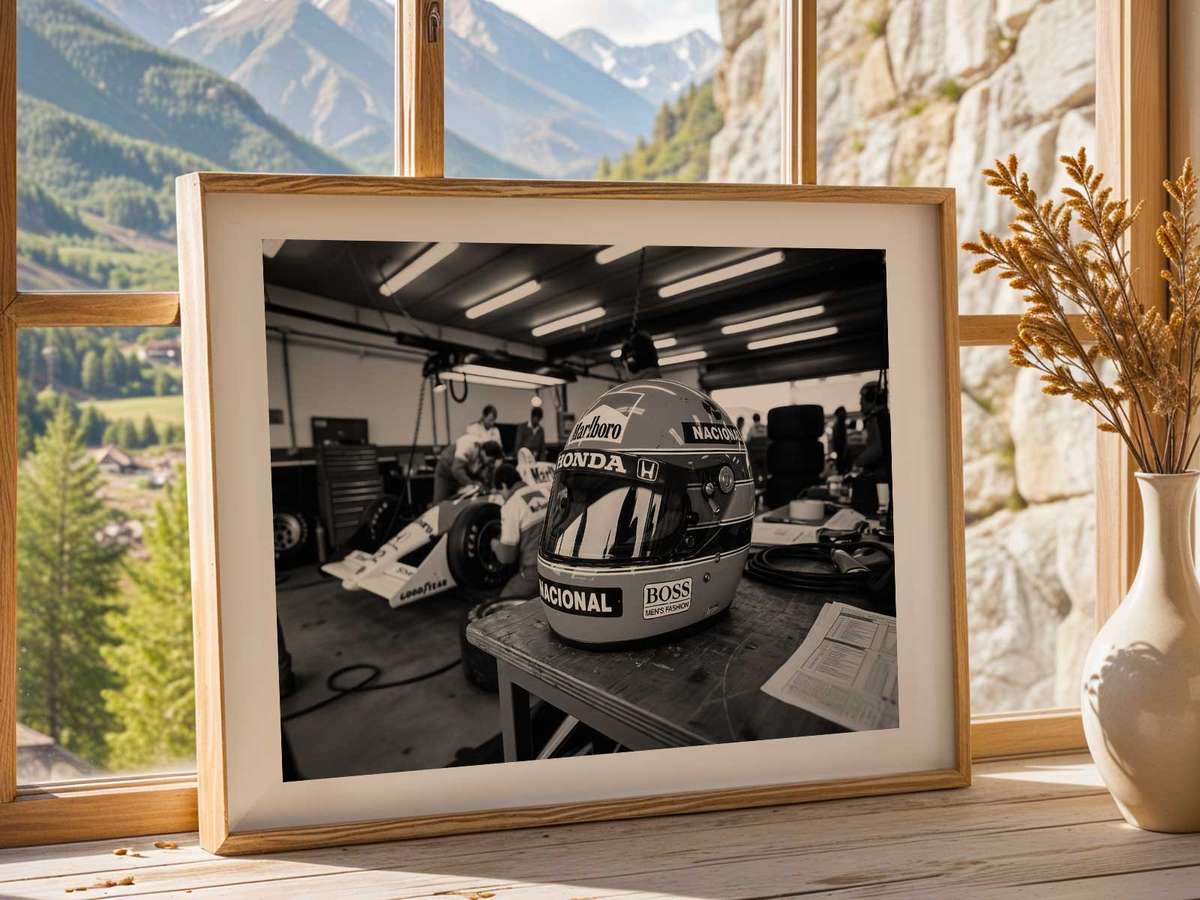
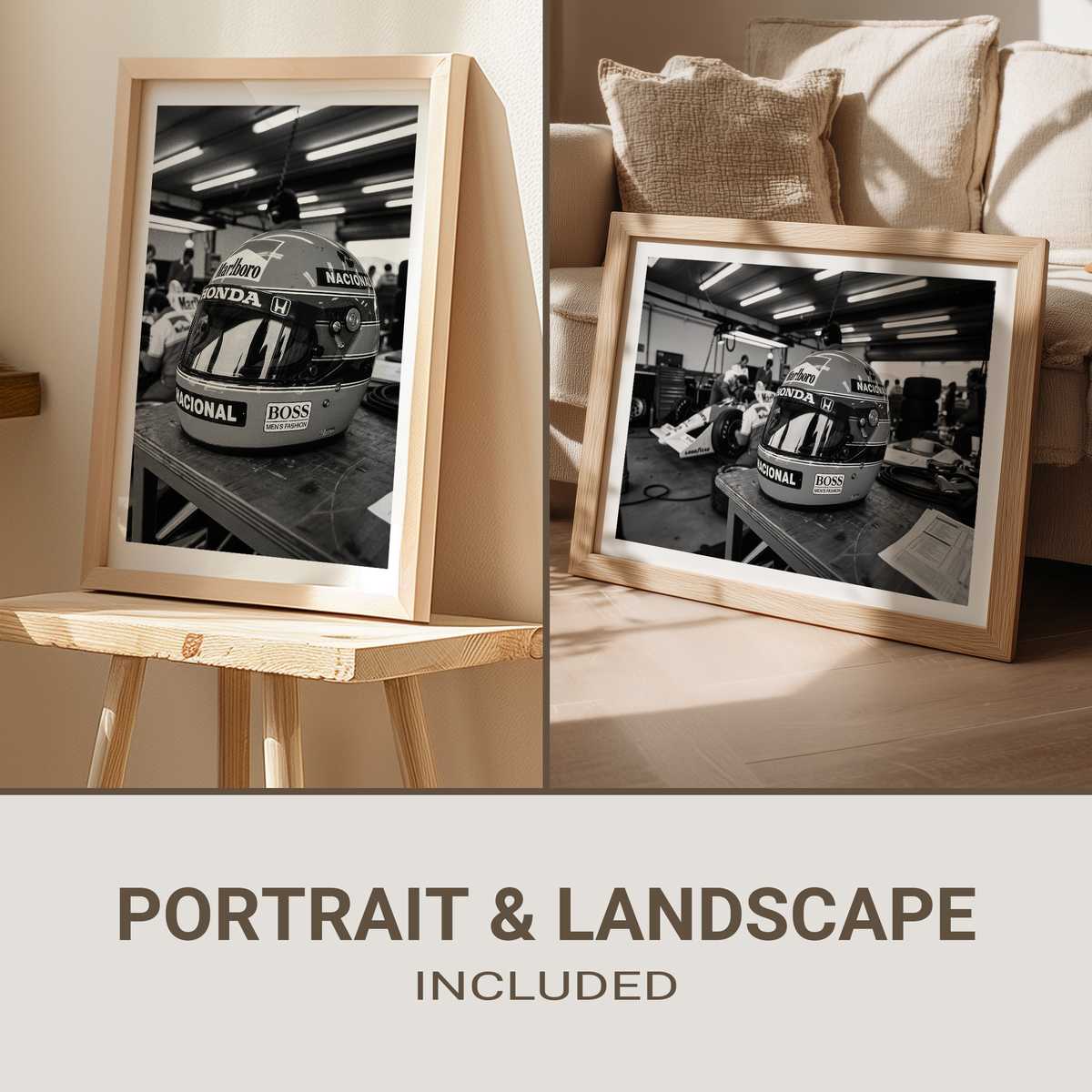
1980s Formula 1 posters often emphasize drama: low-slung cars, dramatic camera angles, and close-up helmet portraits. Composition choices that highlight a driver’s silhouette, the curve of a wing, or the texture of a helmet strap contribute to a poster’s narrative weight. For instance, isolating a helmet against a minimalist backdrop turns a fleeting on-track moment into a timeless emblem, converting seasonal sporting imagery into a piece of cultural heritage.
Typography and Graphic Language: Period Cues That Signal Time and Place
Typography anchors a poster in its era. The 1980s favored condensed sans-serifs, bold numerals, and grid-based layouts for motorsport promotion. Re-using these typographic elements on modern posters signals historical reference without requiring explicit explanation. When combined with era-appropriate color choices—muted neons, petrol blues, or warm sepia tones—type and palette work together to create an immediate sense of period authenticity.
Heritage Value: Why 1980s-Style Posters Become Collectible
Posters that convincingly evoke the 1980s accrue heritage value for several reasons. First, they function as mnemonic devices, preserving and circulating visual cues tied to memorable races and personalities. Second, they occupy a niche between art and memorabilia: attractive enough for interior display, yet specific enough to appeal to motor racing collectors. Finally, limited runs or artist-signed editions that use high-quality materials (archival paper, pigment inks) bridge nostalgia and durable collectibility.
Practical Tips for Collectors and Designers
Collectors should look for credible vintage cues: authentic-looking paper texture, careful use of simulated ageing, and period-correct typography. Watch for print quality—archival materials prolong the life of any intentional patina. Designers creating 1980s-inspired F1 posters should study historical references (race programs, magazine spreads, broadcast frame stills) to capture genuine compositional and typographic traits rather than relying on clichés.
Case Study: Helmet Portraits as Vessels of Memory
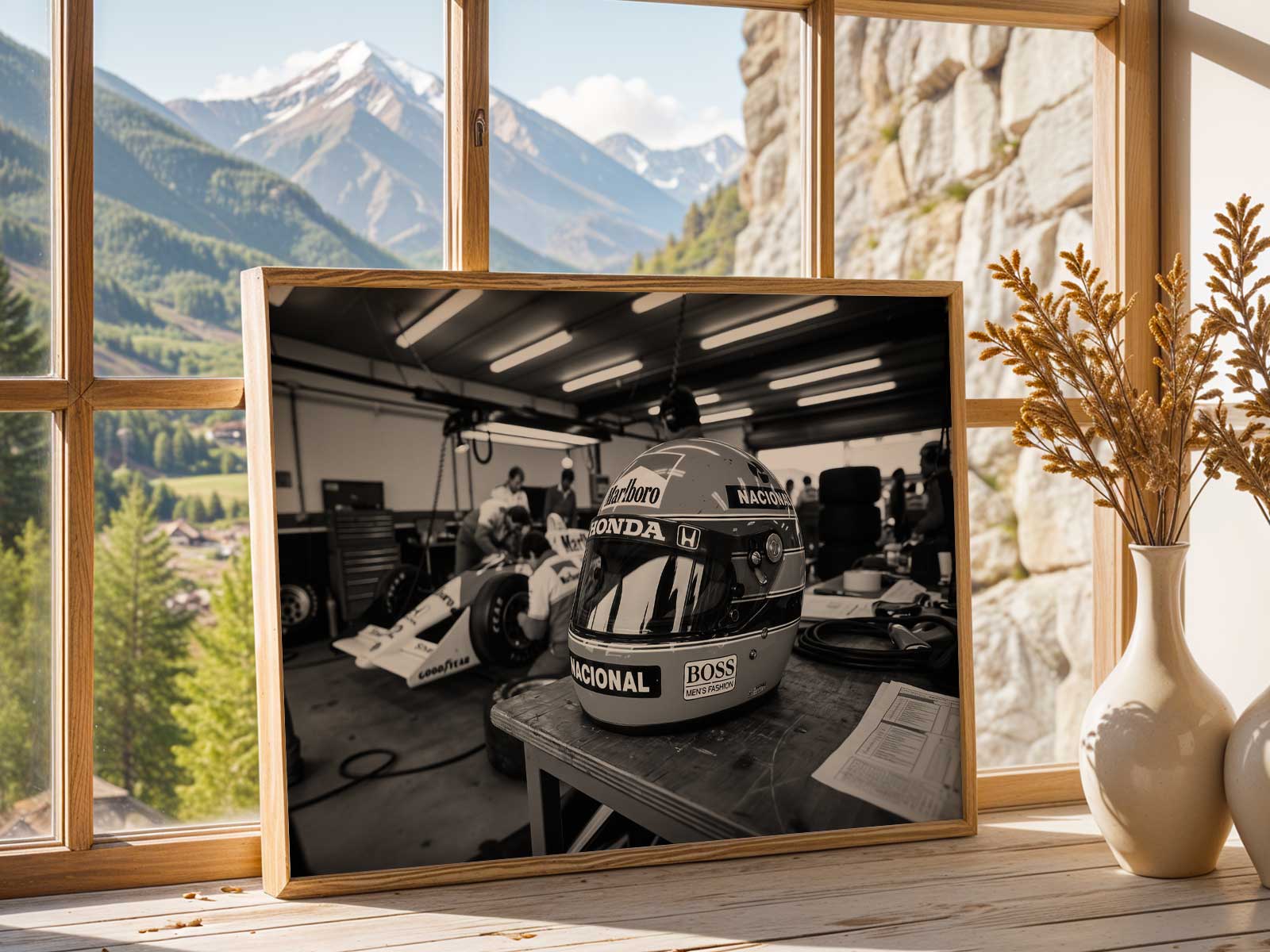
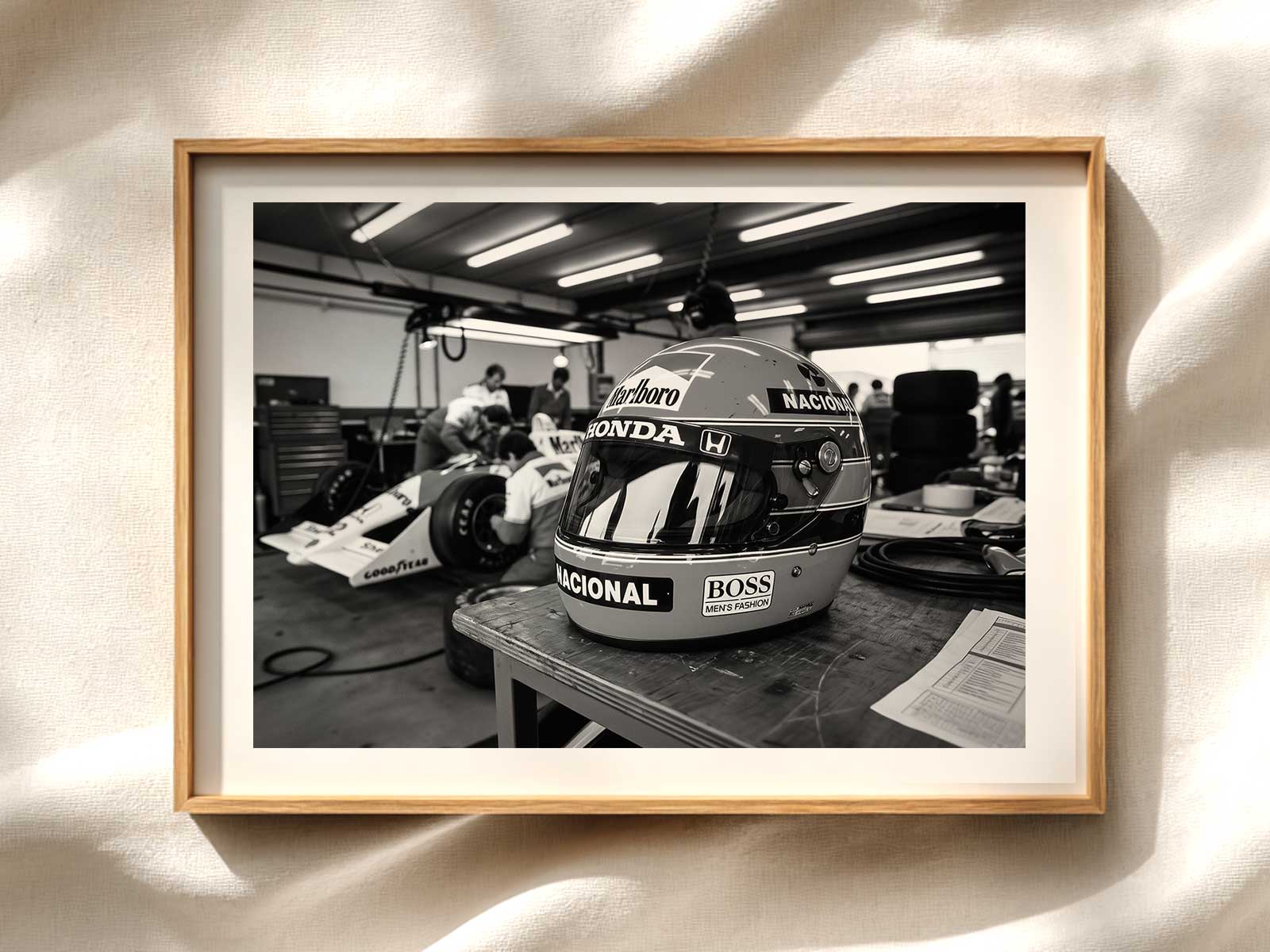
Helmet portraits are a potent example of how a single subject can carry heritage. A helmet rendered with 1980s graphic sensibilities—slight film grain, warm highlight bloom, and restrained typography—becomes more than a depiction of safety equipment. It stands for the driver’s persona, era-specific technology, and the emotive memory of particular races. Such posters function as both homage and historical artifact.
Conclusion: The Enduring Power of Vintage Aesthetics
When designers and producers approach Formula 1 grand prix posters with a clear understanding of 1980s aesthetics and an eye for patina and memory, the result is a poster that transcends decorative purpose. It becomes a curated object of heritage—an image that communicates time, place, and emotional resonance. For fans and collectors, that depth is precisely what turns a poster into a lasting piece of motorsport culture.
Explore vintage-inspired pieces like Ayrton Senna helmet posters to see how period aesthetics and craftsmanship combine to produce posters with meaningful historical presence: https://www.etsy.com/listing/4433926078/ayrton-senna-poster-formula-1-poster