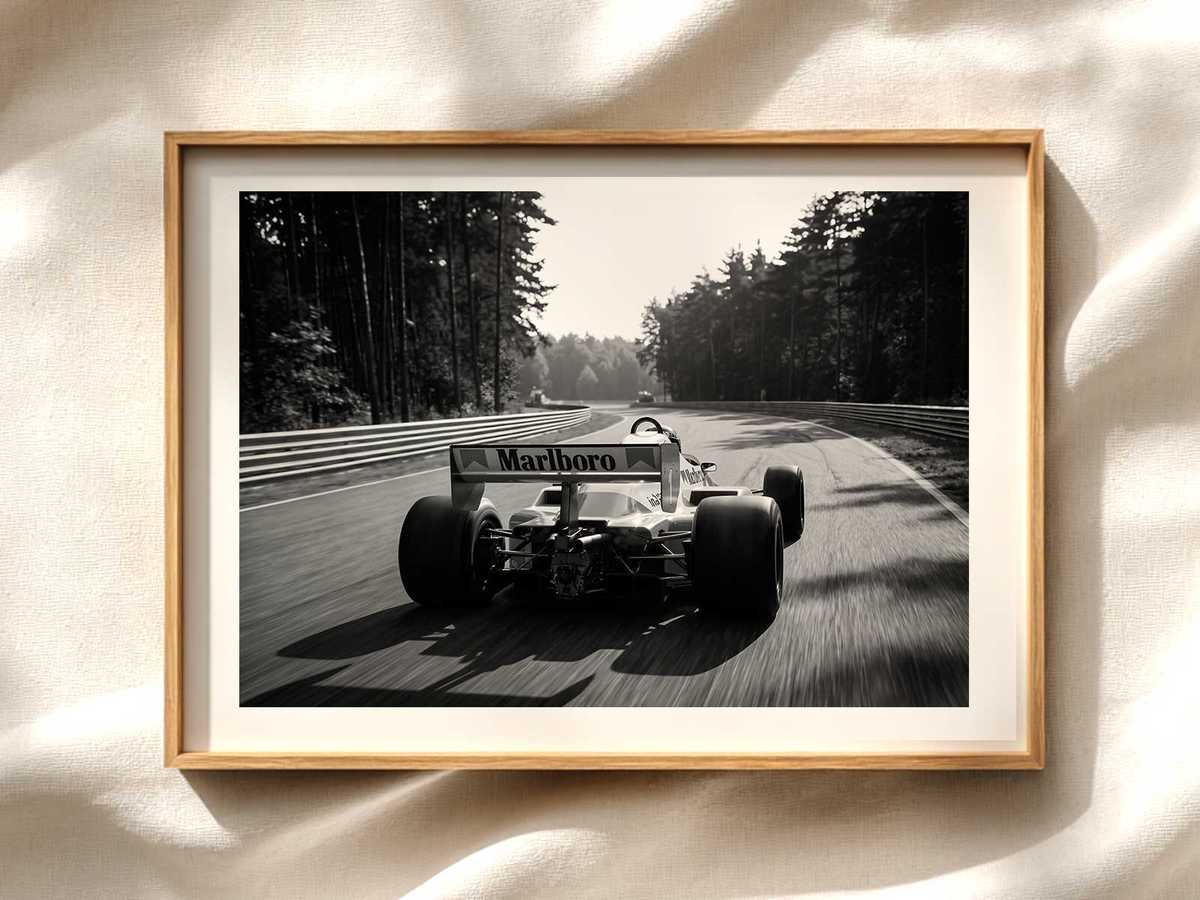
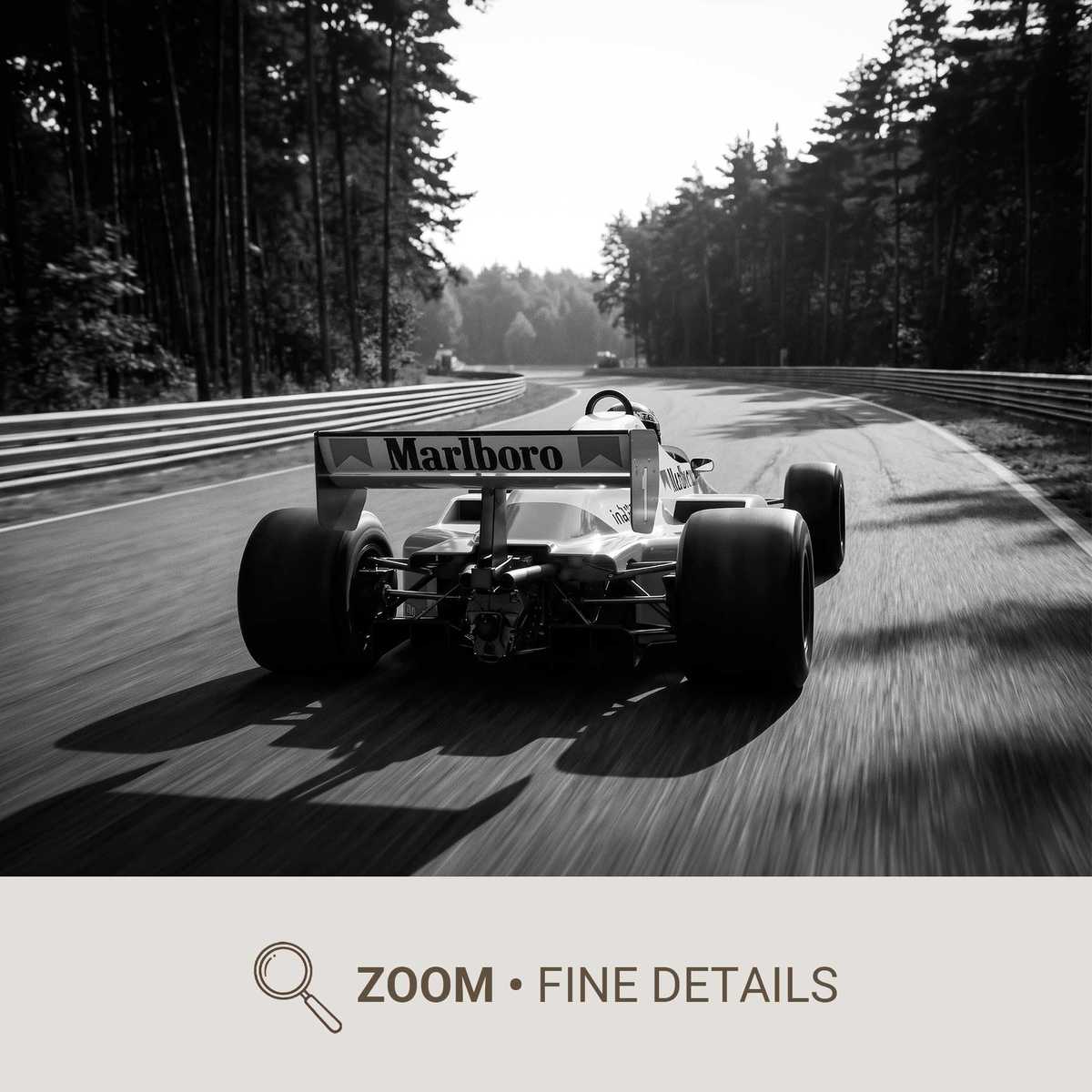
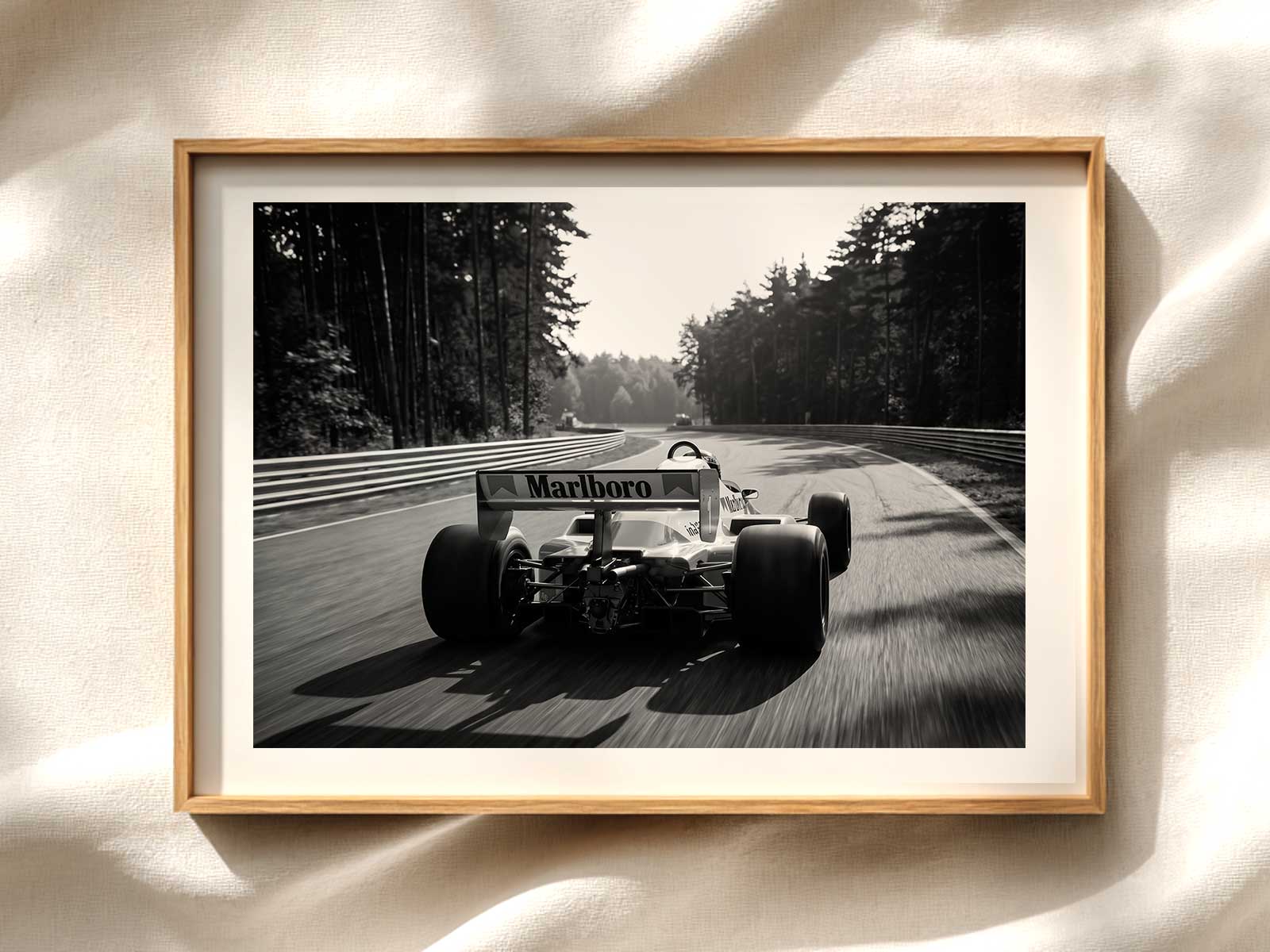
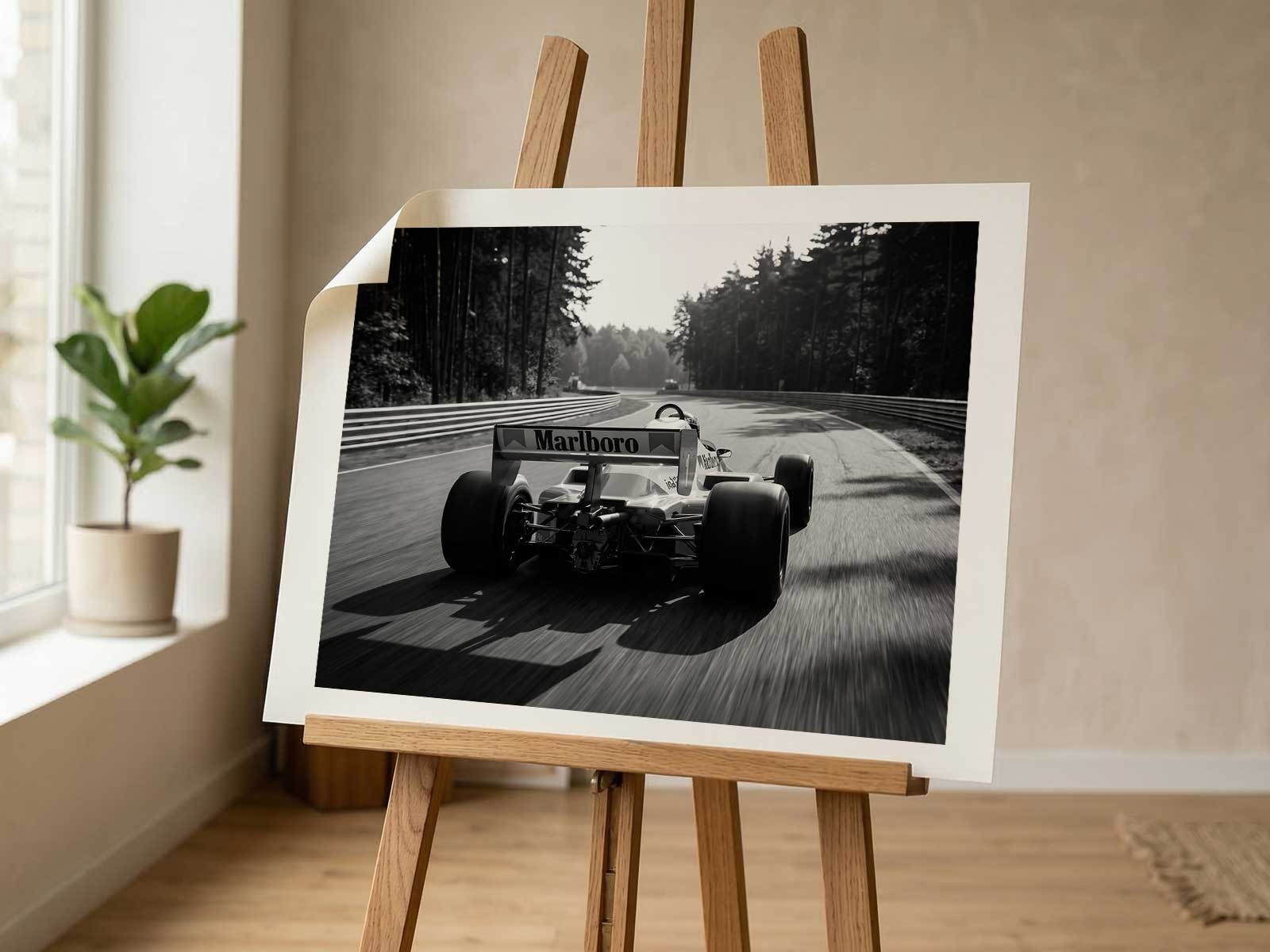
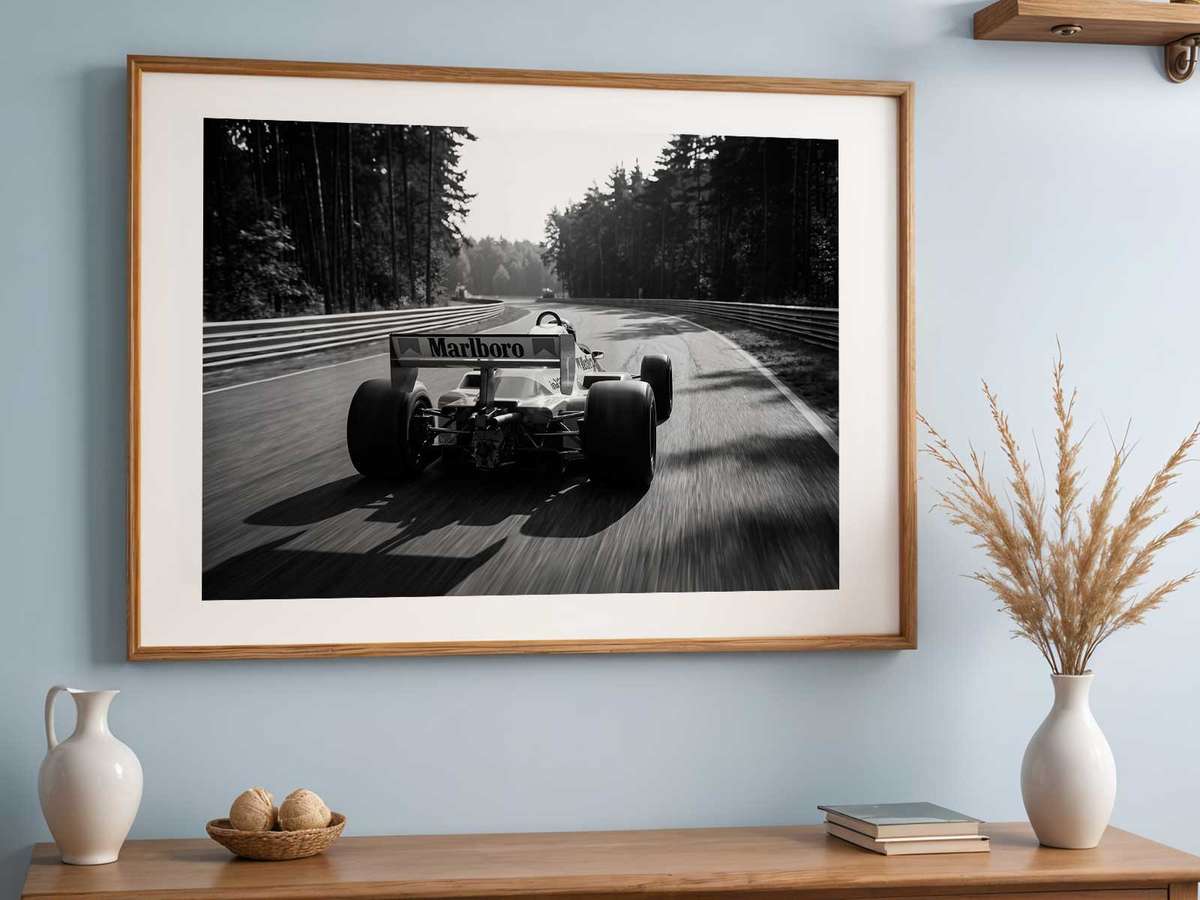
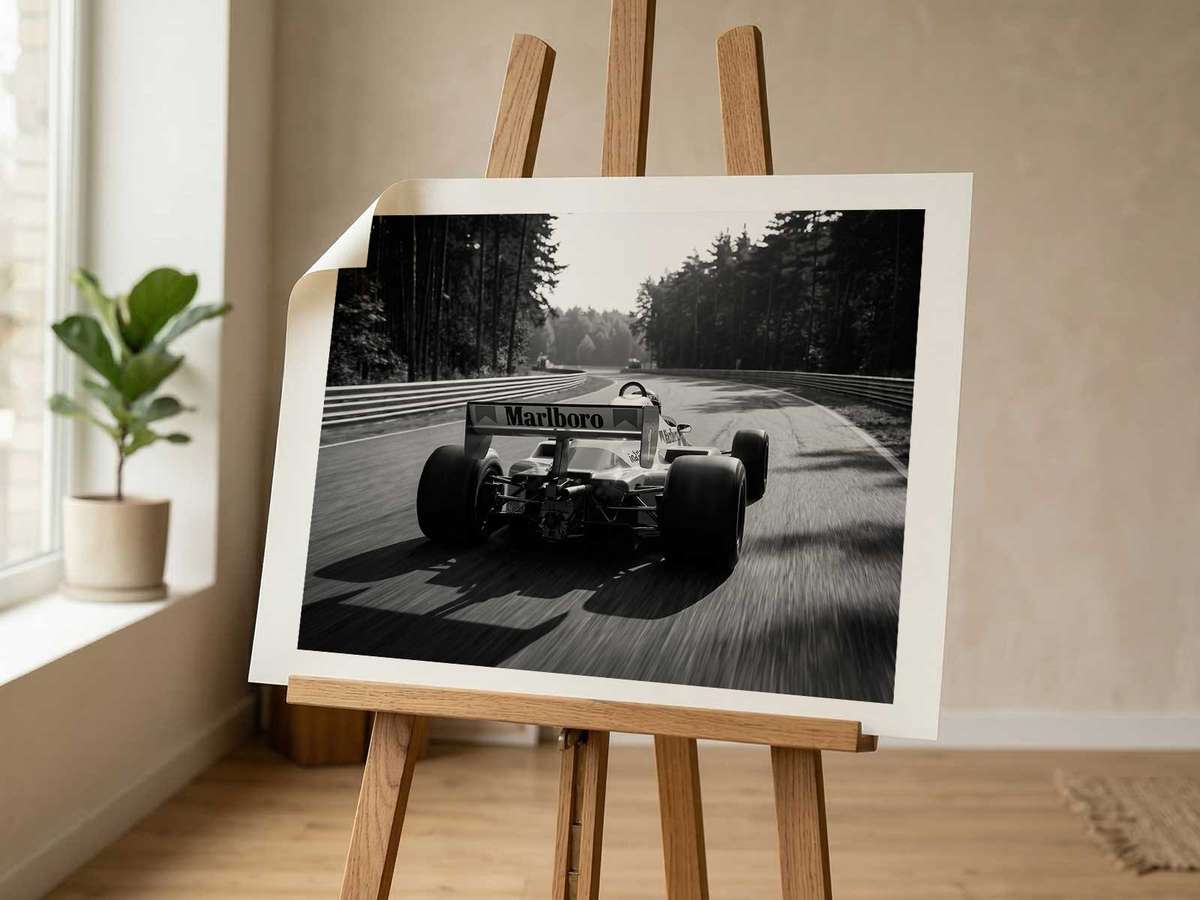
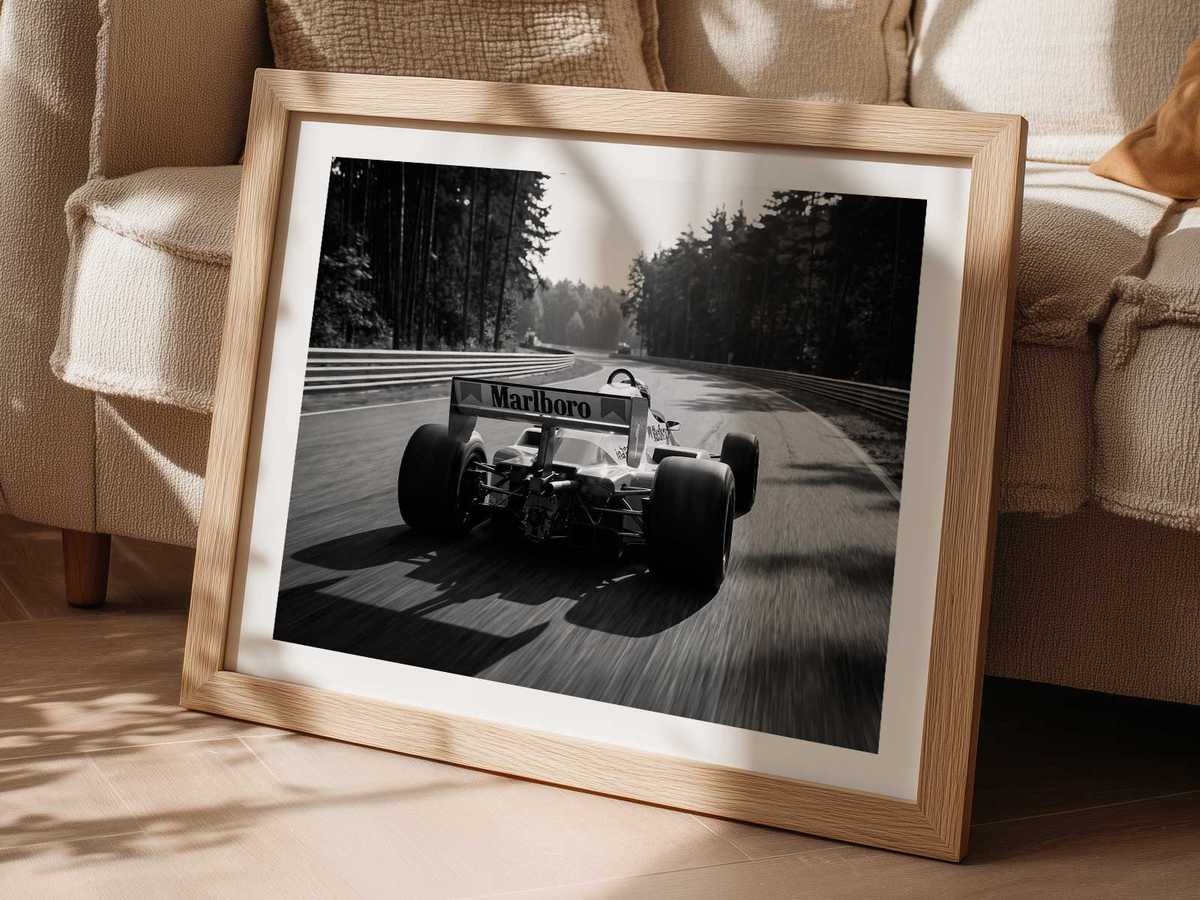
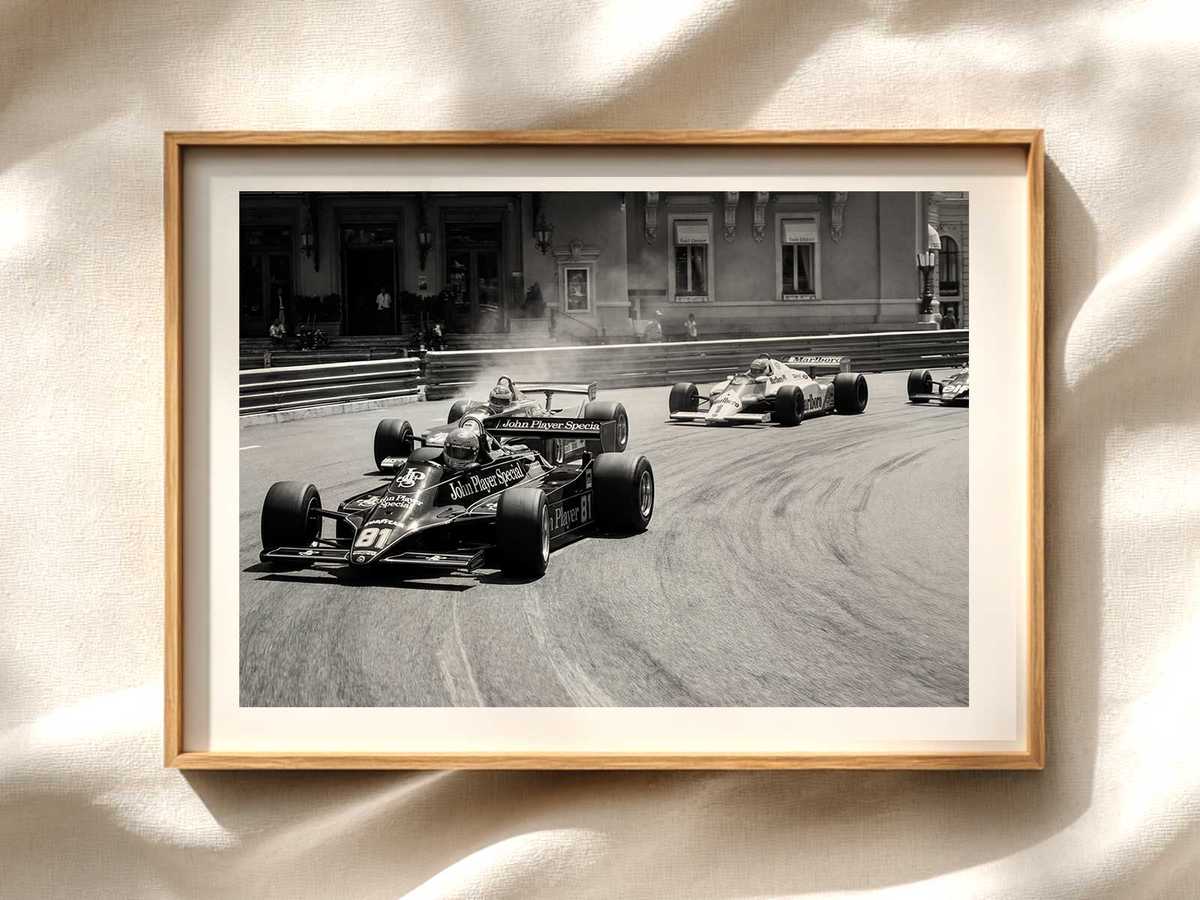
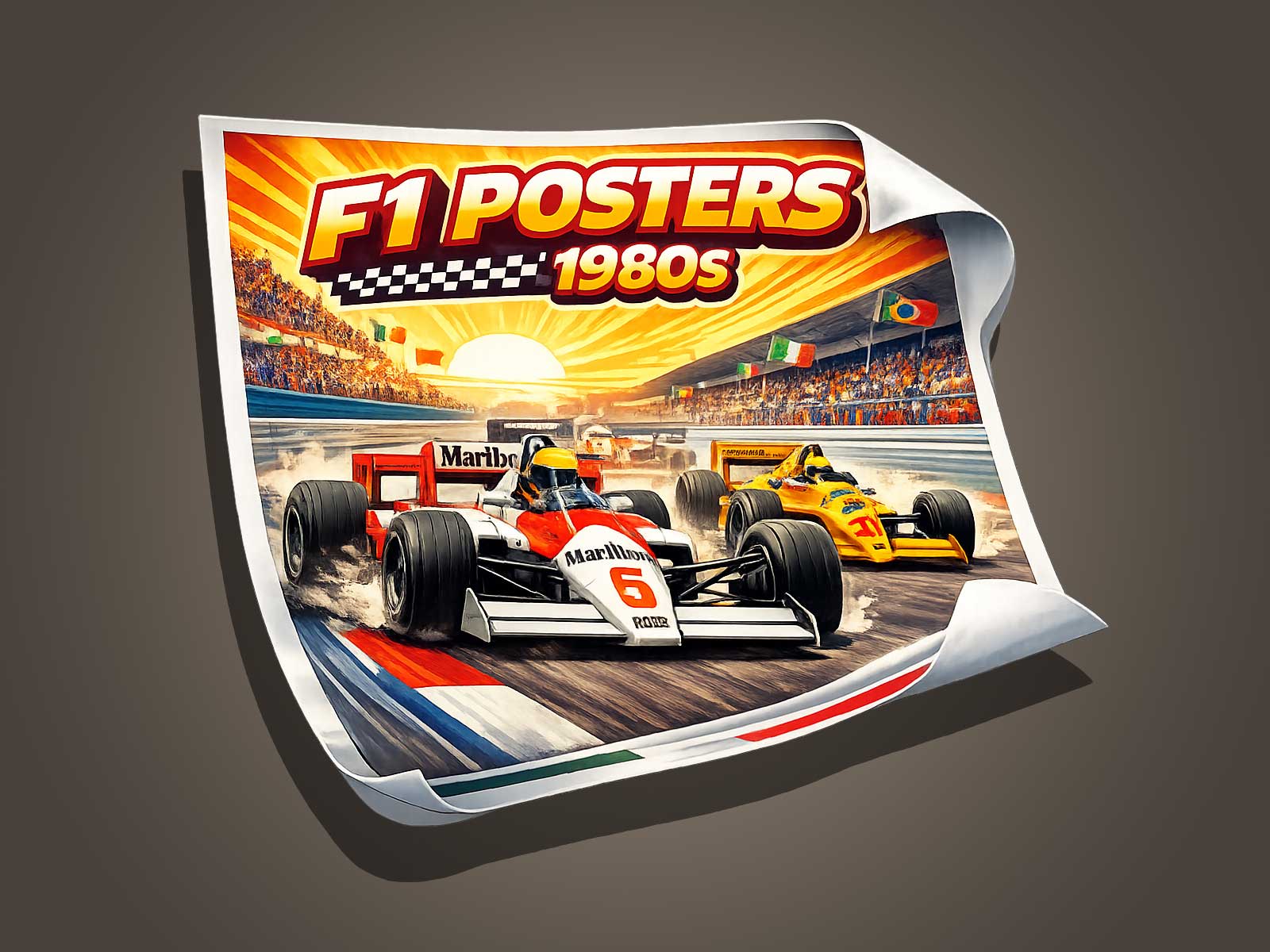
There are posters that simply depict a race car, and then there are images that carry an era. A poster dedicated to McLaren's 1980s cars—those low-slung MP4 silhouettes wrapped in the red-and-white Marlboro livery—does both. At a glance the palette reads as a graphic signature: bold scarlet balanced by clean white creates instant recognisability. That striking contrast is not ornamental; it is a visual identity forged by sponsorship and repeated across circuits, photographs and memory. In a room, that colour rhythm reads from across the space, anchoring a wall with immediate motorsport authority.
Beyond colour, the era’s cars offer shapes that translate beautifully to premium decoration. The MP4 line from the early 1980s into the decade is associated with streamlined, modern forms that reflect genuine technical progress—most notably the introduction of pioneering carbon-fibre construction and aerodynamic refinement. Those clean, purposeful curves and exposed mechanical details make for compelling compositions: a low centre of gravity, long nose, and tightly packaged bodywork create a sense of forward motion even in a still image. That implied speed is one reason such posters feel cinematic rather than merely documentary.
The MP4/4’s cultural weight also deepens an image’s appeal. As one of the era’s most recognised MP4 cars, its visual dominance and historical significance lend any artwork a layer of meaning beyond aesthetics. Collectors and fans respond to that dual quality: a photograph can be admired for its formal beauty while also carrying the cachet of a celebrated machine. In interior terms, the result is a piece that functions as both refined decor and an emblem of motorsport heritage—suitable for a living room, study, office or dedicated collection wall.
[IMAGE_INSERT_ARTICLE_01]
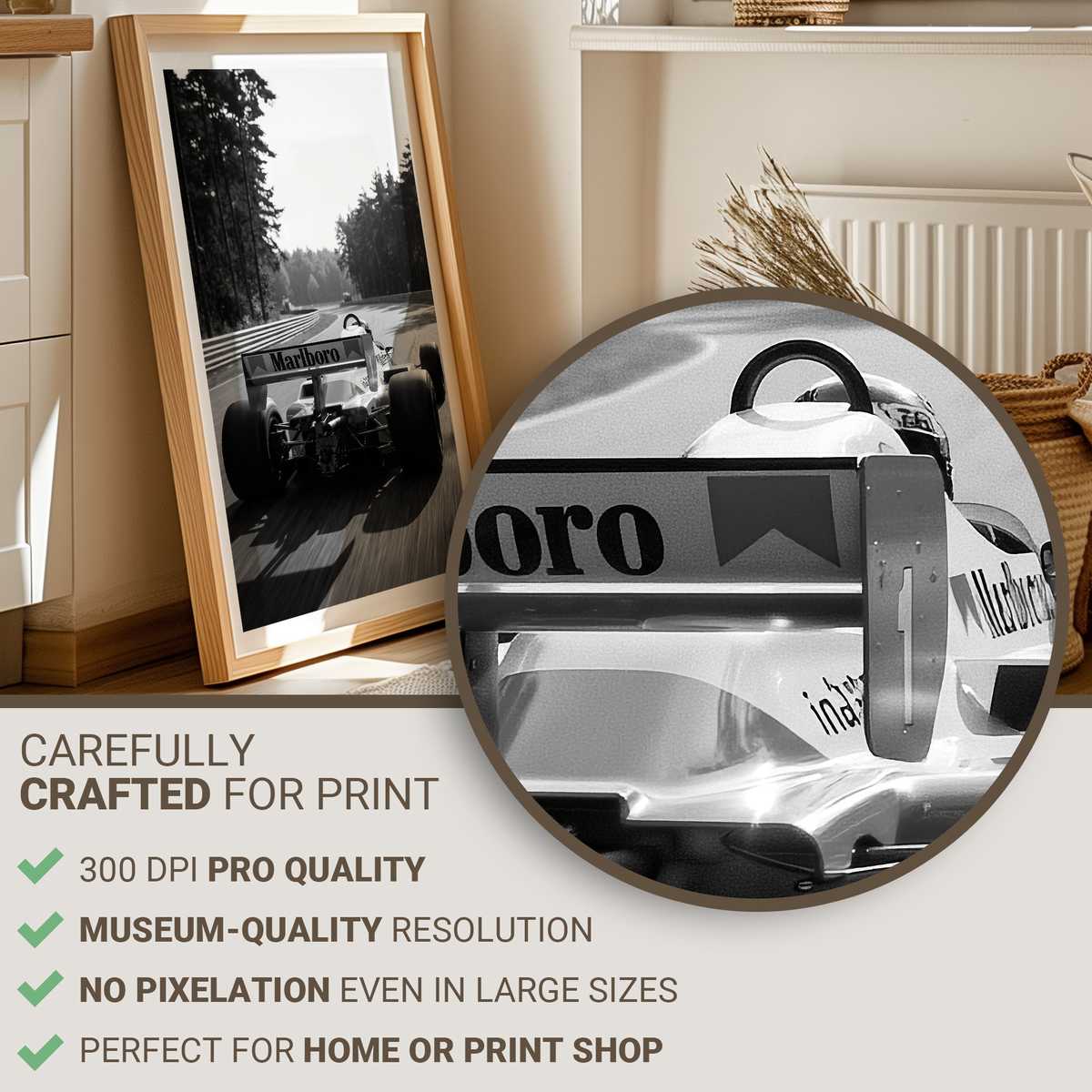
What a viewer notices first is rarely a technical footnote; it is the punch of colour and the rhythm of line. The red-and-white contrast draws the eye, the silhouette keeps it moving, and details like sponsor graphics and exposed suspension reward a second look. This layered readability is crucial for wall art: a poster must deliver an immediate visual hook while offering texture for repeated viewing. The MP4 era does this naturally because the livery and car shapes were developed with high-speed visibility in mind—qualities that translate directly into compelling prints and framed pieces.
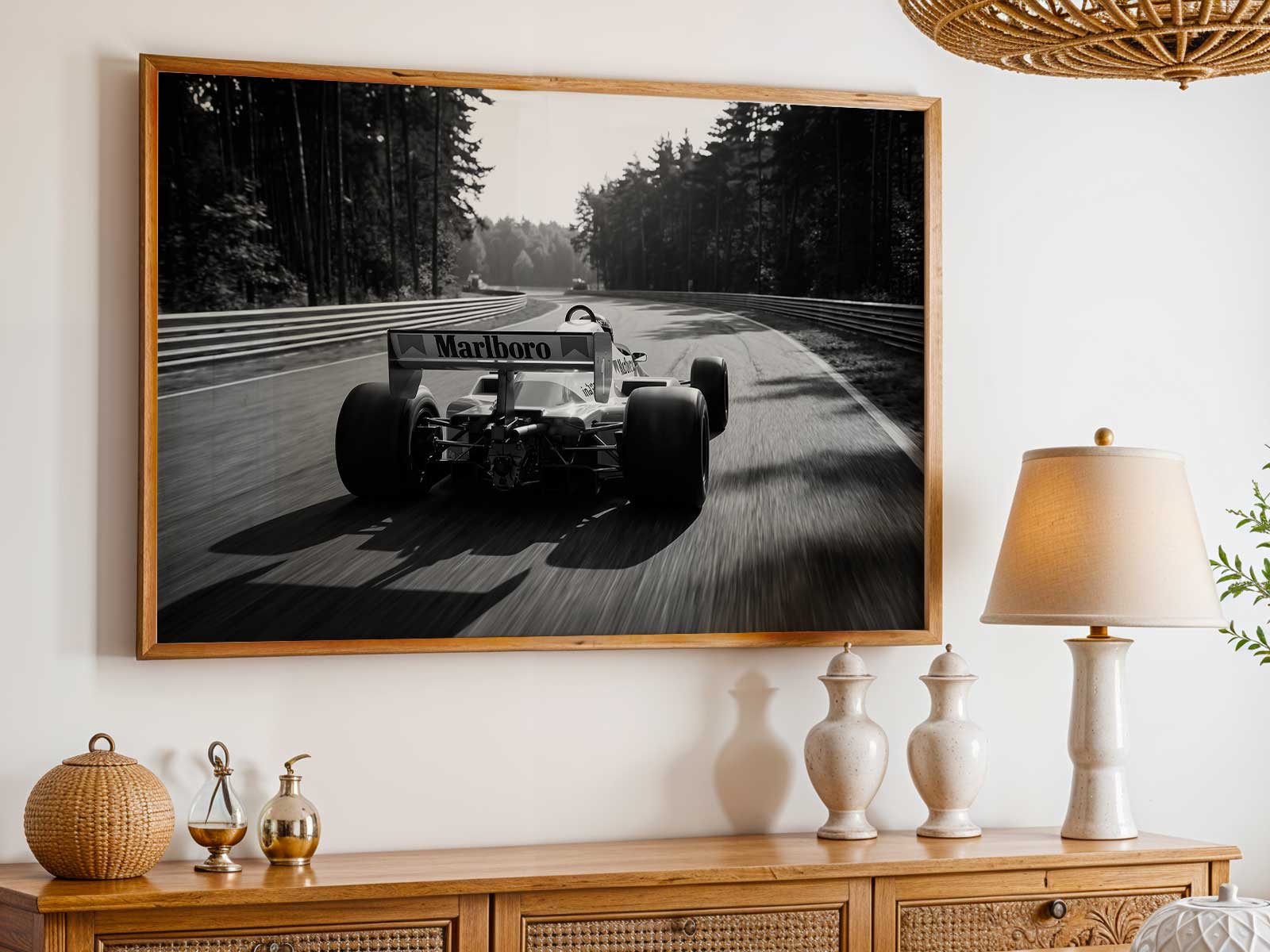
Finally, displaying an image from this McLaren period changes room atmosphere by introducing both motion and narrative. The poster suggests movement across asphalt and time across decades; it evokes technical innovation and the carefully composed branding of an era. That combination—graphic clarity, aerodynamic elegance and cultural resonance—explains why a McLaren 1980s poster can read as premium F1 decoration and as an evocative automotive passion image at once. It’s not only about the car you see, but the era and identity it carries into your space.