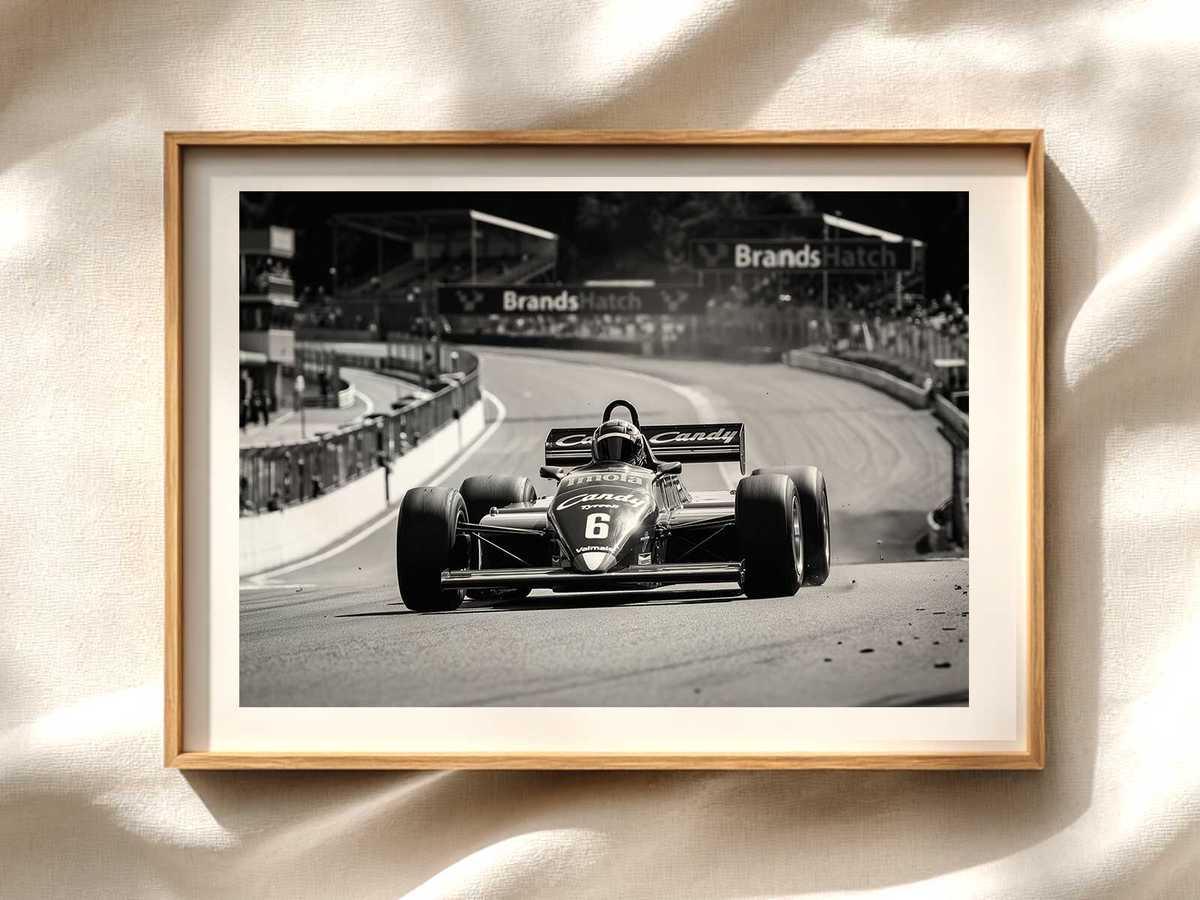
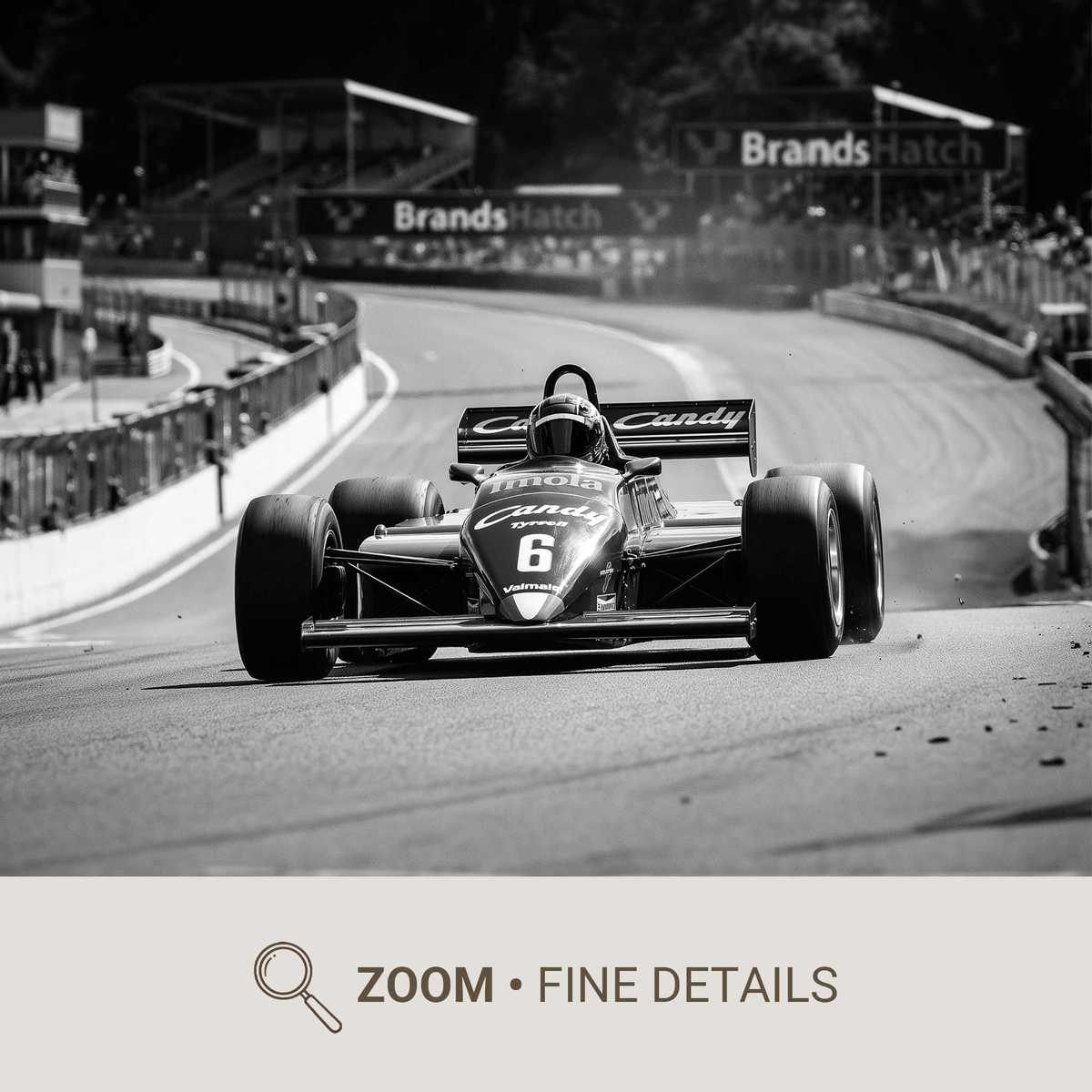
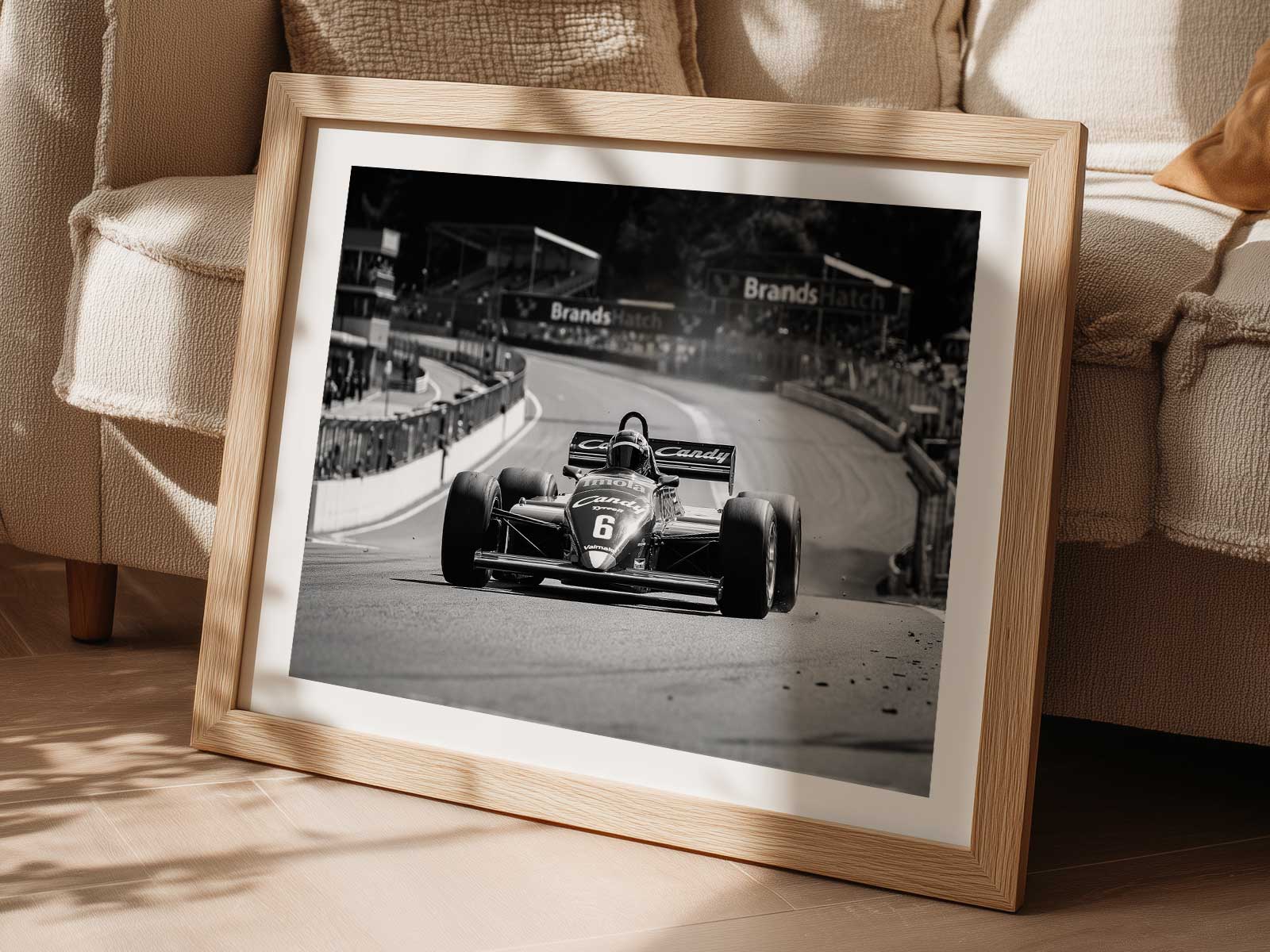
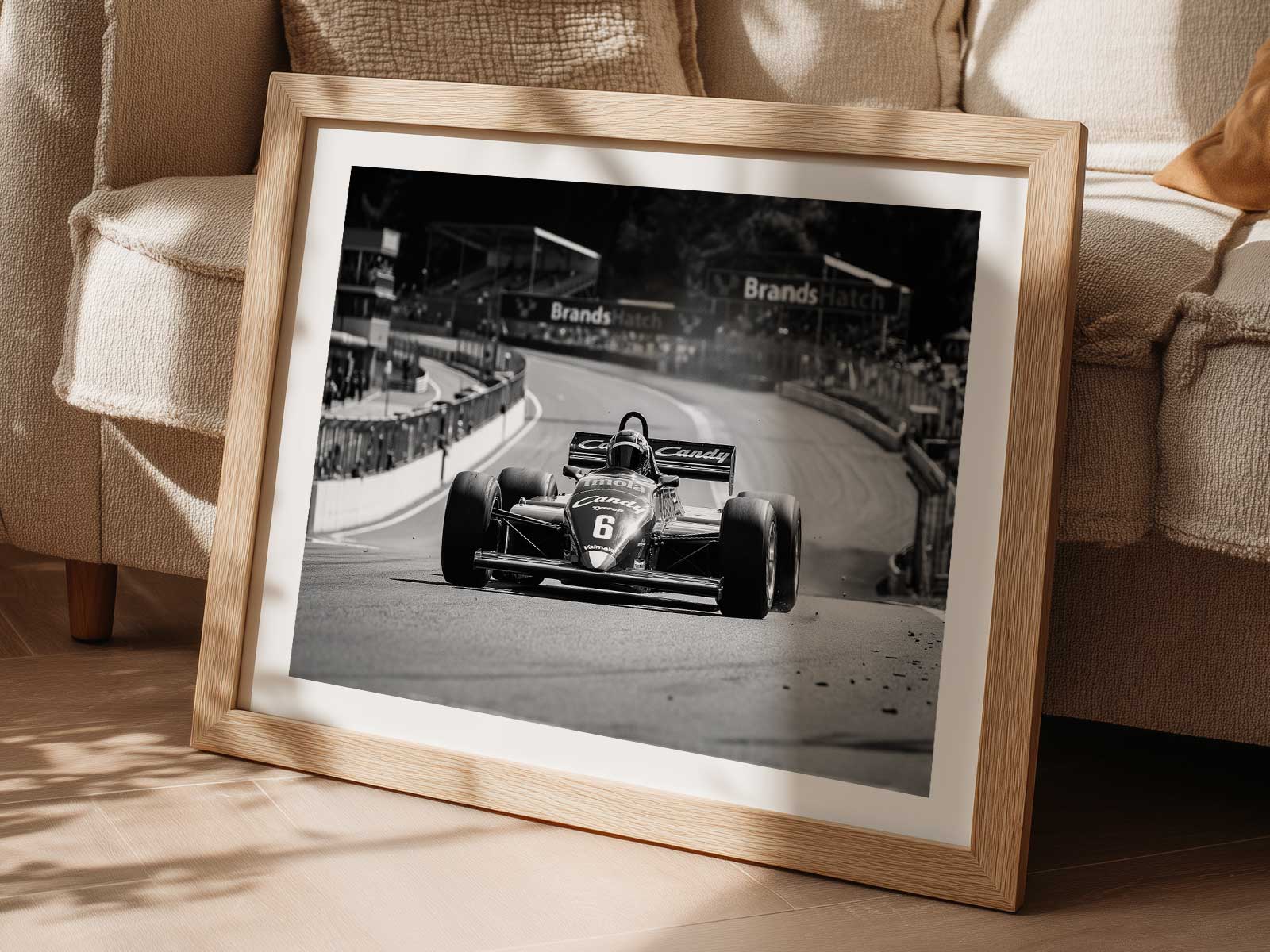
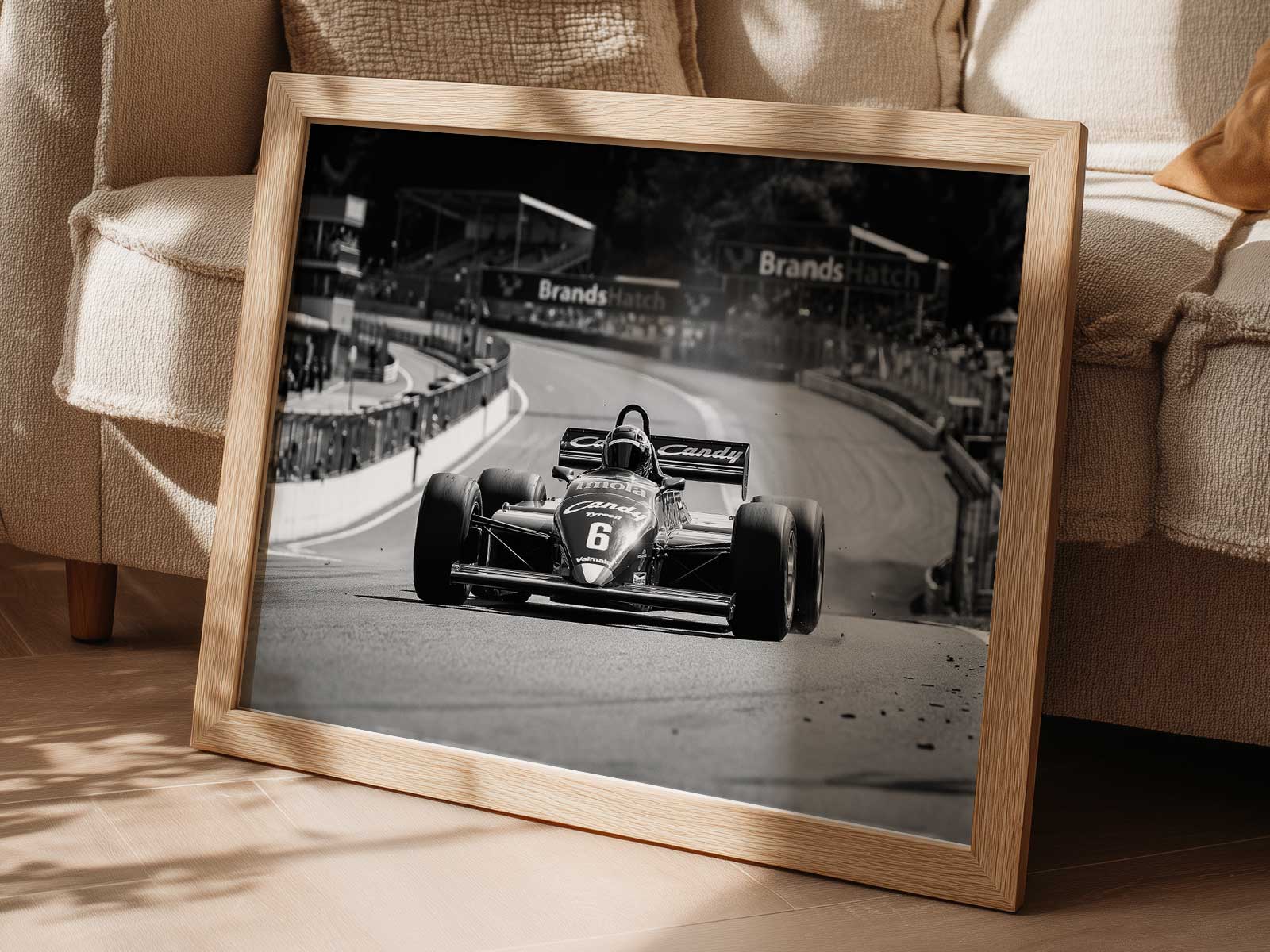
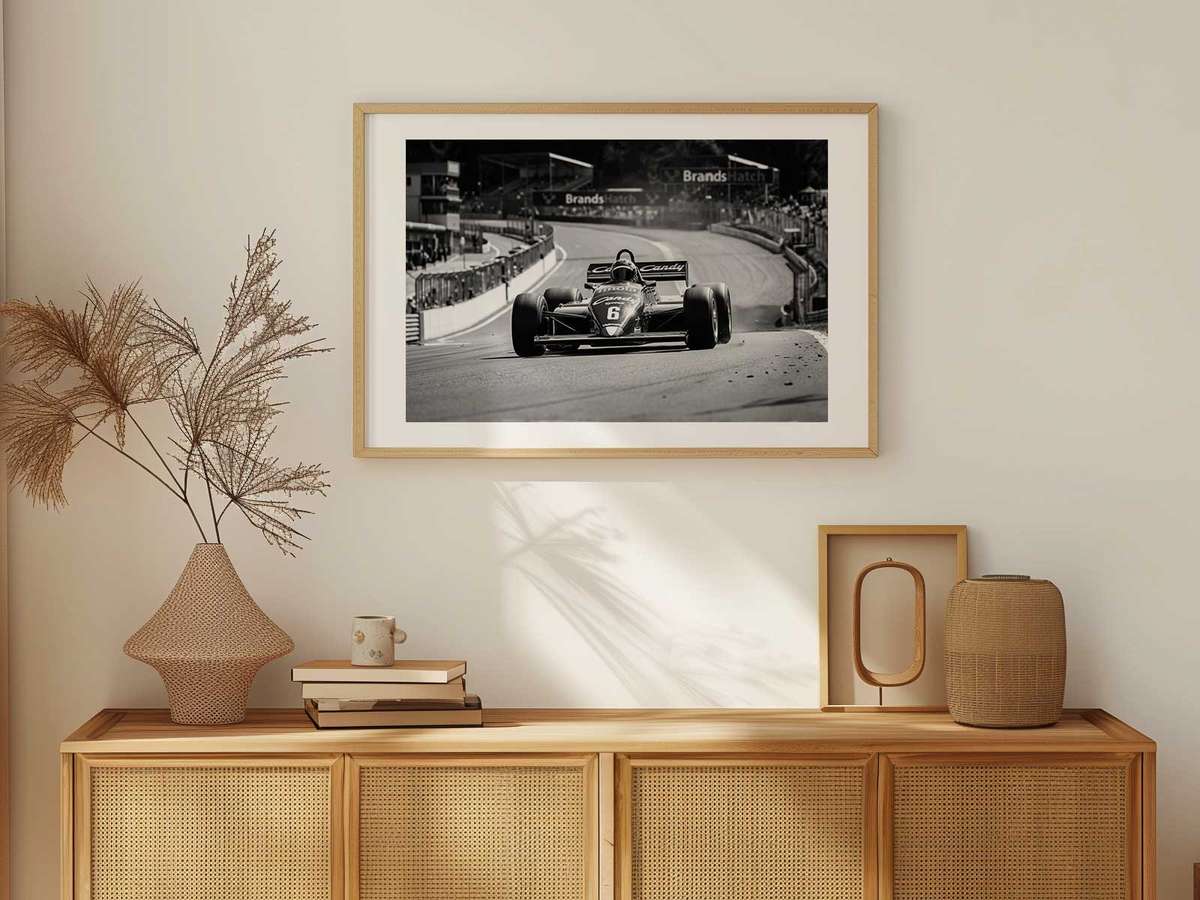
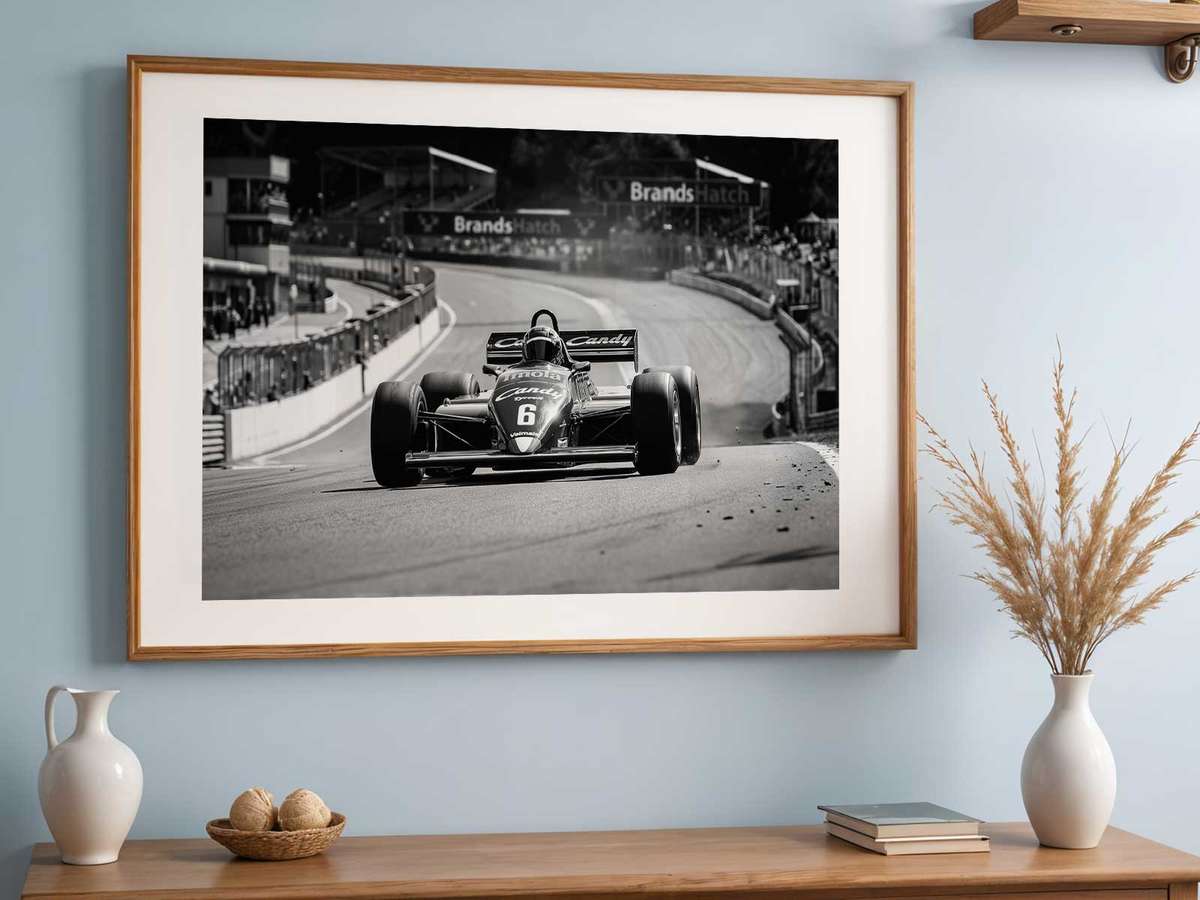
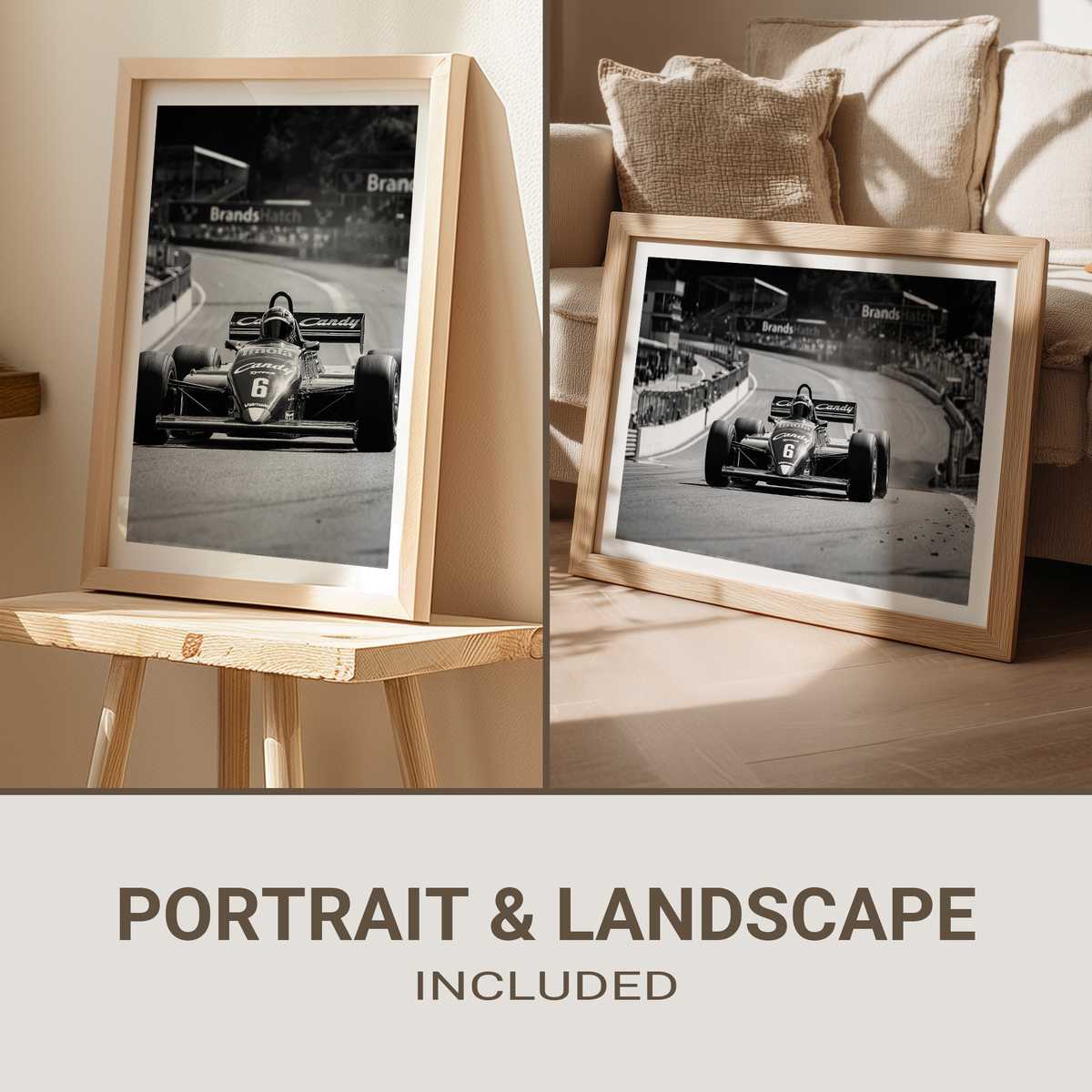
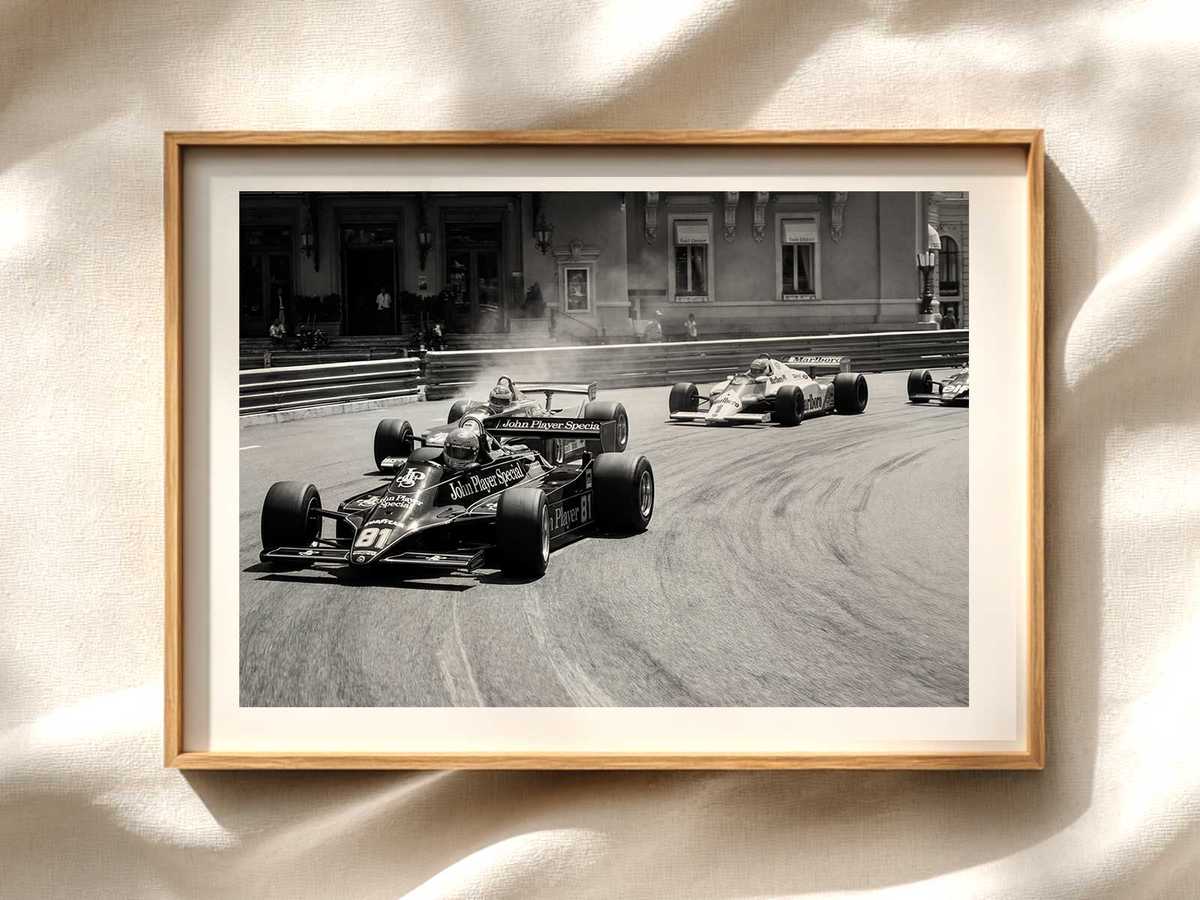
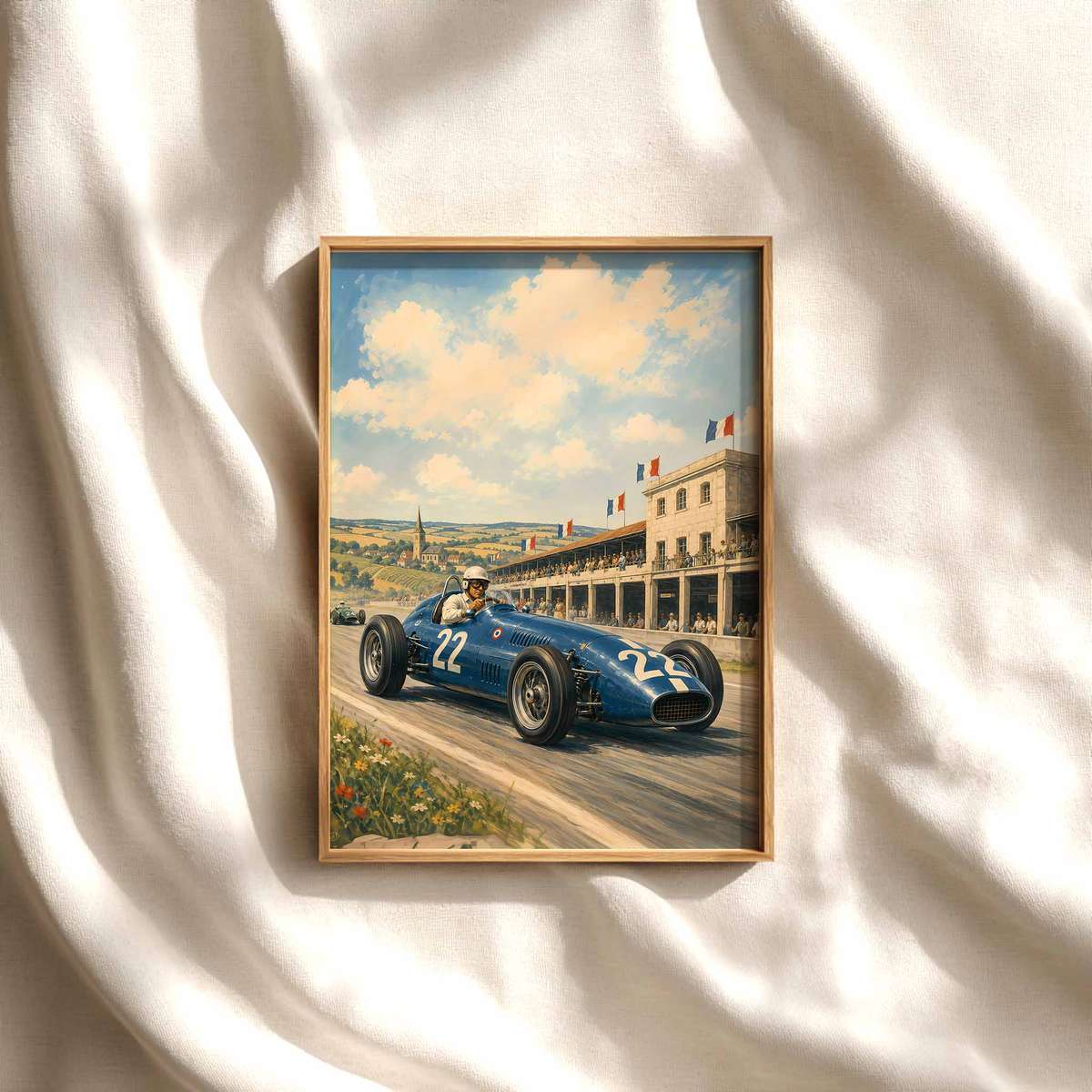
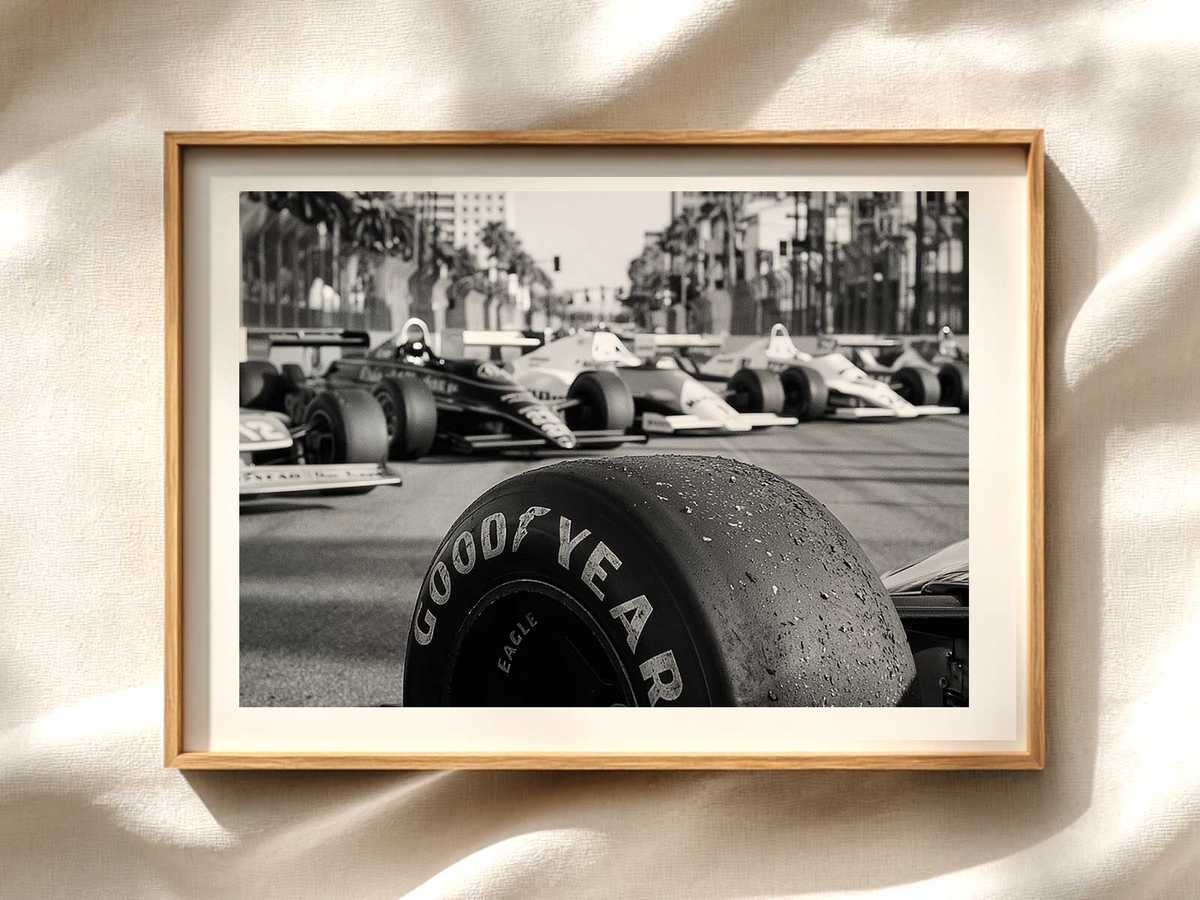
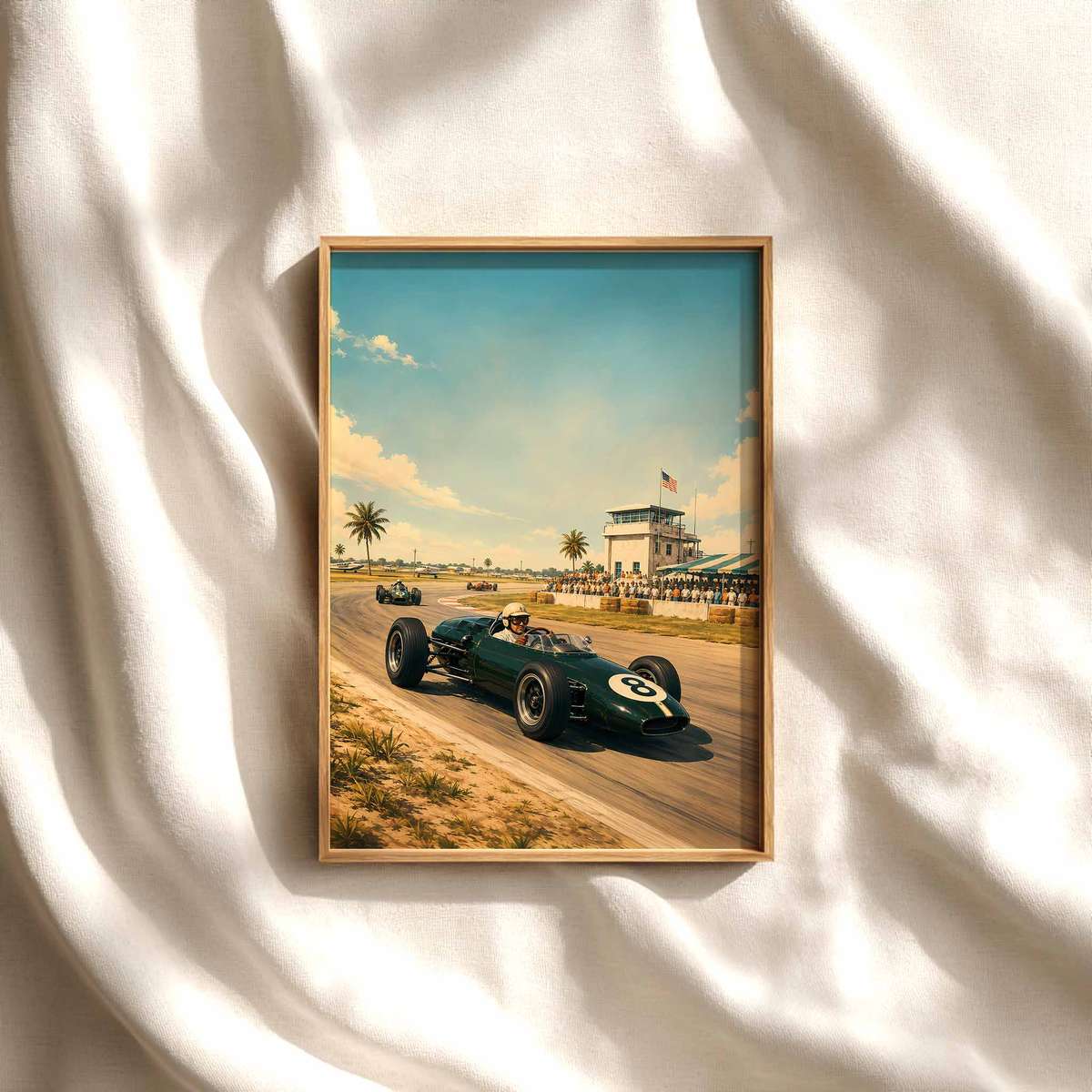
A Tyrrell F1 poster has an immediate visual confidence: the car’s silhouette reads like a logo, its lines both sculptural and functional. What first arrests the eye is the contrast—the bright livery against negative space, the crisp edges of wing and nose, the tension between polished metal and motion blur. That contrast is not merely decorative. It encodes racing identity: a team’s visual language, an era’s graphic codes and the unmistakable posture of a single-seater poised at speed. As a piece of wall art, a Tyrrell poster translates those cues into a statement object that can anchor a room without shouting over other design choices.
There is a powerful emotional economy in a well-composed F1 image. Collectors and fans recognize shapes before names: the long tapered nose, the exposed suspension, the helmet tucked low in the cockpit. These elements act as visual shorthand for speed, skill and mechanical poetry. In a framed print the same shorthand becomes decorative shorthand—an invitation to remember races and to occupy a continuity of motorsport culture. The poster does double duty: it hangs as tasteful décor in a living room or office while still working as a talisman for someone who understands the finer grammar of racing imagery.
[IMAGE_INSERT_ARTICLE_01]
Colour and contrast are at the heart of the Tyrrell’s appeal as premium art. A pop palette—whether a deep blue, clean white, or a striking sponsor accent—creates a focal point that plays beautifully with modern interiors. Against plaster or exposed brick, the poster provides calibrated tension: it animates muted walls and complements leather, wood and glass. The result is a room that feels curated rather than cluttered, where motorsport enthusiasm is expressed with taste rather than fanfare. That subtlety is what elevates a poster from mere memorabilia to considered design.
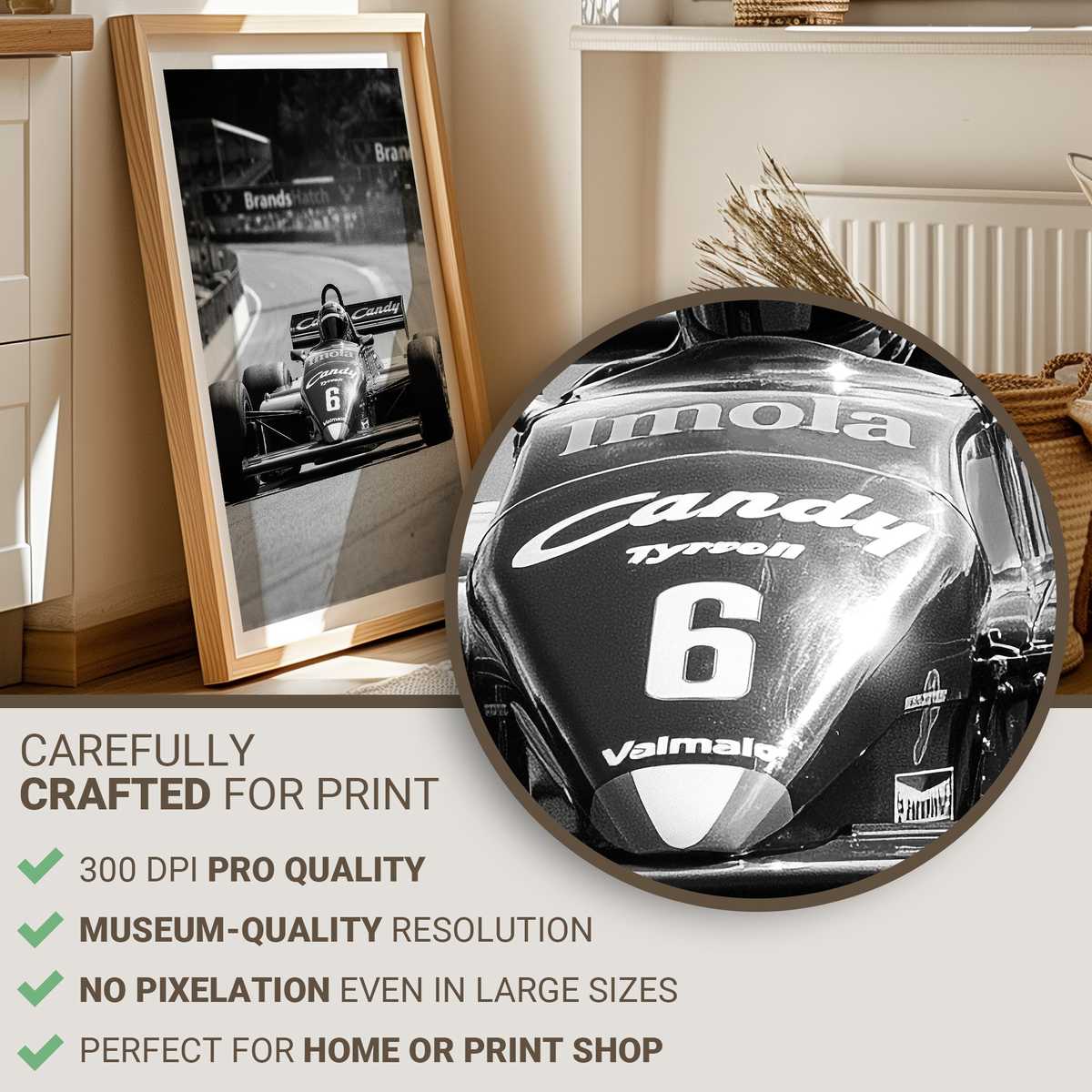
Texture and light within the image also matter. A high-quality print preserves the nuanced reflections on bodywork, the micro-scratches and the sheen of an aerodynamic surface—details that reward close viewing and reward the collector who appreciates materiality. The interplay of light and shadow suggests speed and depth even in a still image, giving the poster cinematic energy. Placed above a console or behind a dashboard in a study, the image becomes a conversation piece: viewers are drawn in by the craftsmanship and stay for the memories the car evokes.
There is also a narrative economy in a Tyrrell poster. Without textual explanation, the visual tells stories of lineage, race weekends, and the ritual of preparation and performance. For interior settings—game rooms, garages converted into lounges, or contemporary offices—the poster supplies character and a sense of history. It signals refined taste; the owner values design that carries meaning beyond mere decoration. A single powerful image can therefore align with a room’s architecture, its color palette and its intended atmosphere, whether that atmosphere seeks dynamism, nostalgia or quiet confidence.
Finally, a Tyrrell poster works as a gift and a keepsake because it bridges two communities: design-minded decorators and dedicated motorsport fans. Its success lies in being read on multiple levels—an arresting composition for those who love visual culture, and a precise icon for those fluent in racing lore. Framed, matted, or printed on high-grade paper, the poster becomes more than an image: it is an object that shapes a space and keeps a brand of speed forever present in the home.