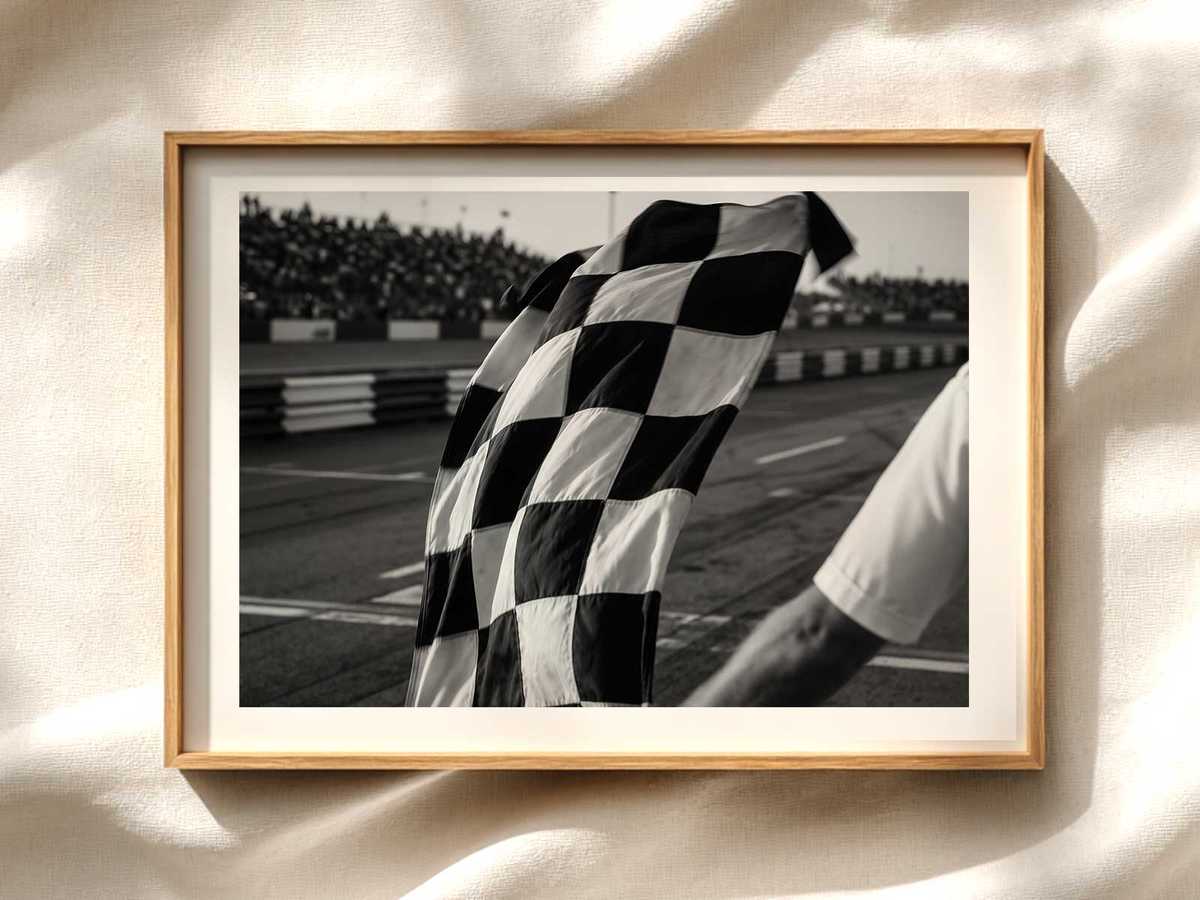
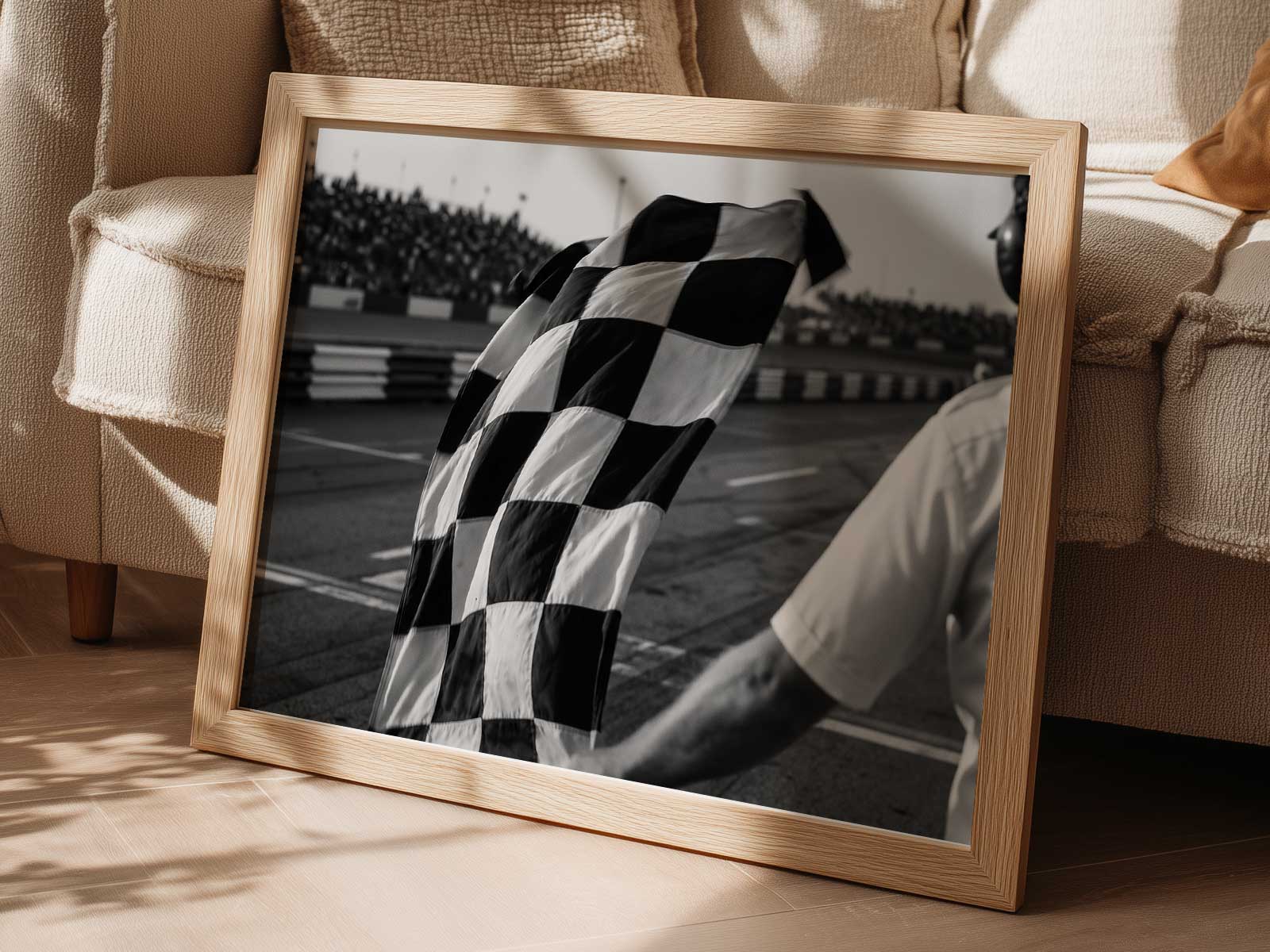
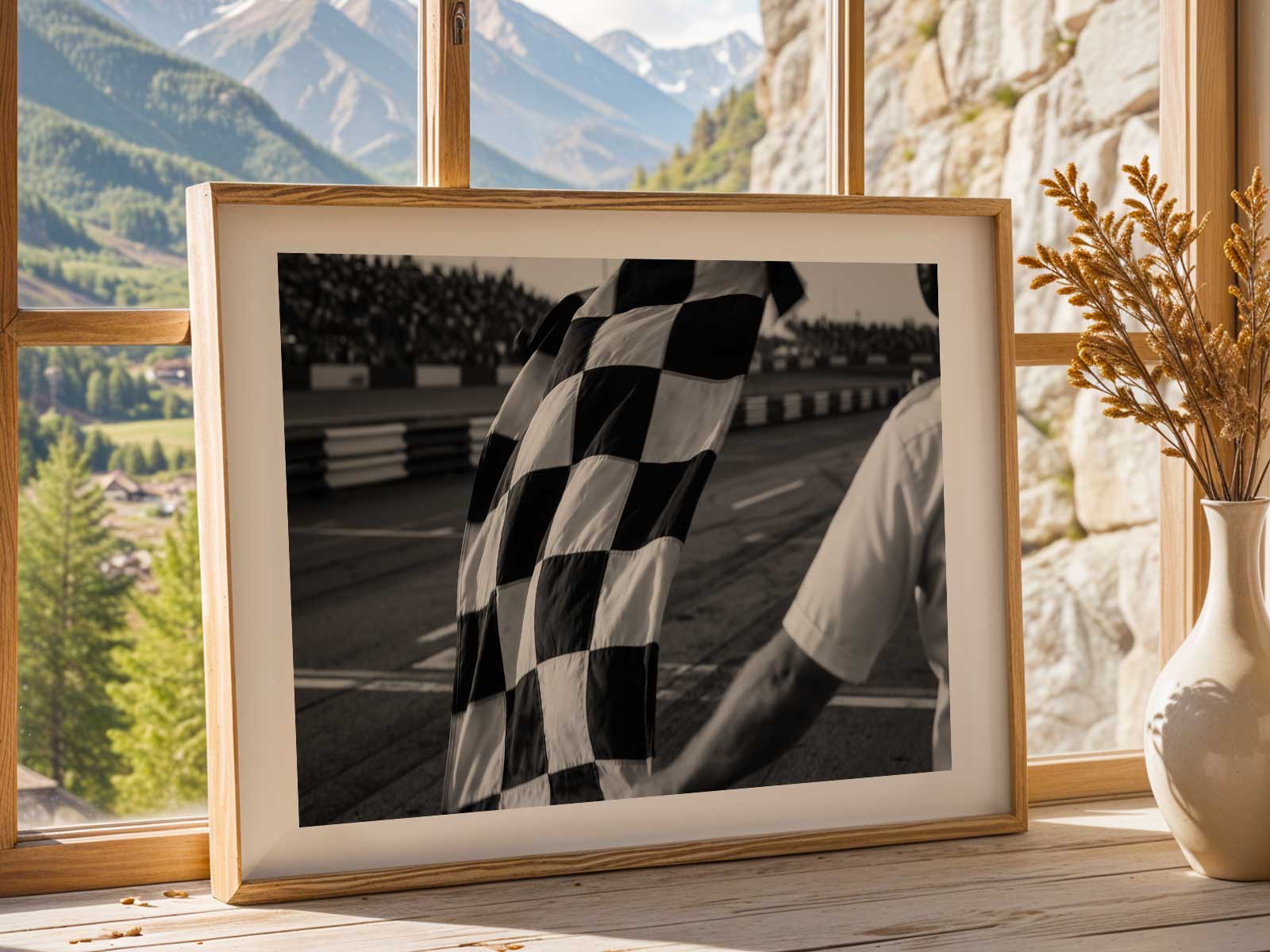
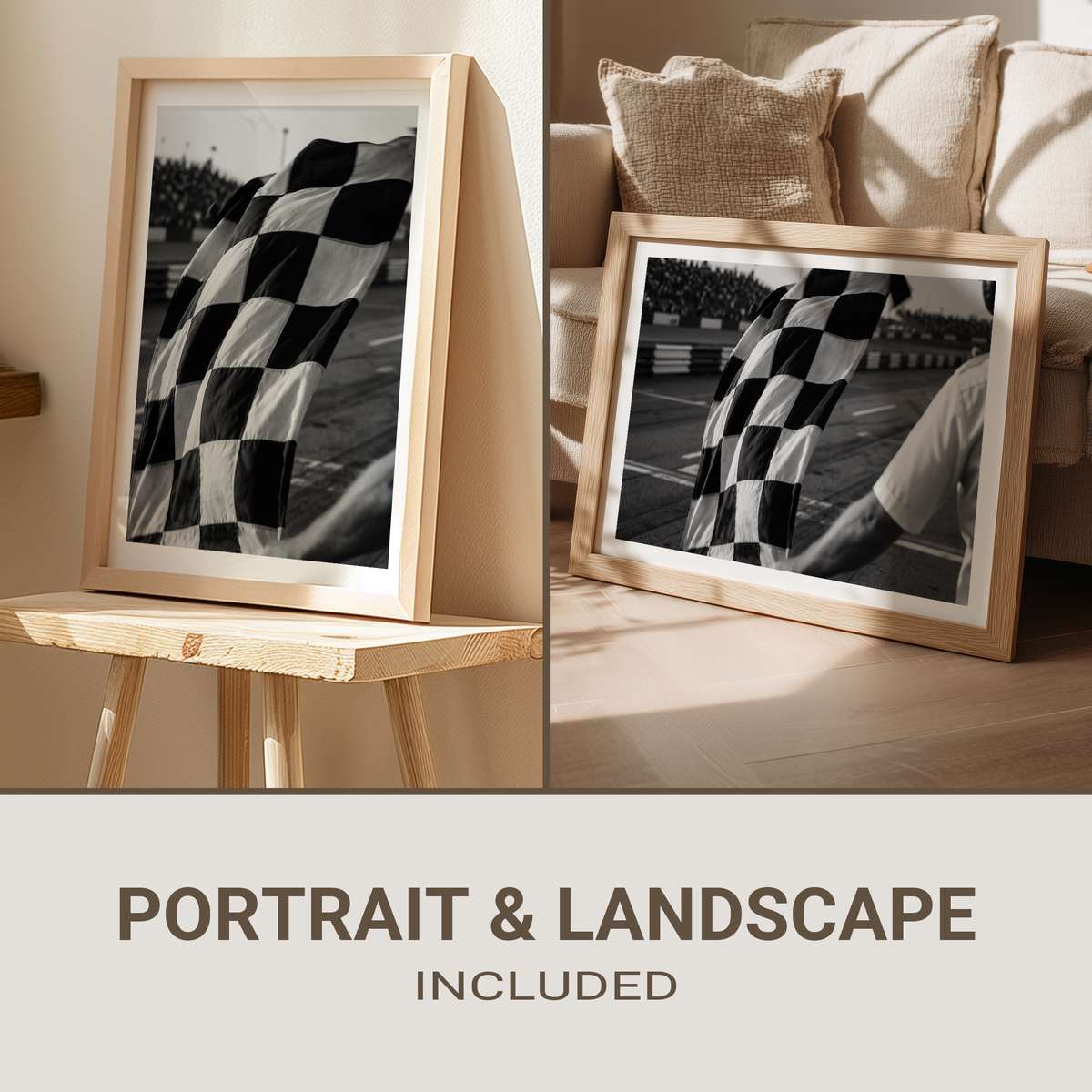
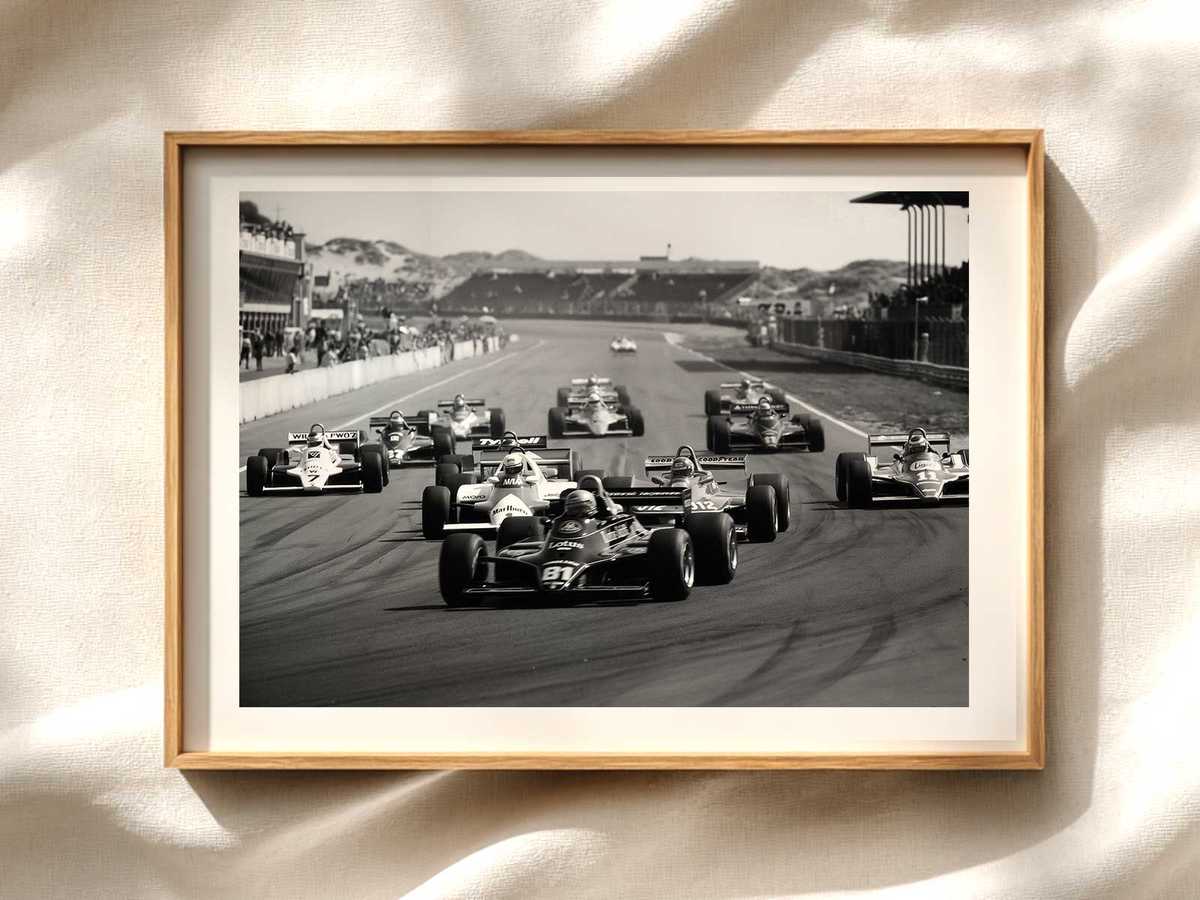
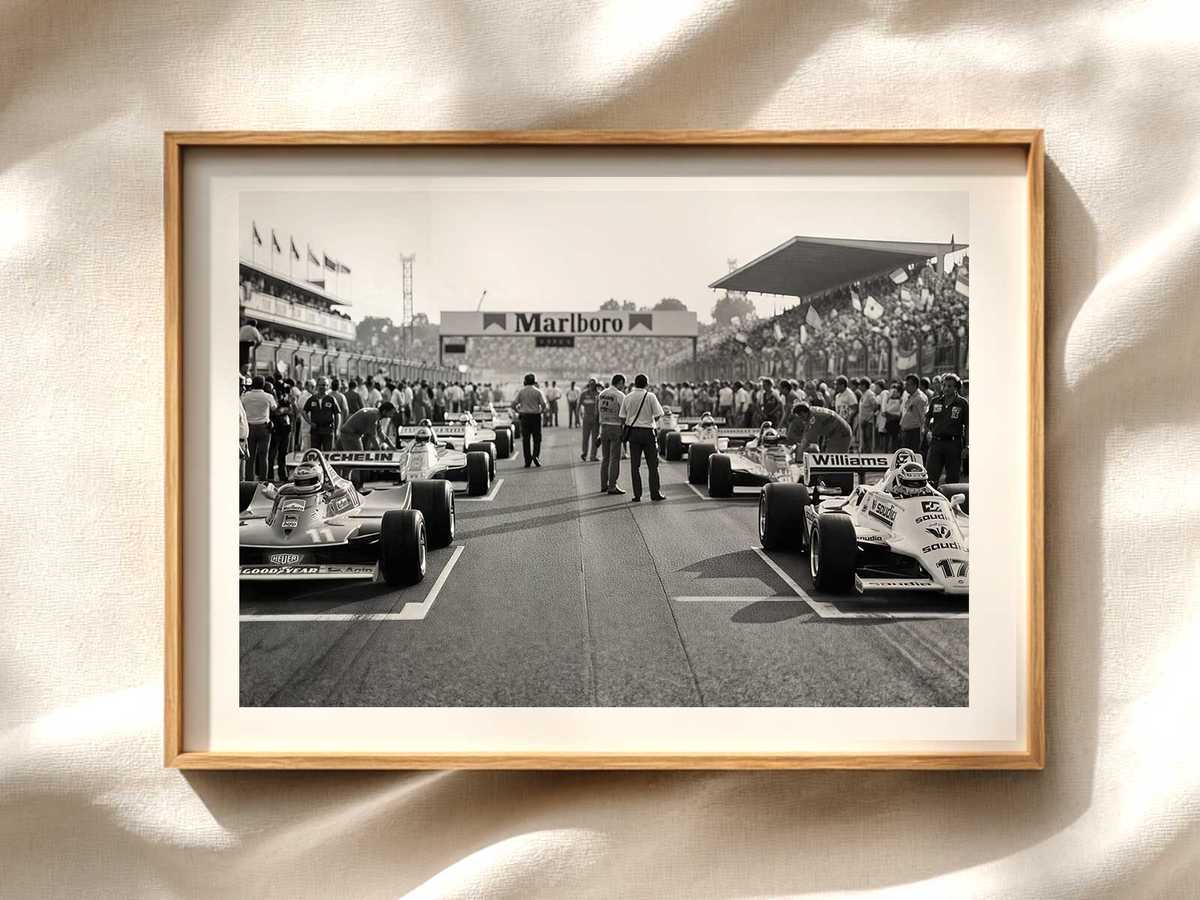
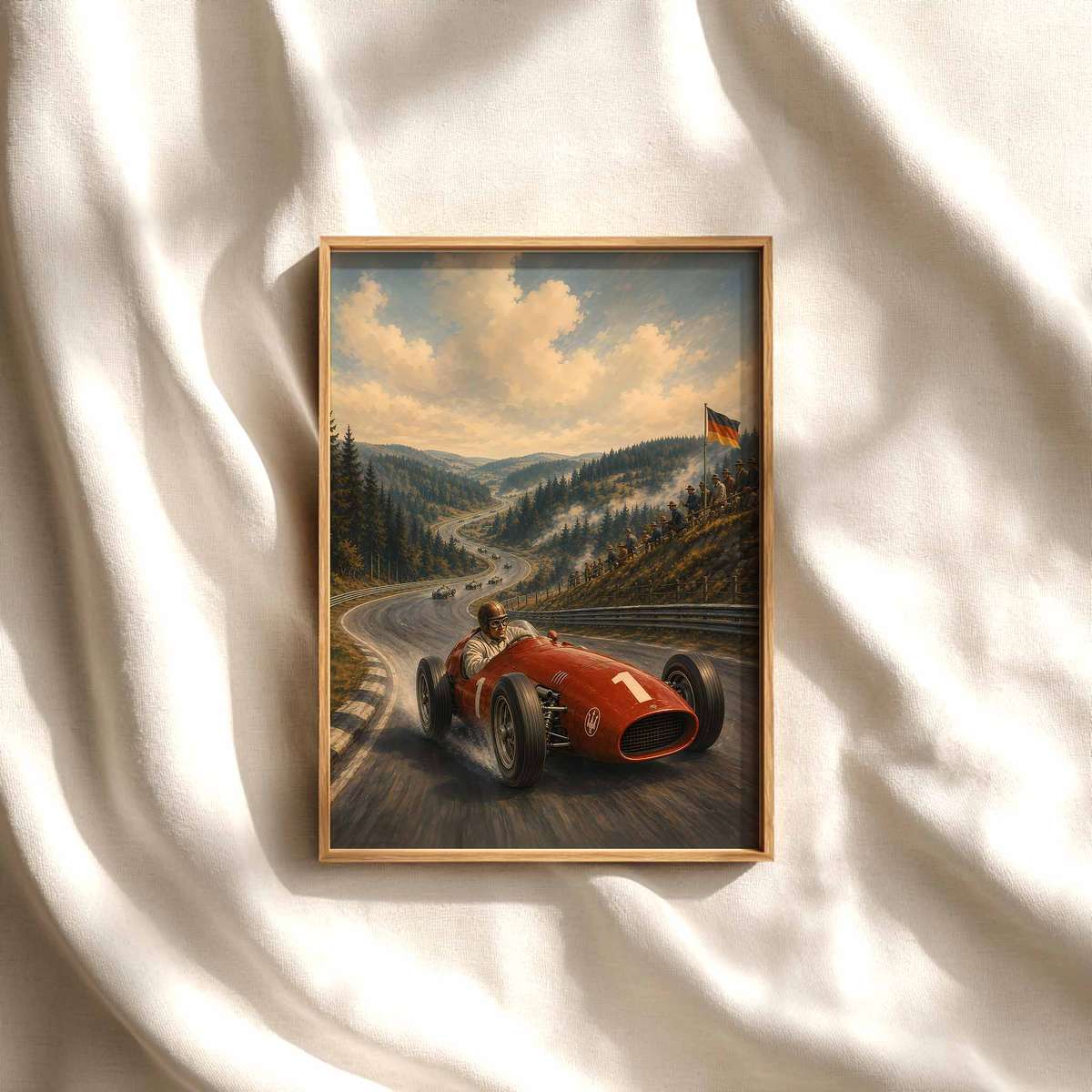
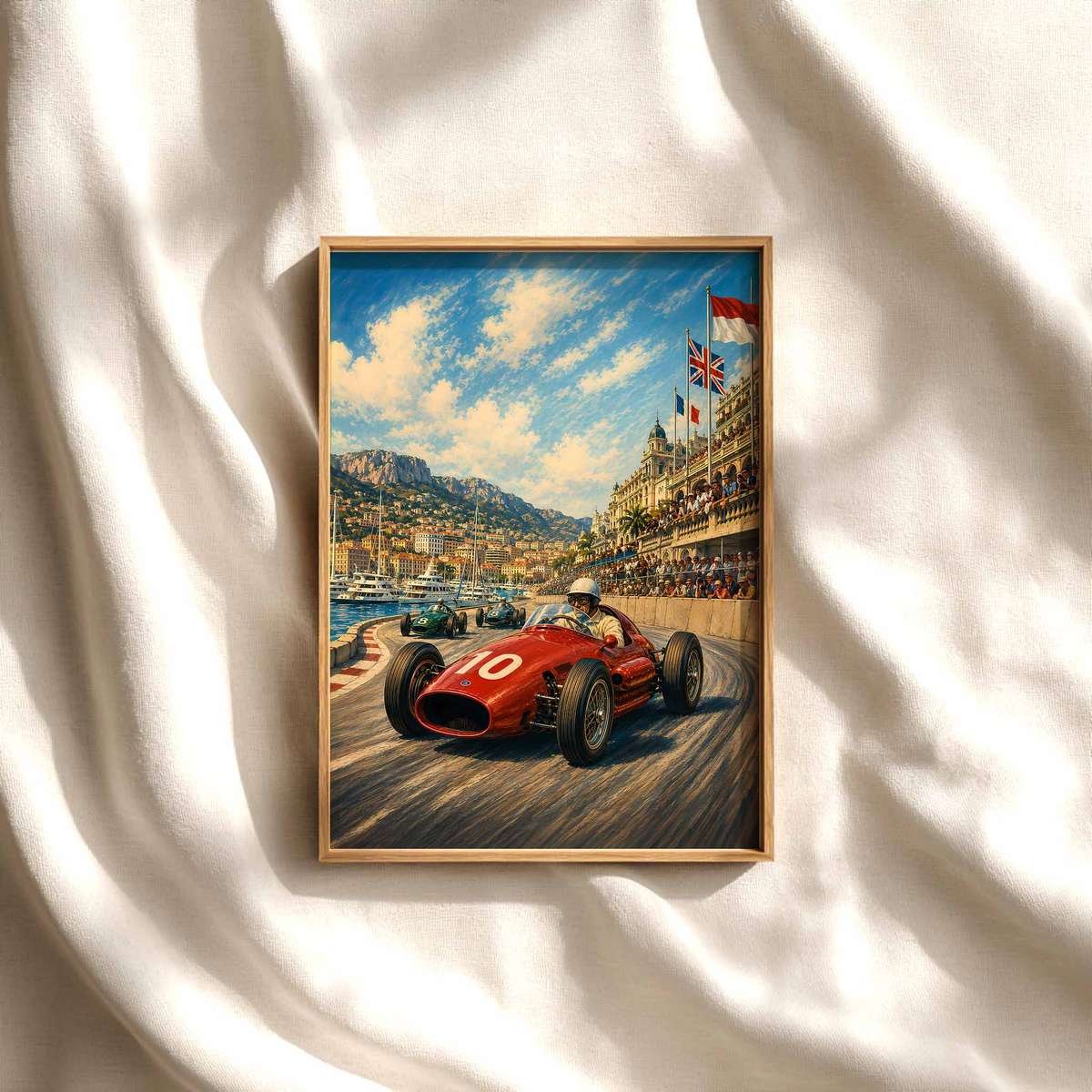
An image of Spielberg — the red-tinged hills, the low-angle sweep of tarmac and a single Formula 1 car carving through a final corner — holds a curious double promise: it’s both a document of motorsport passion and an object of refined décor. At first glance the poster speaks to speed and spectacle: a silhouette of aerodynamic form against a dramatic sky, wheel spray or tyre heat shimmer, a composition that compresses motion into a single, decisive moment. That compression is what makes the image poster-worthy. It freezes the arc of energy that leads to the chequered flag and turns it into a graphic rhythm for a wall.
What the viewer notices first is usually shape and contrast. The unmistakable profile of an F1 car — low nose, rear wing, the hint of a halo — functions like a logo: instantly legible even at distance. In a Spielberg poster the track’s terraces and the green of the Alpine backdrop provide negative space that lets the car read clearly, while colour accents (team liveries, track curbs, spray) give the composition points of focus. This clarity of form is essential to premium wall art; it allows the poster to hold a room visually without shouting, which is why collectors and interior designers alike choose motorsport prints for living rooms, offices, and game rooms.
[IMAGE_INSERT_ARTICLE_01]
Beneath the formal qualities is identity. An image from the Austrian Grand Prix carries circuit memory: the rhythm of Red Bull Ring’s corners, the way light falls late in the day, the sense of proximity between car and landscape. That sense of place anchors the poster emotionally. For fans, it evokes races, drivers and team colours without requiring explicit storytelling. For non-fans, the photograph’s compositional confidence and the car’s sculptural geometry read as modern art—clean lines, energetic diagonal movement, and a limited but intense palette. The result is a visual language that translates across audiences.
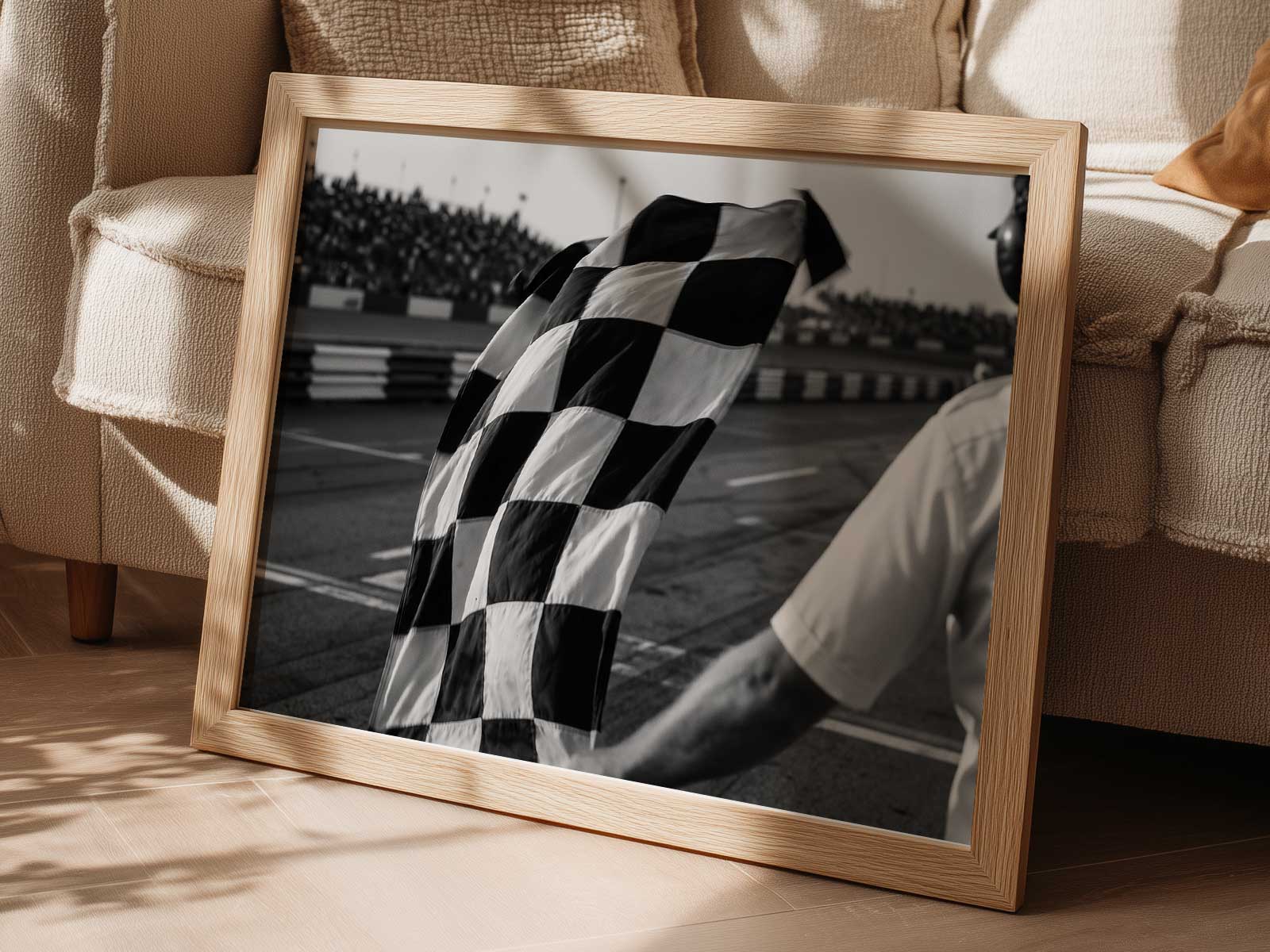
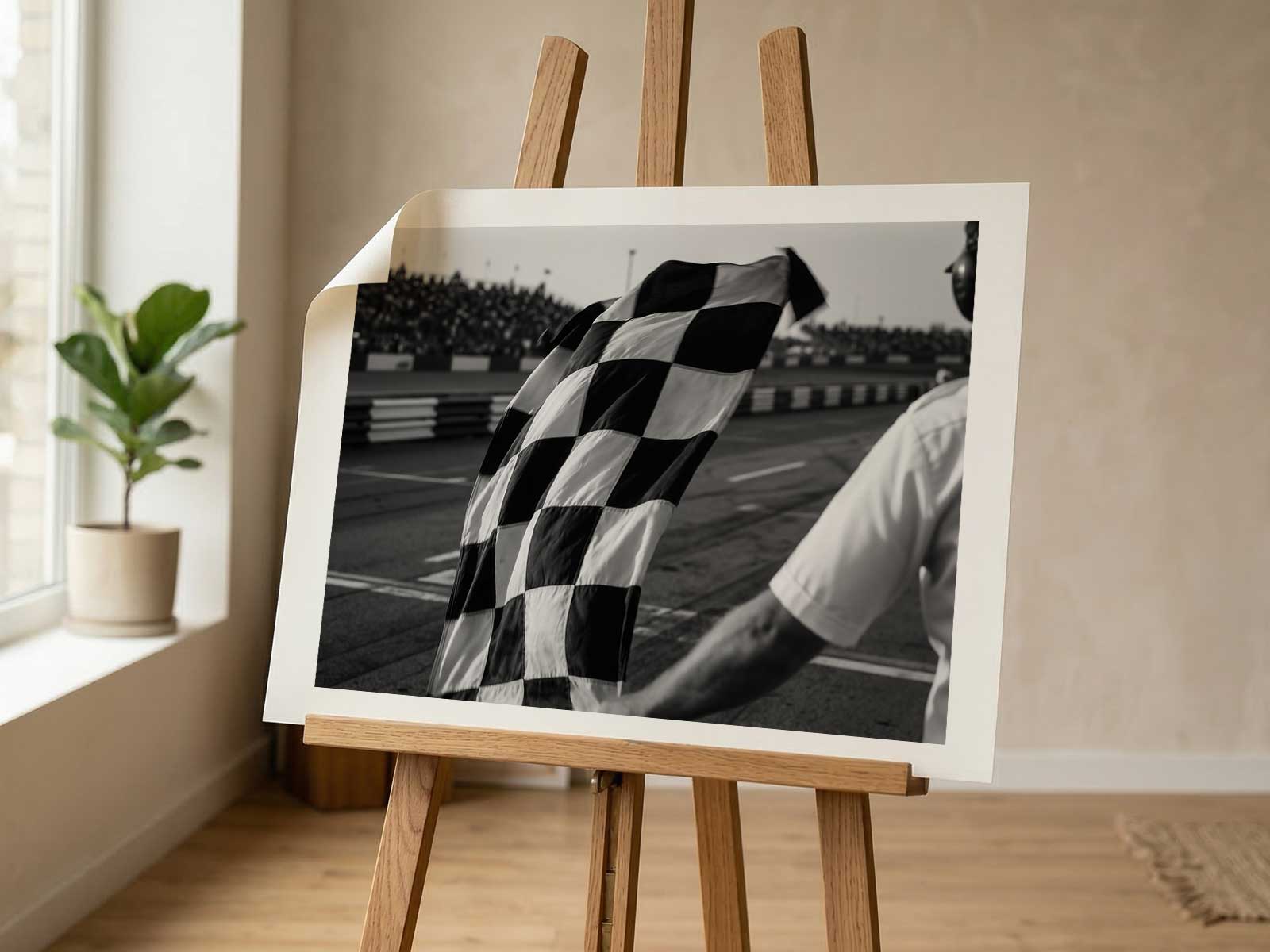
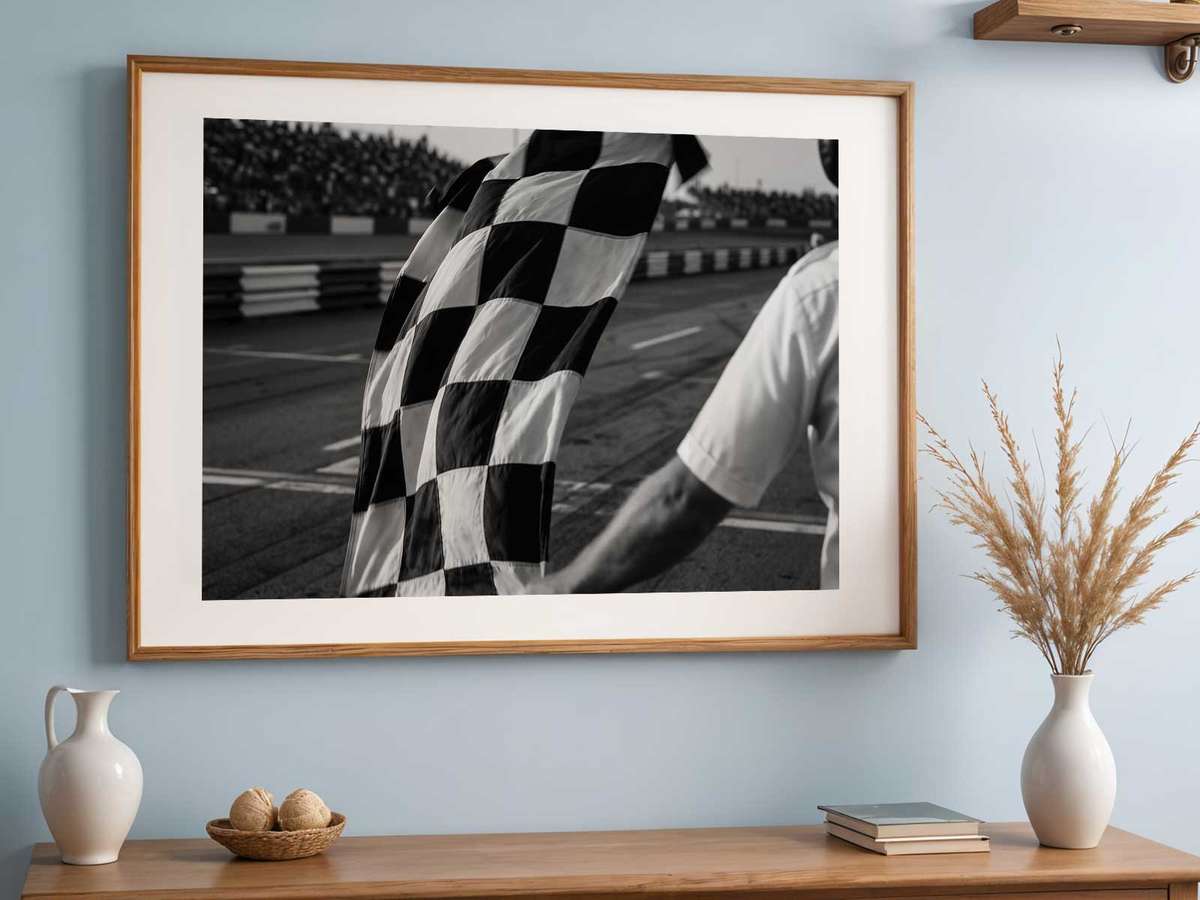
The evocative power of a moment under the chequered flag is particularly useful in a poster. The flag signals resolution and release: the lap’s tension, the team’s effort, the driver’s concentration, all distilled into a single gesture. A well-framed Spielberg print can suggest that exact emotional arc—focus transformed into celebration—through posture, light and the suggestion of motion. That implied narrative gives the piece longevity; it’s not merely an image of a car, it’s a scene that invites memory and projection, which is why it feels collectible.
In terms of atmosphere, motorsport imagery shifts a room’s mood toward dynamism and precision. Where a landscape photograph calms, an F1 poster invigorates: the eyes follow implied trajectories, the mind anticipates speed. Yet when the poster is composed with restraint—subtle horizon lines, balanced negative space, muted or elegant colour grading—it reads as sophisticated rather than aggressive. That balance is what lets a Spielberg poster sit comfortably above a desk or on a living-room wall, enhancing rather than overpowering existing décor.
Finally, the collector appeal is both emotional and tactile. Posters that honor Spielberg succeed because they pair recognisable racing identity with high production values—crisp printing, archival paper, careful cropping—that respect the image’s visual punch. They become objects people want to keep and display, gifts that carry both personal memory and universal design virtues. In short, a Spielberg-focused F1 poster works because it captures a charged racing instant and translates it into an enduring, elegant image that enriches a room and rewards repeated looking.