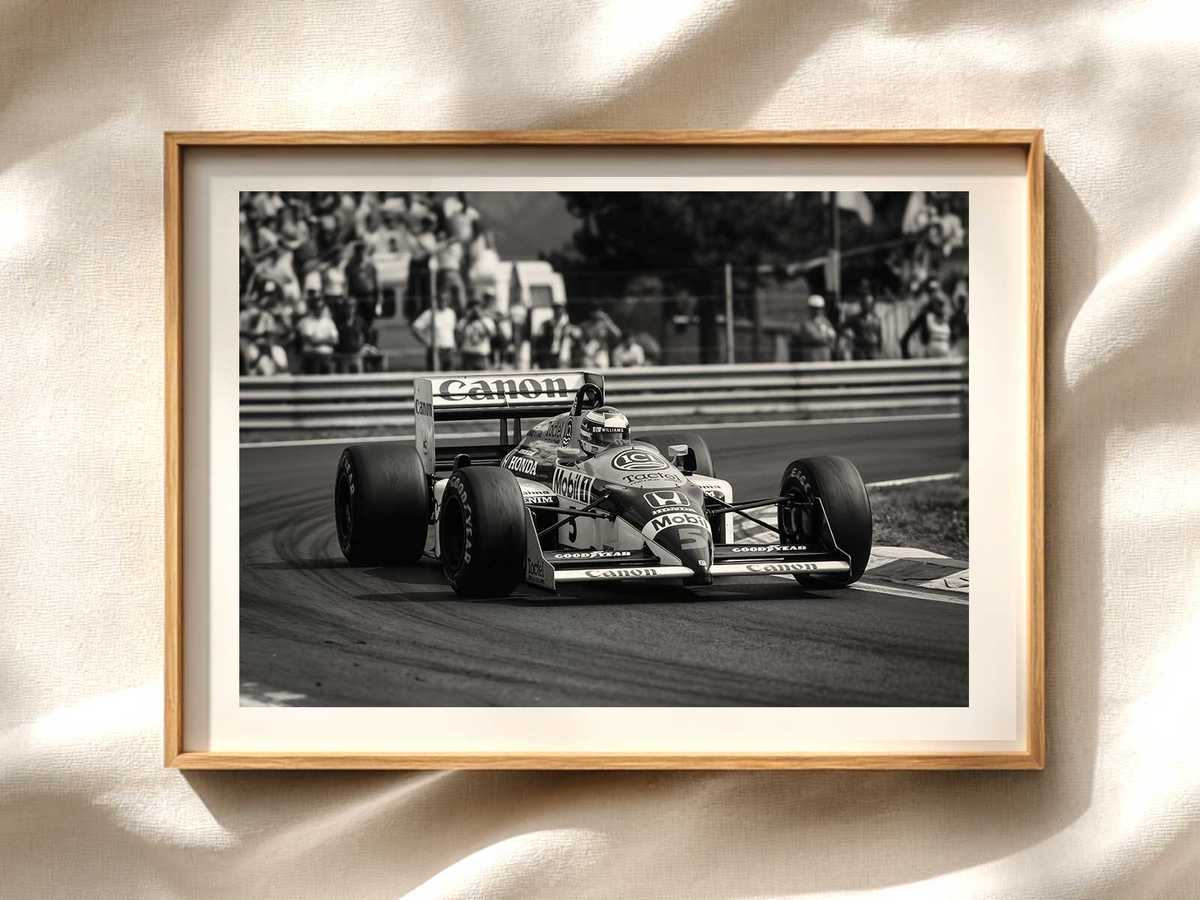
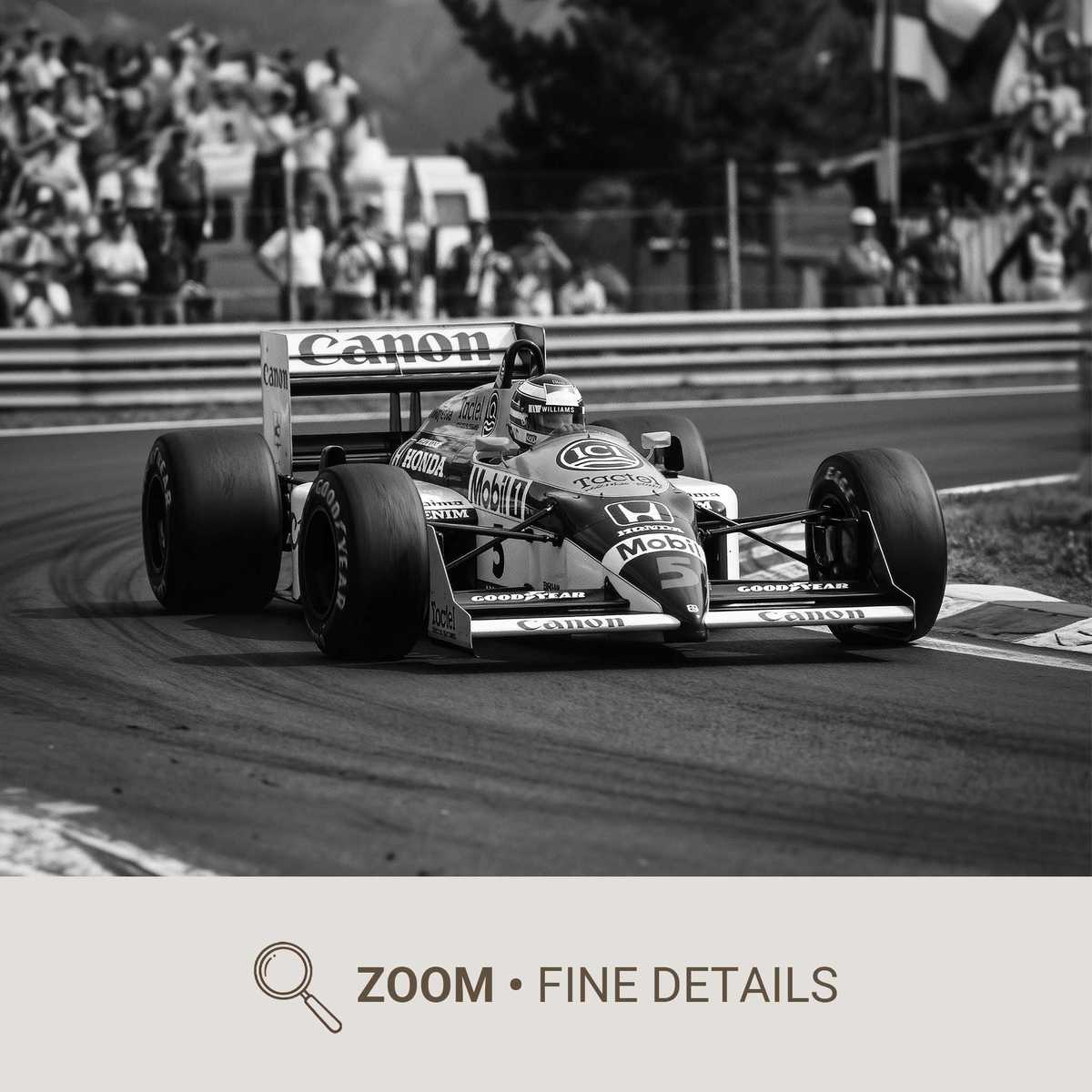
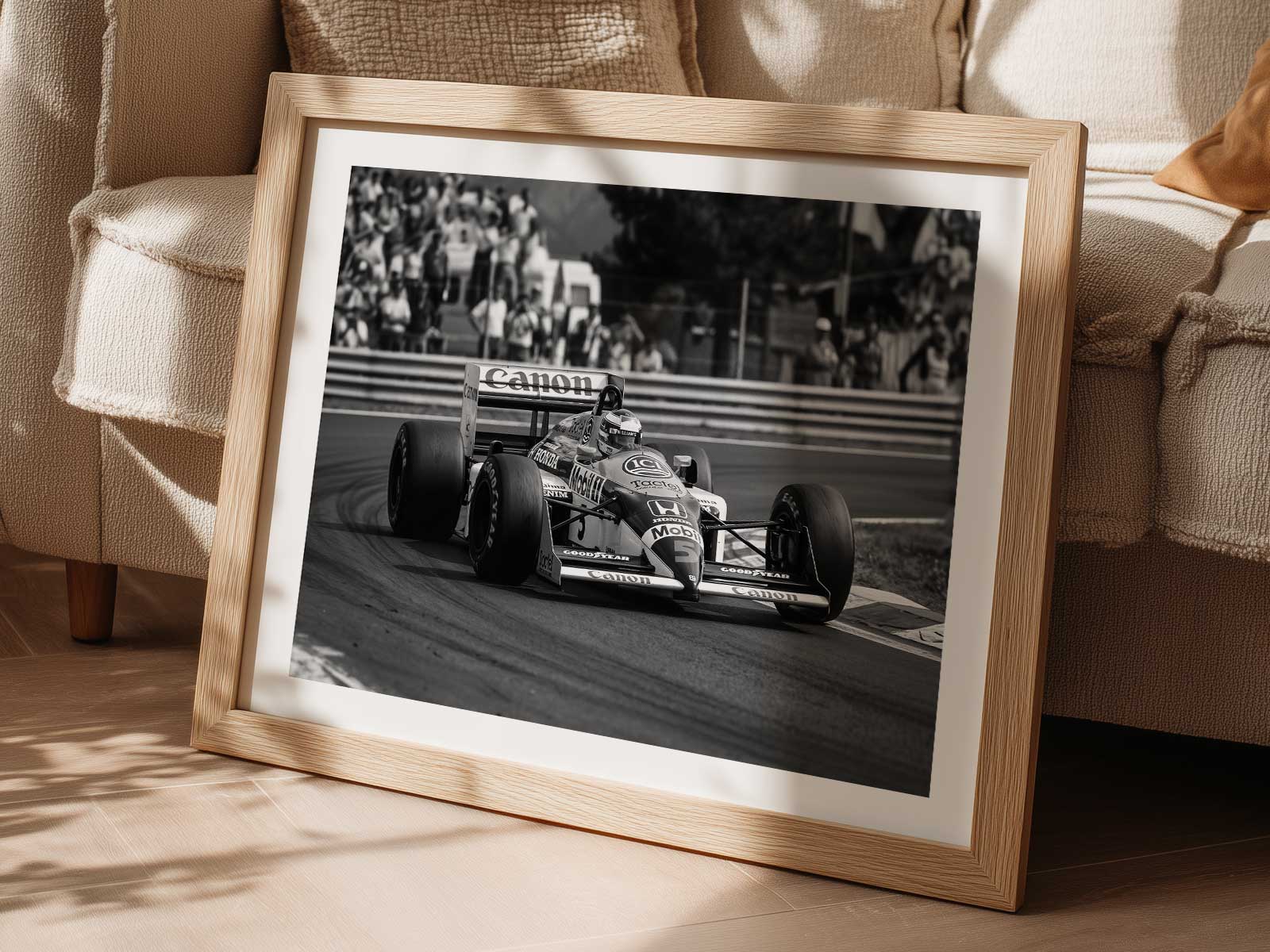
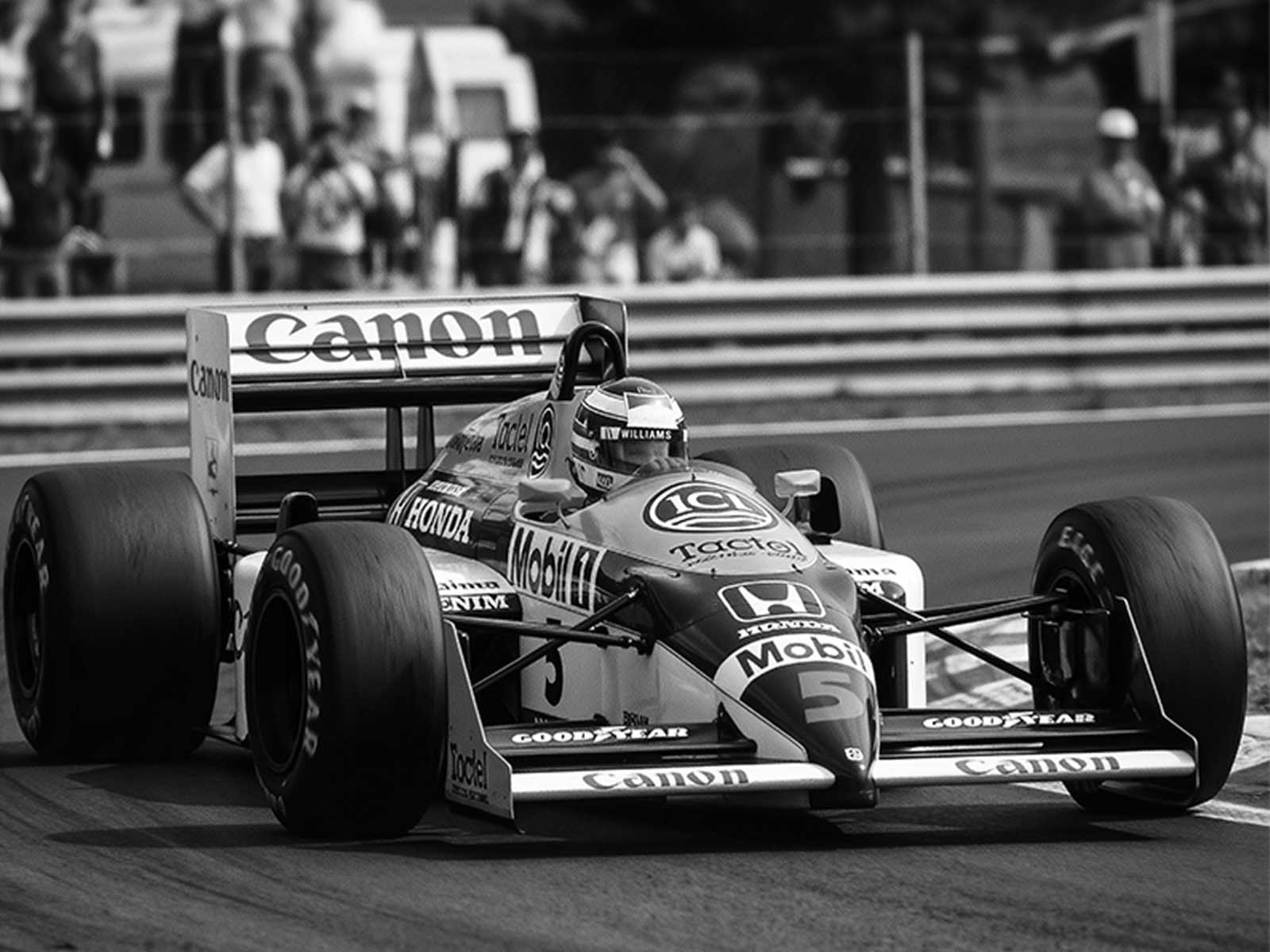
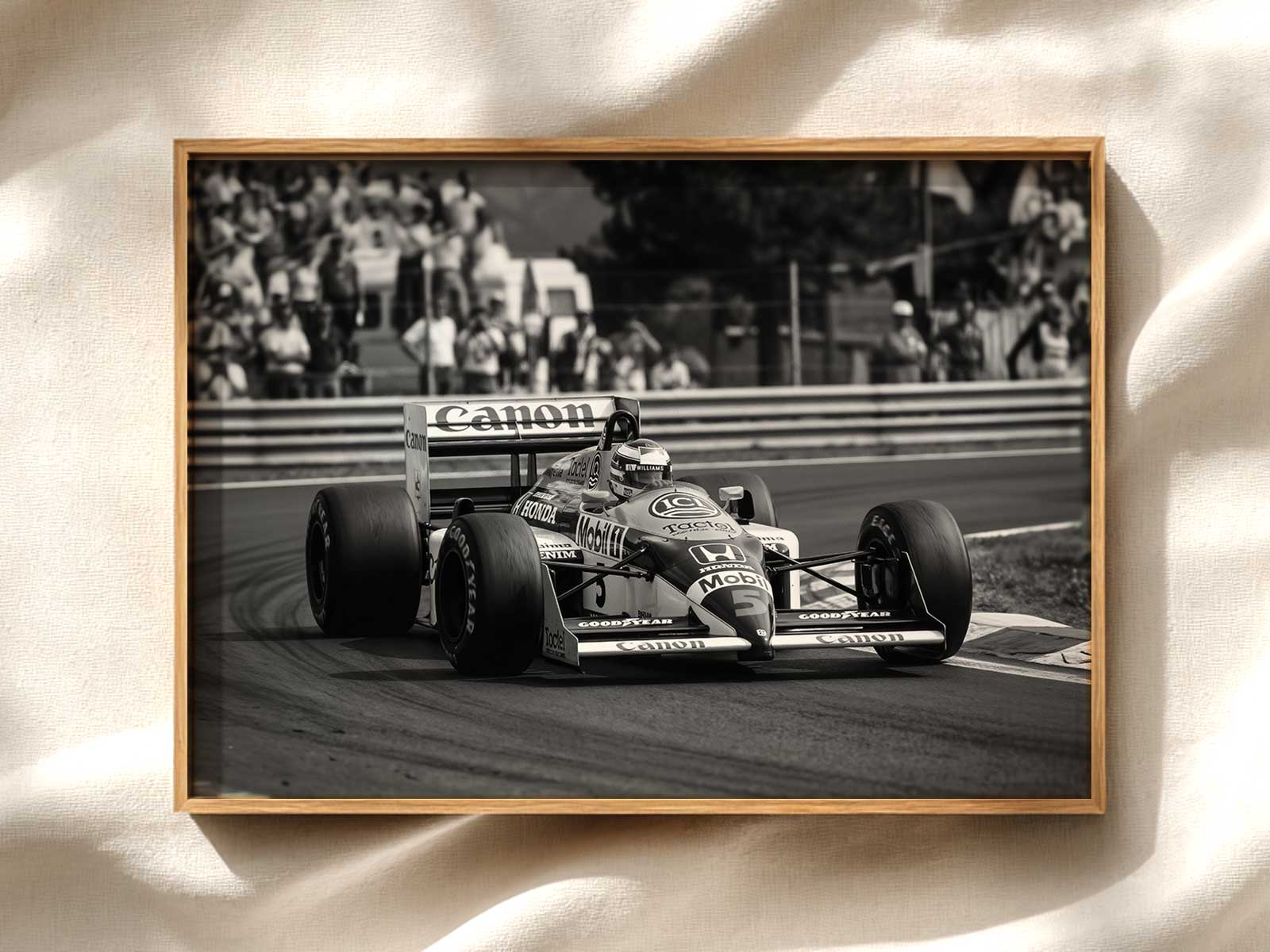
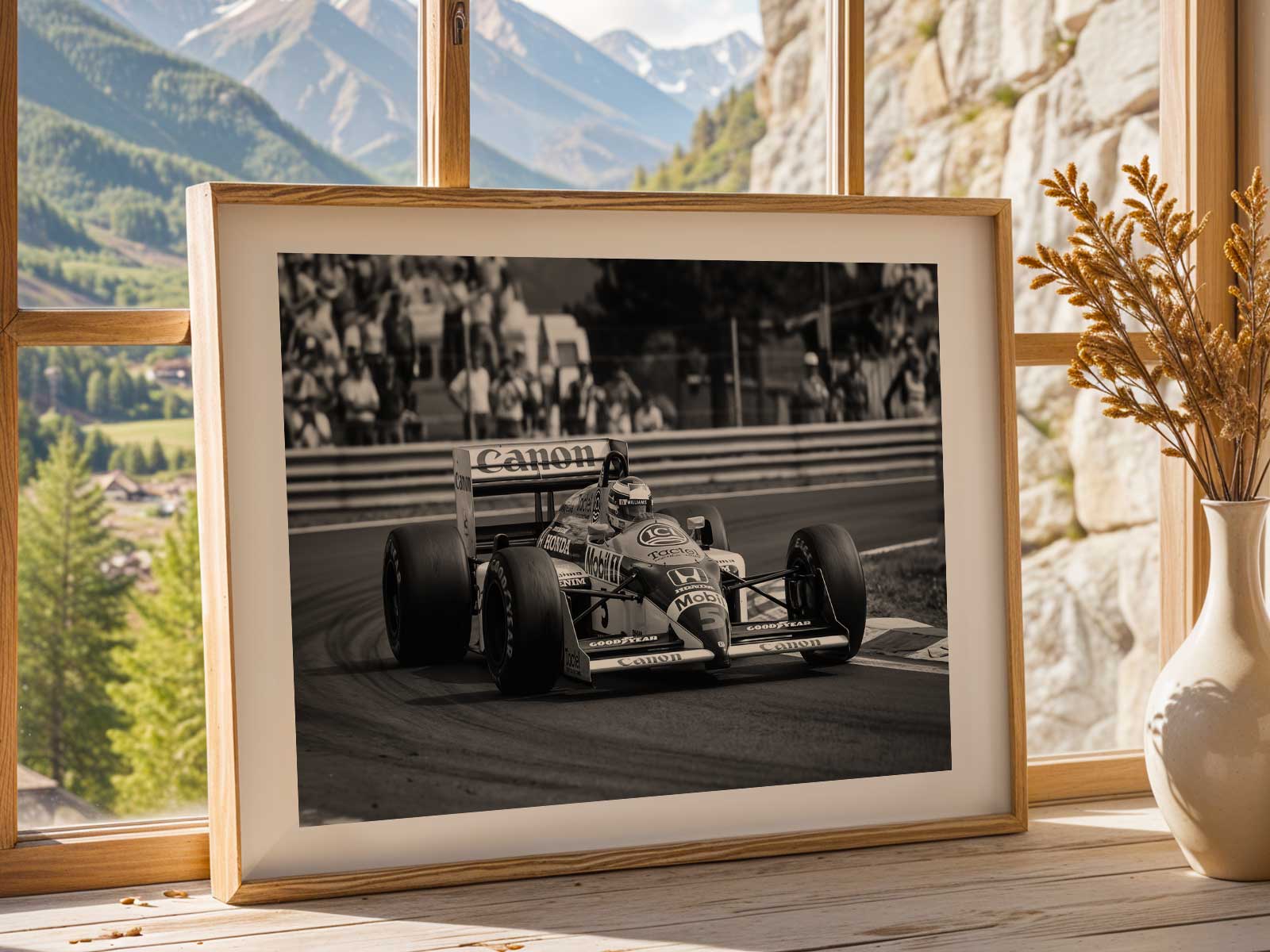
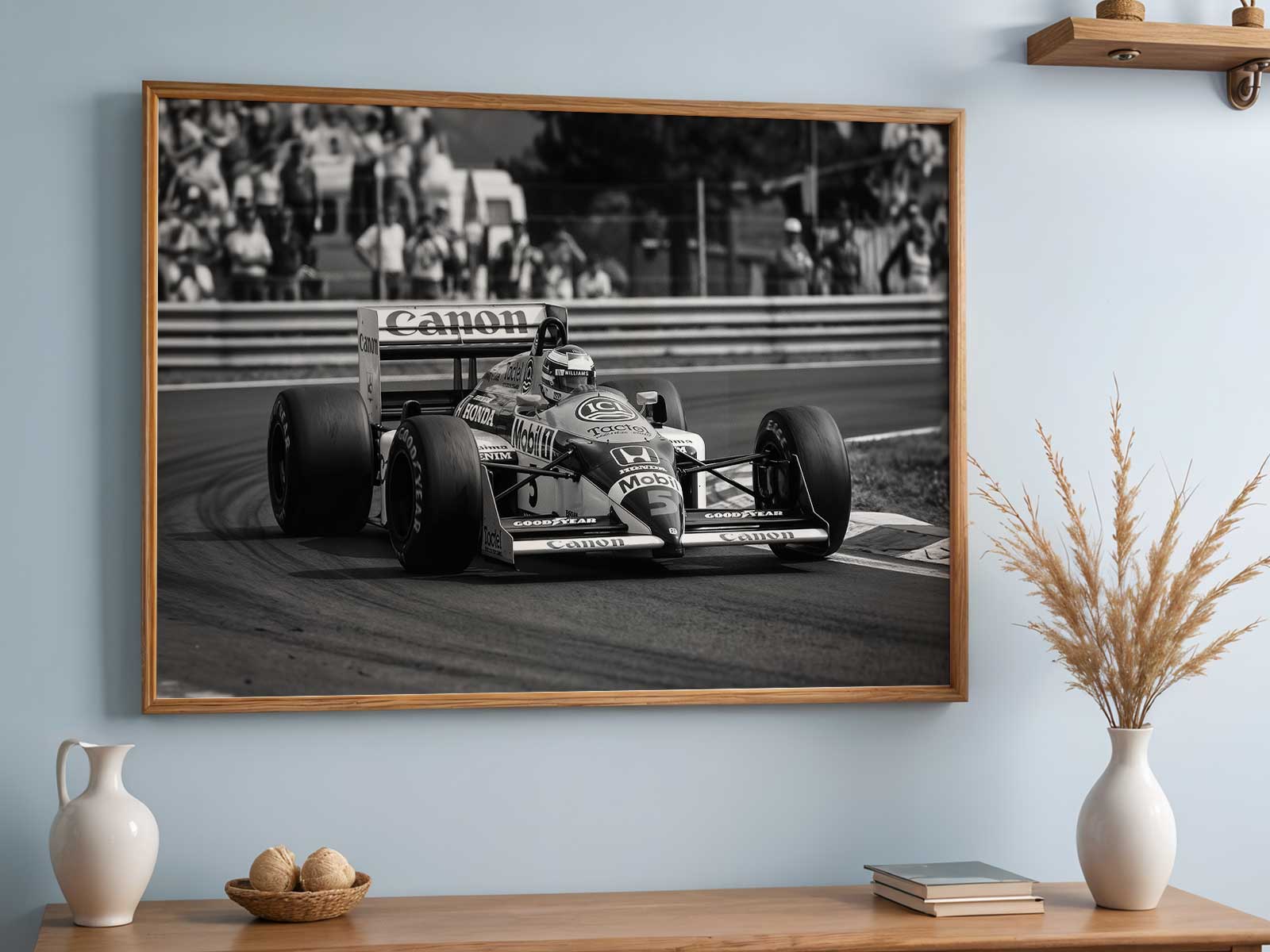
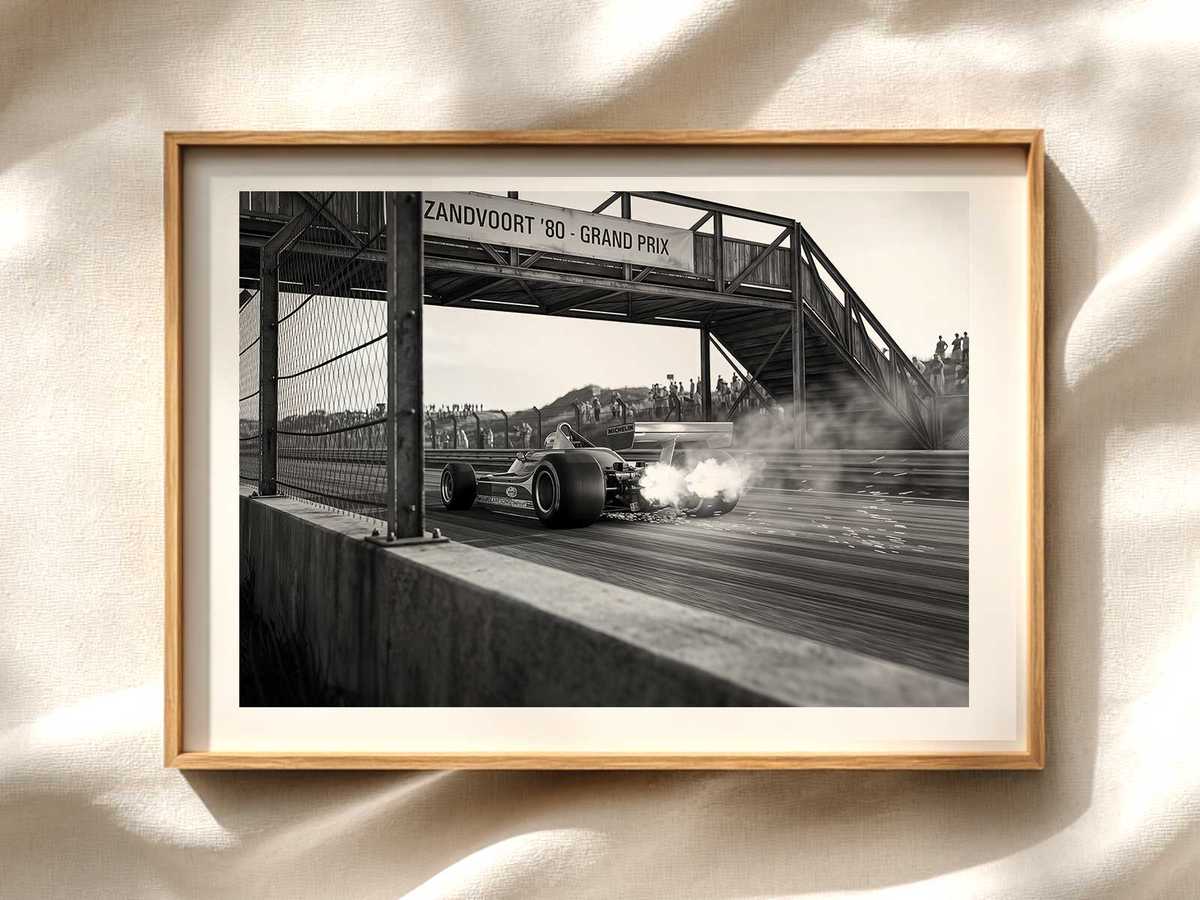
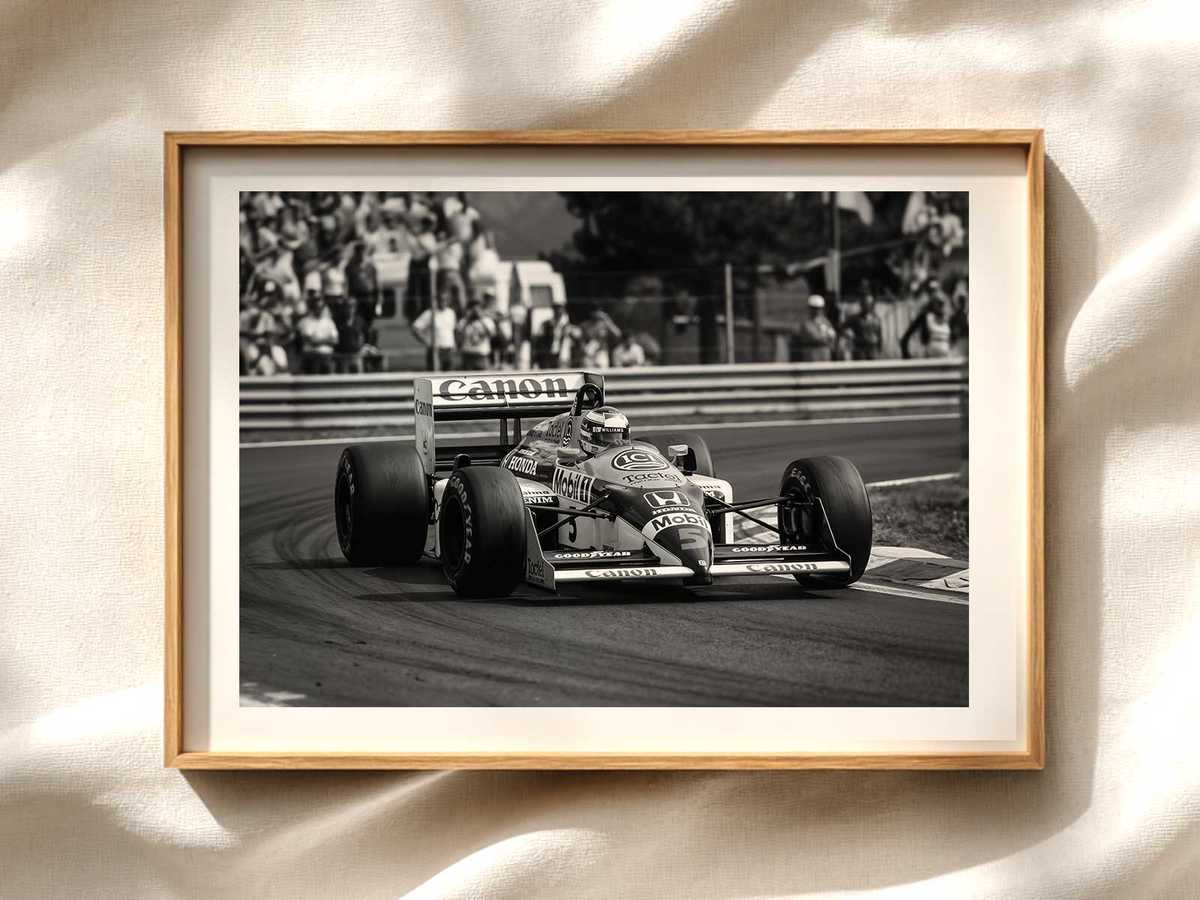
In poster design, a single freeze-frame can carry the full drama of a Grand Prix. The aggressive lines and sonic menace of a turbo-era Formula 1 car condense an instant of racing into a visual story: motion becomes gesture, aerodynamic edges translate to tension, and the scene reads like a clipped paragraph of high-speed narrative. This article explains how to portray that intensity on a poster while keeping the composition decorative, evocative, and true to the sport.
Reading the Turbo-Era Aesthetic
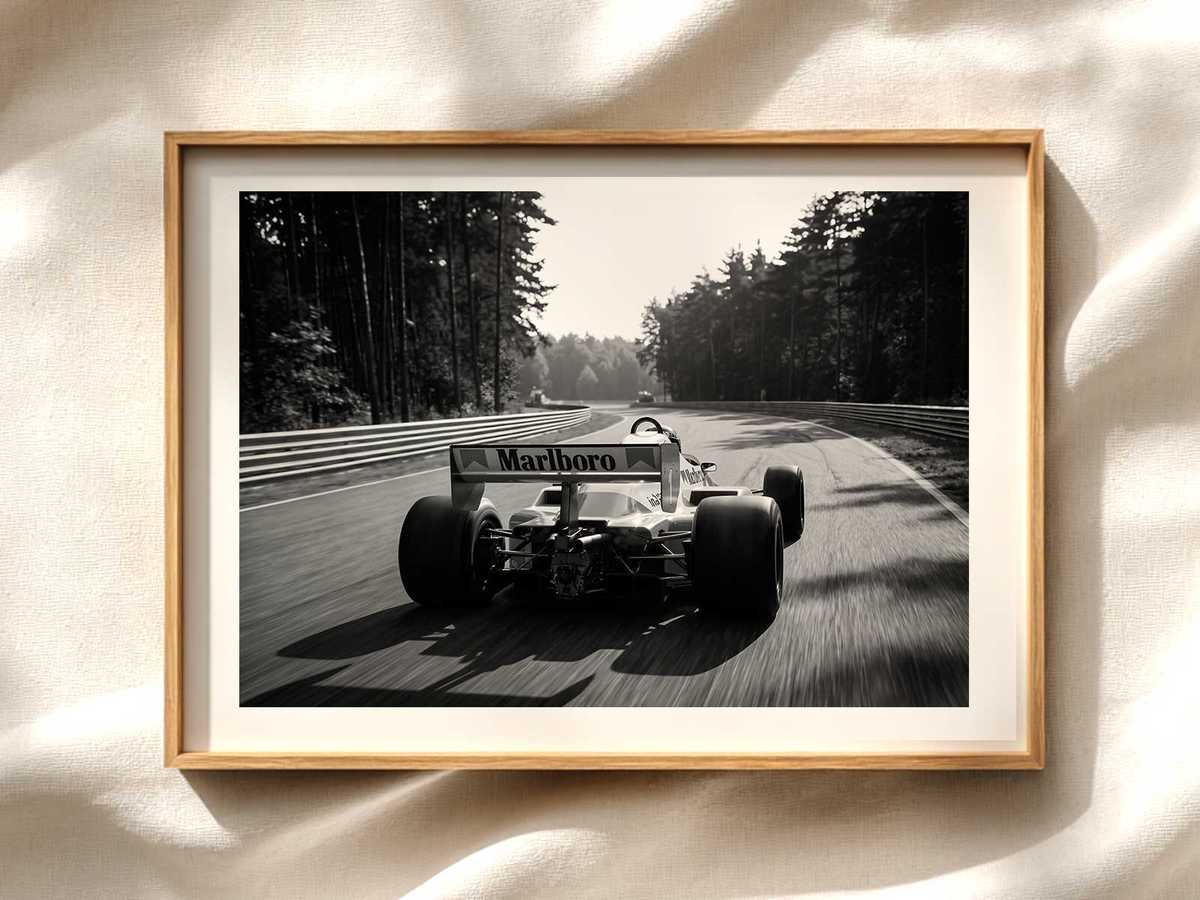
The turbo era brought extreme aero solutions, sharp wing profiles, and a mechanical rawness that reads instantly on the page. For a poster, emphasize contrasts: razor-like silhouettes against soft backgrounds, hard highlights on metal surfaces, and the boxed geometry of sidepods and wings. These elements suggest speed even when the car is stationary in the image—their geometry implies forward thrust.
Conveying Movement Without Motion Blur
Motion blur is a common tool, but for a decorative poster that aims for narrative clarity, use compositional cues instead. Tilt the car within the frame to suggest acceleration or cornering force. Introduce diagonal track lines, compressed perspective, and repeated graphic motifs (curbs, tire marks, safety barriers) to create implied motion. Sharp, directional lighting—cast shadows and bright creases on bodywork—adds a staccato rhythm that the eye reads as speed.
Portraying Pressure and Drama
Pressure in a Grand Prix moment is both physical and emotional. Show it through surface detail: heat haze above the exhaust, tightly turned steering angles, tire deformation against track kerbs. Crop tightly to isolate the cockpit and suspension arms, forcing the viewer into the scene. Include human elements sparingly—a gloved hand on the wheel, a helmet visor reflecting a competitor—to anchor the drama in personal stakes.
Color and Contrast: Amplifying Tension
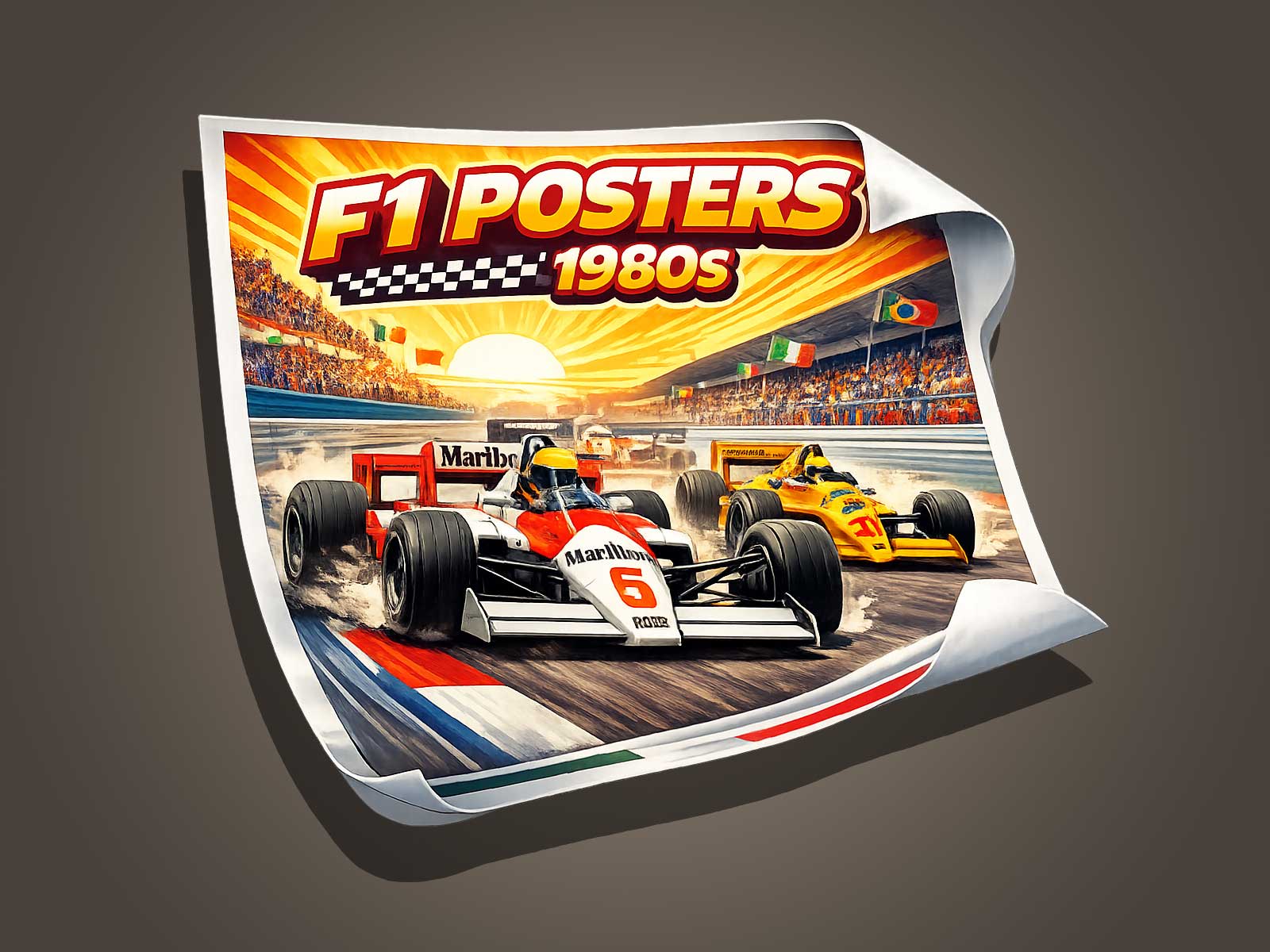
Color choices amplify pressure. Muted, desaturated tracks and sky let car liveries and sponsor colors pop; conversely, high-contrast palettes—deep blacks with neon highlights—evoke the turbo era’s intensity. Use selective saturation: keep the background neutral and boost saturation on focal elements like the nosecone or brake ducts. Strategic vignette or gradient overlays can channel the eye and heighten tension without overpowering the decorative balance.
Typography and Graphic Balance
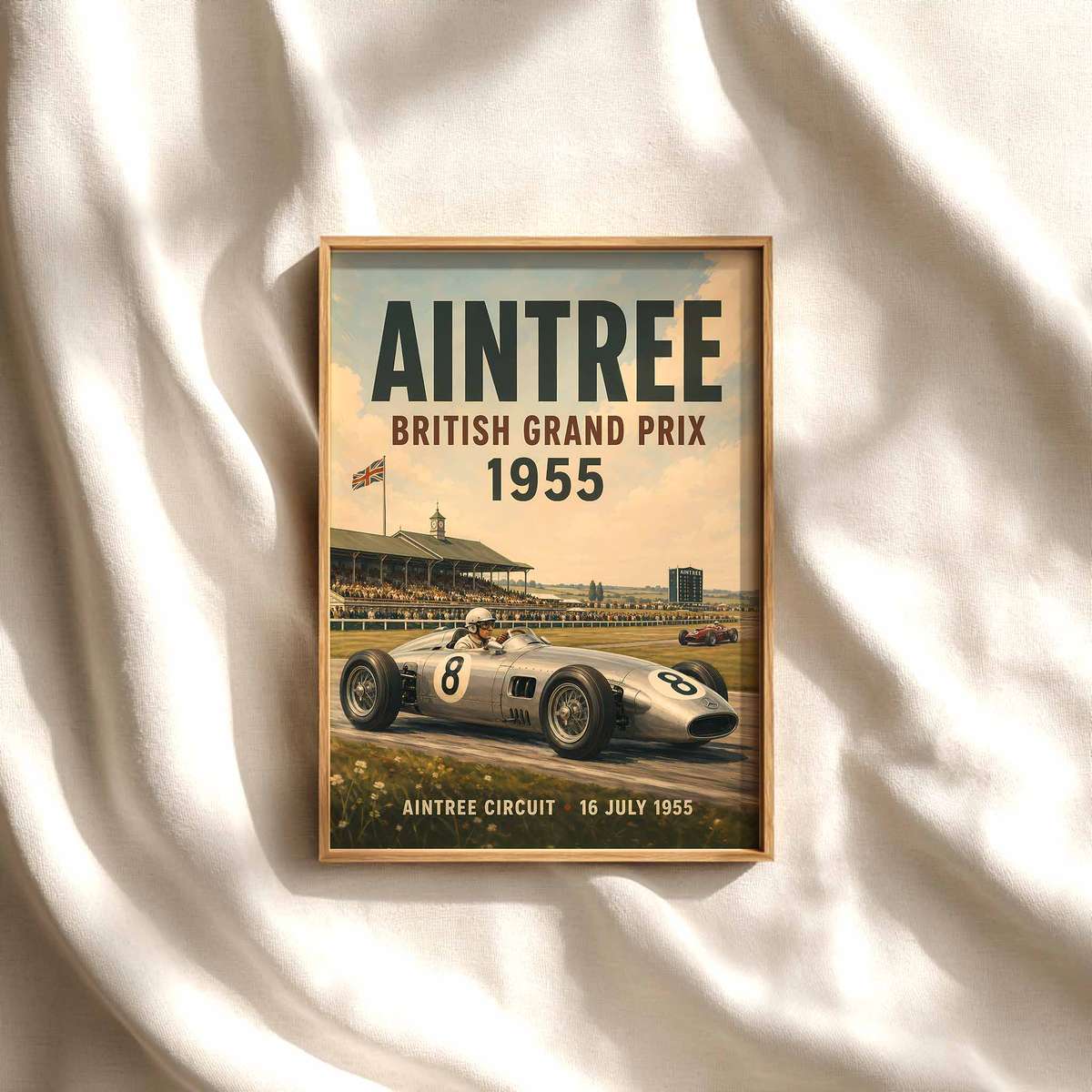
Typography should complement the car’s aggressiveness. Choose condensed, geometric sans-serifs or slightly slanted type that echoes aerodynamic lines. Place text outside the action zone—along the top margin or a lower band—to preserve the image’s narrative center. Use minimal copy: a race name, year, or a short phrase that enhances the moment without literalizing it.
Composition Tips for a Decorative, Narrative Poster
- Anchor the image with a strong focal point: nosecone, wheel, or helmet visor.
- Use negative space strategically—an expanse of track or sky amplifies speed and isolation.
- Crop to intensify: close crops turn equipment into graphic forms, enhancing the decorative quality.
- Layer subtle textures—tire marbling or track rubber—to provide tactile realism without clutter.
- Maintain a limited palette to keep the poster suitable for interiors and collectors.
Practical Workflow for Designers
Start with high-resolution imagery or a meticulously modeled render. Work non-destructively: build layers for contrast, dodge and burn to sculpt edges, and add selective color grading. Test prints at intended sizes—sharpness and fine detail can change perception when scaled. For limited-edition posters, consider foil or spot gloss on sharp edges to literalize the car’s aggressive highlights.
Final Thought: Narrative Power of a Single Instant
A turbo-era Formula 1 car’s aggressive sharpness does more than depict a vehicle; it compresses an entire Grand Prix moment—speed, conflict, and human will—into a single, decorative image. When executed thoughtfully, a poster becomes a narrative artifact: shorthand for a race’s pressure and drama that works equally well on a gallery wall or a fan’s living room.