How the Imola Grand Prix Distinguishes Itself: Layout, Set‑Up and On‑Track…
Imola — officially the Autodromo Internazionale Enzo e Dino Ferrari — sits in the F1 calendar as an old‑school permanent road circuit of roughly 4.9 km that rewards precision. Its compact, narrow layout combines elevation change, fast sweepers and heavy braking zones, forcing teams to make clear compromises between downforce, ride and traction. That balance, together with limited natural overtaking, is what shapes weekend outcomes at the Emilia Romagna Grand Prix.
Quick summary
Imola demands high downforce for stability through rapid direction changes, strong traction for uphill exits and robust braking stability for heavy‑braking spots. Limited DRS opportunities mean qualifying and pit strategy often determine the race.
Quick access
First reading of the circuit•Setup trade‑offs•Overtaking & DRS
FIRST READING OF THE CIRCUIT
From the pit wall Imola immediately reads as a classic, technical track rather than a high‑speed, wide modern venue. The official Autodromo description and modern guides highlight a compact 4.9 km permanent road circuit with pronounced elevation shifts and a narrow racing surface. That combination creates a layout where momentum and clean lines matter, but so do driver precision and car stability through quick transitions.
CORNER RHYTHM AND SPEED PROFILE
Imola mixes genuine high‑speed sections with trickier chicanes and slower corners. Long sweepers such as the modern Tamburello/Acque Minerali area demand aerodynamic stability and the ability to carry speed through direction changes, while sequences that feed into Tosa and Variante Alta interrupt momentum with heavy braking and low‑speed re‑starts. The lap rhythm is therefore a repeated alternation of aero‑dependent flow and hard, mechanical grip moments.
BRAKING ENERGY AND TRACTION DEMANDS
The circuit concentrates its most severe demands in a handful of heavy‑braking zones and uphill exits. Tosa hairpin and the run into Variante Alta are archetypal spots where braking stability and re‑launch traction directly affect lap time and overtaking potential. Teams therefore value rigid braking performance and rear‑end stability; poor brake‑instability or traction deficits are punished by time loss through these sequences.
KERBS, SURFACE, AND TRACK EVOLUTION
Surface character and kerb placement at Imola add to the setup puzzle. The track’s undulations and aggressive kerbs require suspension compliance and kerb tolerance; teams tune ride to avoid upsetting the aerodynamic platform over bumps. Track evolution across a weekend is meaningful because the narrow racing line becomes more defined and limited runoff preserves the consequences of small mistakes.
SETUP TRADE-OFFS AND CAR COMPROMISES
Because Imola alternates between fast sweepers and technical slow sections, teams commonly adopt relatively high downforce to stabilise rapid direction changes (for example through Acque Minerali and modern Tamburello) without sacrificing the traction needed for uphill exits. The compromise is directly on ride and mechanical grip: softer settings improve kerb compliance and traction but can cost top speed and aero efficiency through the high‑speed parts. Brake balance and chassis stiffness also take on extra importance due to the mix of heavy stops and quick transitions.
TYRES, THERMAL LOAD, AND STINT SHAPE
Pirelli nominations and team choices at Imola are often aimed at creating tactical variety. Softer compounds have been used in some years to encourage pit stops and add strategic depth. Thermal load is moderate compared with high‑speed abrasive tracks, but tyre management remains important because a single‑stop race can be common if compounds and conditions allow. Teams therefore weigh aggressive early pace against preserving rubber for later stint performance.
OVERTAKING, DRS, AND RACECRAFT
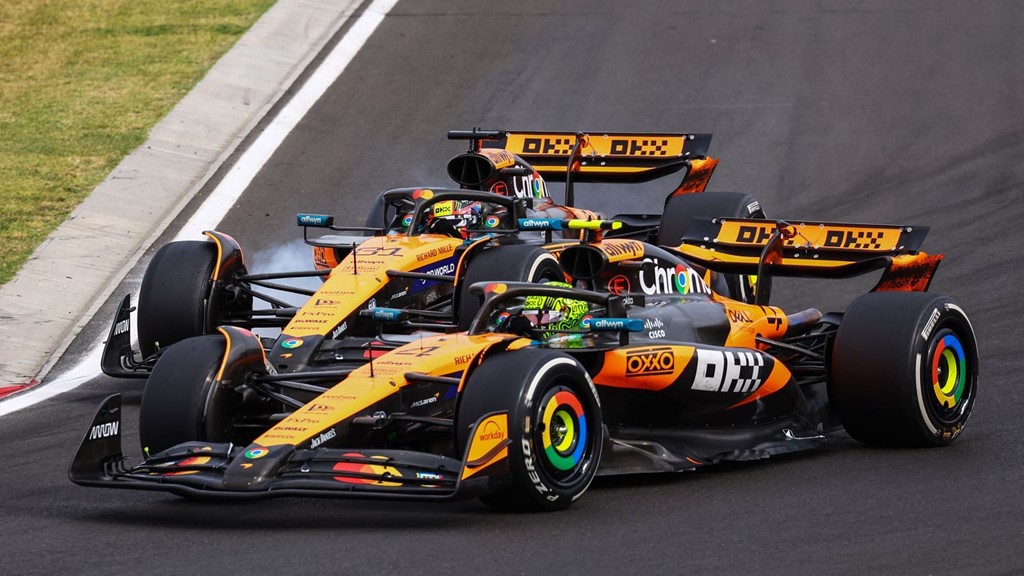
Overtaking is intrinsically challenging at Imola. Contemporary technical guides characterise the modern layout as providing limited DRS‑assisted opportunities — typically a single DRS zone — and rely on heavy‑braking corners such as Tosa and the approach to Variante Alta as the best natural places to pass. That constraint makes qualifying position, pit‑stop timing and tyre strategy decisive: track position is difficult to overturn without a strategic window or an opponent mistake.
HISTORICAL AND COMPETITIVE CONTEXT
Imola’s place in Formula 1 is tied to its historic character and to safety‑driven changes over time. Following significant incidents in the past, the circuit has undergone safety alterations and resurfacing, with upgrades ahead of the 2020 return. Despite these changes, the venue retains narrow lines and limited runoff in places, preserving the sense of an old‑school circuit where driver precision and car set‑up are rewarded.
CLOSING INTERPRETATION
In concrete F1 terms Imola is a technical mirror: it exposes weaknesses in setup and tyre strategy more readily than many modern wide circuits. Its mix of high‑speed corners, heavy braking and narrow lines pushes teams toward higher downforce, better kerb compliance and solid traction, while the relative scarcity of DRS opportunities elevates qualifying and pit strategy. For followers of racecraft and setup nuance, the Emilia Romagna Grand Prix remains one of the calendars’ truest tests of car balance and driver precision.
Author: William L.