How the Miami Grand Prix Reveals a Modern F1 Car's True Identity
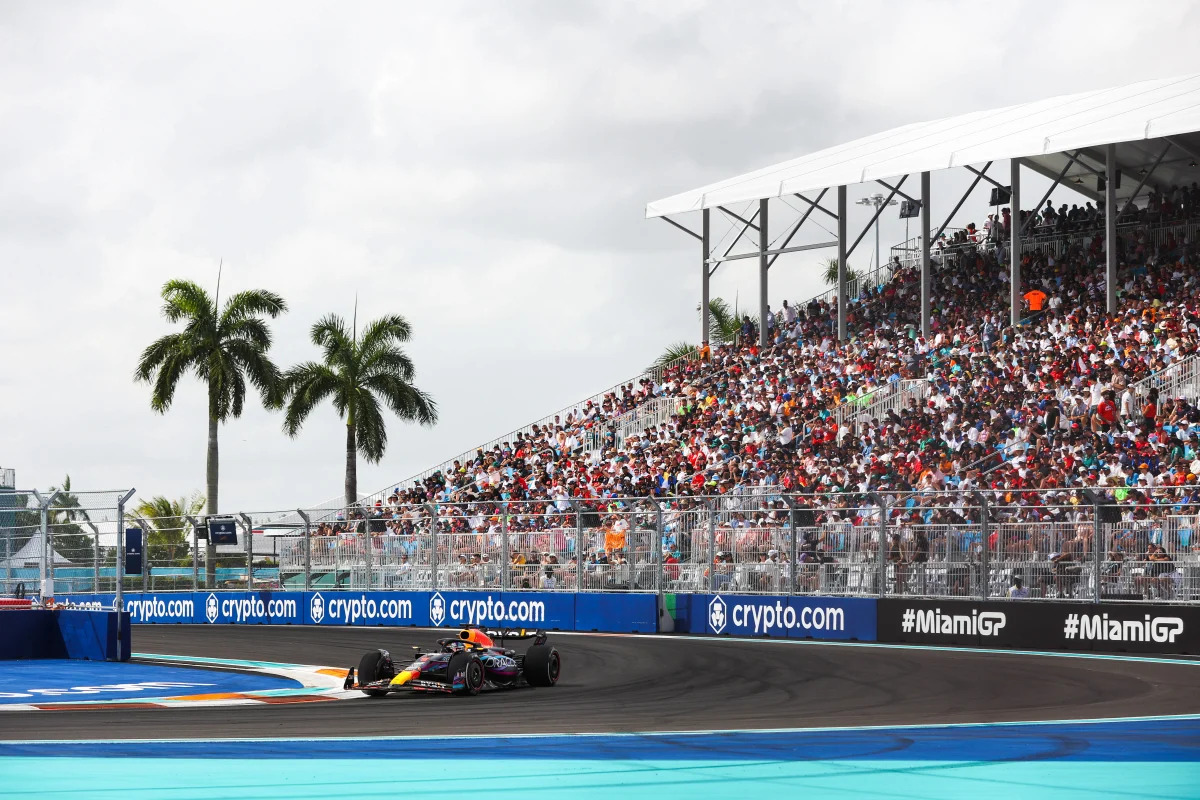
The Miami International Autodrome is a revealing test for any contemporary Formula 1 car. Its roughly 5.4 km layout with 19 turns combines long DRS‑assisted straights, several heavy‑braking zones and a technical stadium section with aggressive kerbs and bumps. Those characteristics force teams to choose compromises between aerodynamic efficiency, braking stability, mechanical grip and chassis compliance—making Miami a clear window into a car’s real performance identity.
Quick summary: Miami demands low drag for long straights but enough downforce and compliant ride for the stadium kerbs and tight chicanes. Teams adjust ride height, suspension compliance and brake cooling to manage those conflicting needs.
FIRST TECHNICAL READING OF THE CAR
At Miami the immediate questions about any car are straightforward: how much aero will it carry for the technical stadium sector, and how clean is its low‑drag performance down the 1.2 km straight? The circuit’s mix of high‑speed runs and stop‑start corners exposes whether a car is conceptually biased toward outright aerodynamic efficiency or toward mechanical and low‑speed stability. Because the track is temporary and features bumps, a car that looks tightly packaged and low to the ground will also be judged on how it survives kerb hits without upsetting its aerodynamic platform.
AERO PLATFORM AND DOWNFORCE CHARACTER
Miami forces a classic drag versus downforce compromise. Teams must reduce frontal and overall aerodynamic drag to exploit the long DRS‑assisted straight while retaining wing and floor load for the slow and medium corners in the stadium. The floor and diffuser therefore become central: a machine that can generate usable downforce from the underfloor with relatively low induced drag gains an advantage because it reduces the need for large, draggy wings downforce in the slower sectors.
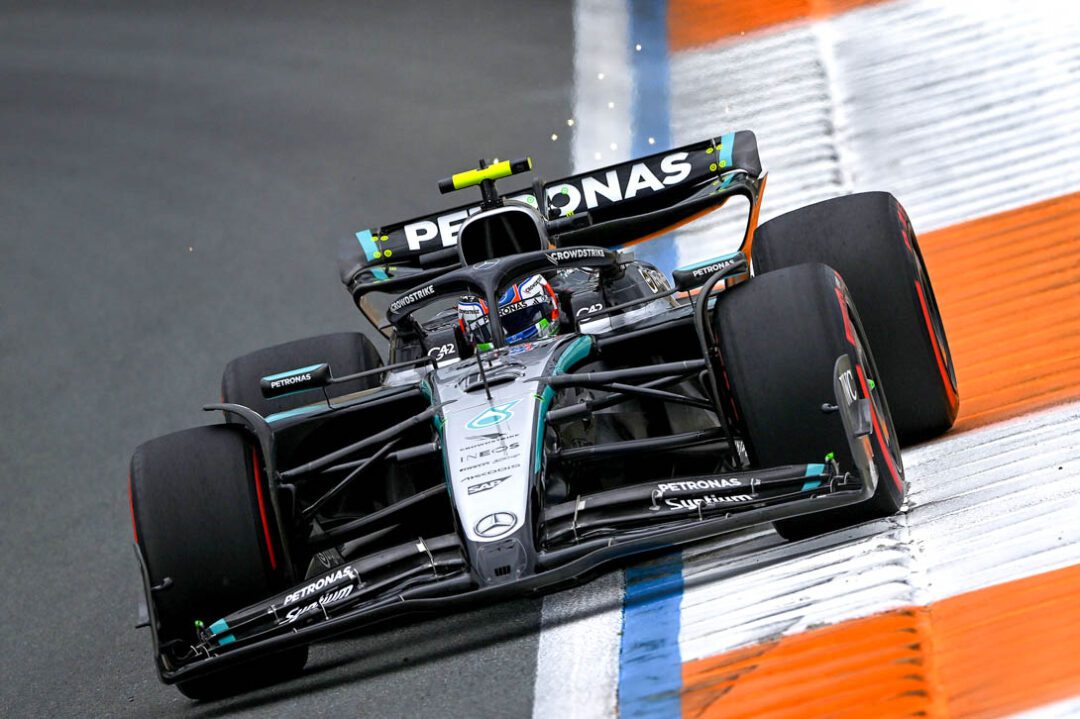
On a temporary layout with bumps, maintaining a stable aero platform is harder. Running too low for optimal floor performance increases the risk that kerb strikes or bumps will change ride height, break the diffuser seal and produce sudden balance shifts. As a result, teams often accept a slightly higher nominal ride height or introduce suspension compliance to protect the underfloor’s continuity across the stadium kerbs—trading peak aero for predictable behaviour.
SUSPENSION, RIDE, AND PLATFORM CONTROL
Aggressive kerbs and the bumps of a semi‑permanent circuit make kerb absorption and ride compliance critical. Engineering choices at Miami typically include softened springs and a more compliant damper tune to allow the chassis to ride over the stadium kerbs without severe pitch or heave. That compliance helps keep the floor and diffuser operating in their optimal bands through transitions, but it also increases aerodynamic pitch sensitivity at high speed.
Teams therefore calibrate anti‑roll rates and ride heights to find a middle ground: enough compliance to survive kerbs and preserve tyre contact, but sufficient platform discipline to avoid unpredictable understeer or oversteer when aerodynamic load changes under braking or across bumps.
TYRE WINDOW, DEGRADATION, AND CONTACT PATCH
Temporary circuits like Miami evolve strongly through a weekend. Initial low grip gives way to a rapidly improving surface as rubber is laid down, which alters tyre warm‑up and degradation windows. That evolution increases sensitivity to setup choices: a car that struggles to warm its tyres early will be disadvantaged in qualifying and the early laps of a stint, while one that manages contact patch and heat consistently will benefit as the track gains grip.
Because teams must balance aero and mechanical grip, tyre behaviour often exposes a car’s fundamental trade‑offs. A car set up for lower drag will typically rely more on mechanical grip and suspension tuning to keep the contact patch effective in slow corners; conversely, a downforce‑biased car can generate quicker corner entry speeds but risks overheating or uneven wear if its balance shifts across the stint.
BRAKING, TRACTION, AND CORNER PHASE BEHAVIOUR
Miami contains multiple heavy braking zones, which highlight braking stability and brake cooling trade‑offs. Long straights allow high terminal speeds, increasing the thermal and load demand on brakes at the end of those runs. Teams must therefore balance brake ducting and cooling—too much cooling creates aerodynamic penalty, too little risks fade and inconsistent bite.
On corner exit, traction maps and differential settings become decisive. The stop‑start nature of sections around the stadium means power delivery and traction control calibration significantly affect exit speed and tyre life. Tuning differential preload and electronic torque delivery to suit heavy traction zones helps a car put power down without spinning the rear tyres or upsetting balance on kerb exits.
DEVELOPMENT PATH AND TECHNICAL EVOLUTION
Because Miami is a semi‑permanent, evolving testbed, development choices teams bring need to be evaluated for scalability across circuits. Practical trade‑offs applied here—raising ride height, softening suspension, modulating brake cooling and adjusting traction maps—are typical for temporary circuits and inform how a car’s baseline architecture behaves in imperfect conditions. The car concept that adapts quickest in setup and allows engineers to trade between aero efficiency and mechanical compliance will show its strengths most clearly at Miami.
CLOSING INTERPRETATION
In short, the Miami Grand Prix acts like a diagnostic tool for modern F1 cars. Its layout forces explicit choices about aero efficiency, platform control, suspension compliance, tyre management and brake cooling. A car that reads well at Miami is not necessarily the highest downforce machine; it is the one whose concept permits readable compromises—predictable behaviour over kerbs, manageable tyre windows as the track evolves, and a workable drag/downforce balance for both the long straight and the stadium complexity. Observing a car’s performance here reveals how conservative or aggressive its engineering priorities are, and how easily its setup window can be exploited by drivers and engineers across a weekend.
Author: William L.