How Silverstone sets the British Grand Prix apart: profile, setup and on-track…
Silverstone is the touchstone of the British Grand Prix and one of Formula 1’s fastest, most flowing circuits. From its role as the site of the inaugural World Championship round in 1950 to its permanence as host since 1987, Silverstone’s identity is defined by long straights and sustained high-speed sequences that shape engineering choices and on-track spectacle.
Quick summary: Silverstone demands aerodynamic efficiency with enough downforce to survive Maggots–Becketts–Chapel. Tyre thermal and lateral loads drive strategy; long DRS-enabled straights create clear overtaking theaters.
Quick access: Circuit identity · Setup trade-offs · Overtaking and racecraft
FIRST READING OF THE CIRCUIT
At first glance Silverstone reads as a high-speed test for car aero and chassis stability. The circuit’s signature sequence—Copse, Maggots, Becketts and Chapel—forms a rapid, flowing series of direction changes that reward aerodynamic efficiency and lateral grip over outright mechanical downforce. Long straights separate those sequences, emphasising low drag so teams accept a different balance than at slower venues.
CORNER RHYTHM AND SPEED PROFILE
Silverstone’s lap is defined by sustained sections where momentum must be carried precisely. The fast complexes require crisp transitions between high-speed compression and quick steering inputs; cars that can maintain speed through those sequences gain significant lap time. Interruptions to that rhythm come where long straights and heavy braking zones reset the lap, making the circuit a study in repeated high-to-mid speed transitions.
BRAKING ENERGY AND TRACTION DEMANDS
Because the layout alternates long high-speed runs with heavy stops, the most punished moments are the hard braking zones that follow the straights and the traction exits out of tighter corners. Teams and drivers must manage brake stability entering heavy stops while protecting the rear during hard launches. These repeated cycles of braking and acceleration influence both car set-up and tyre behaviour across a stint.
SETUP TRADE-OFFS AND CAR COMPROMISES
Aerodynamic efficiency is the central compromise at Silverstone. Teams typically aim for a lower-drag balance than they would on slower circuits, but they cannot sacrifice the aerodynamic load needed to keep tyres and chassis stable through long, fast sequences. That means the setup window narrows: reduce drag to exploit long straights, but retain enough downforce and mechanical grip for cornering stability and tyre longevity through Maggots–Becketts–Chapel.
TYRES, THERMAL LOAD AND STINT SHAPE
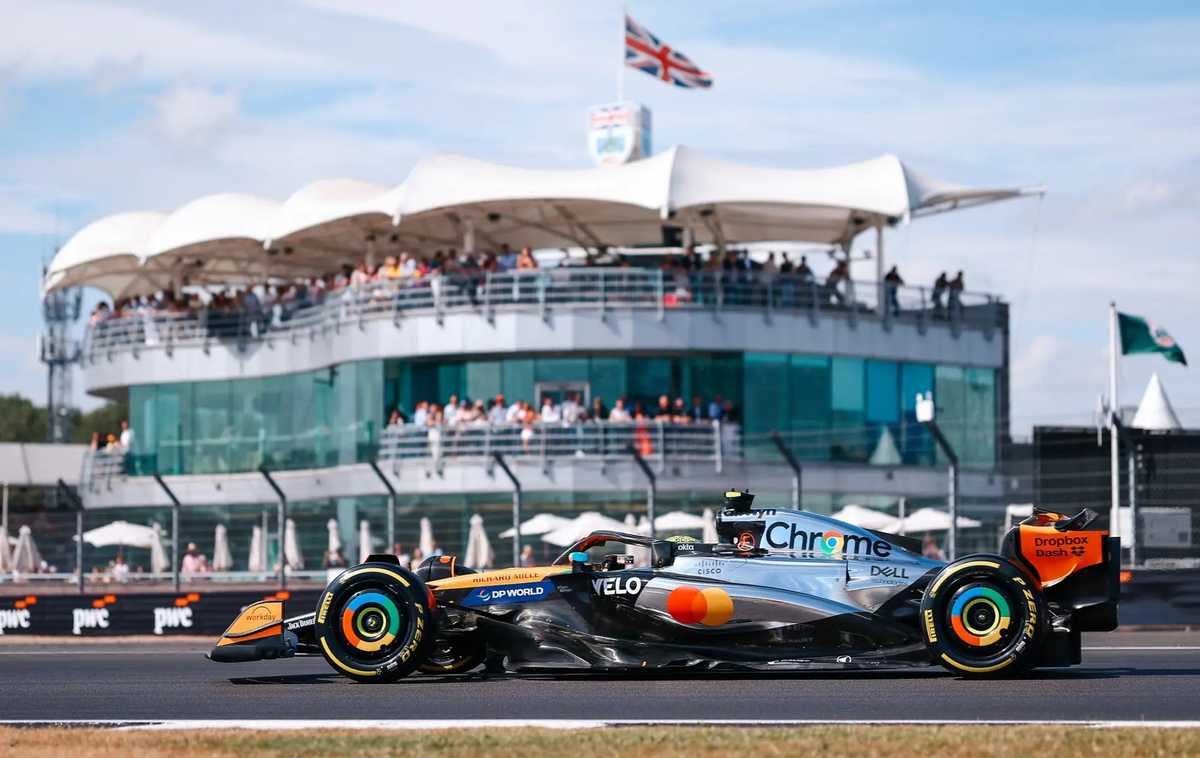
Sustained lateral forces in the high-speed corners generate high tyre loads and wear. Tyre management is therefore central to strategy: teams use practice data to understand thermal build-up and compound performance across long, high-energy runs. The combination of lateral stress and repeated hard braking means that stint shape often reflects a balance between outright lap time and protecting tyre life for race phases where performance must be conserved.
KERBS, SURFACE AND TRACK EVOLUTION
Silverstone’s surface and kerbs interact with its high-speed nature to influence weekend evolution. As rubber is laid down, the track becomes faster through the flowing complexes, but the high-speed lateral loads mean surface grip and kerb tolerances directly affect how aggressively teams will run suspension and ride height. Practice sessions are therefore crucial for teams to validate mechanical settings against evolving surface conditions.
OVERTAKING, DRS, AND RACECRAFT
Long straights and the circuit’s high average speed create clear DRS-assisted overtaking opportunities. The layout rewards drivers who can carry speed through the fast sequences to set up runs onto the straights, where slipstreaming and DRS use combine with heavy braking zones to produce passes. Because the track alternates flowing high-speed sections with heavy braking, racecraft often revolves around timing exits correctly and using aerodynamic efficiency to close or defend onto the straight sections.
HISTORICAL AND COMPETITIVE CONTEXT
Silverstone’s place in Formula 1 history is concrete: it hosted the inaugural World Championship round on 13 May 1950 and has been the permanent home of the British Grand Prix since 1987. The venue has been reprofiled over time but has consistently remained one of the sport’s fastest circuits. Its combination of layout, history and large, passionate crowds has produced memorable races, often amplified by variable British weather.
CLOSING INTERPRETATION
Silverstone remains a decisive weekend for teams because it exposes aerodynamic and tyre strengths clearly. The circuit’s high-speed DNA forces a precise compromise between low drag and the downforce needed to survive its rapid complexes. That technical pressure, combined with long straights that encourage wheel-to-wheel moves and a history of dramatic races, is what continues to set the British Grand Prix apart on the calendar.
Author: Eric M.